Arctic Svalbard Polar Bears
8DFrom ₹6,85,000
A 5-day premium route through Riomaggiore, featuring Riomaggiore, Vernazza, Manarola and Via dell'Amore.
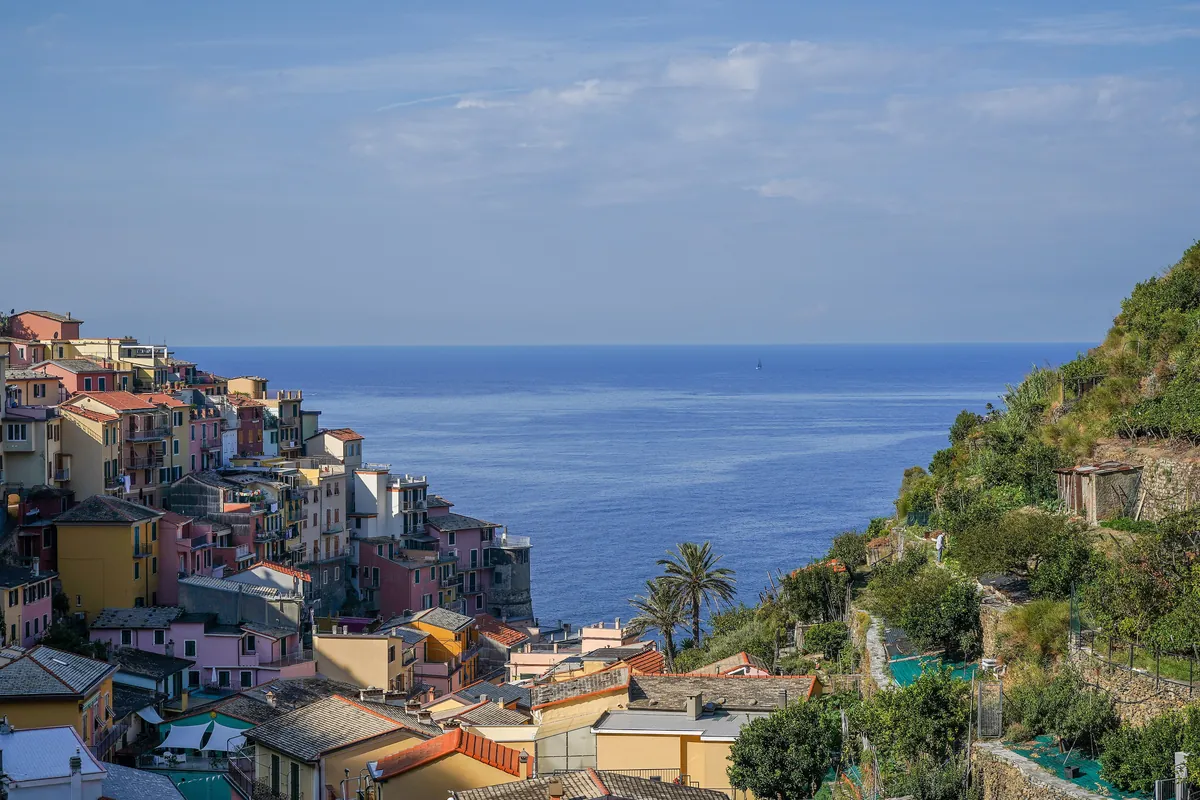
Riomaggiore is a village and comune in the province of La Spezia, in Liguria, and the most southerly of the five villages that make up this 5-day route along the Cinque Terre. The village dates from the early thirteenth century and is known for its historic character and the wine produced by the town's own vineyards. It has a shoreline on the Mediterranean's Gulf of Genoa, with a small beach and a wharf framed by tower houses, and its main street, Via Colombo, holds the village's restaurants, bars and shops. Both the water and the mountainside around Riomaggiore have been declared national parks, and the village once inspired paintings by Telemaco Signorini, a painter of the Macchiaioli group who was active from 1835 to 1901. Riomaggiore and its Cinque Terre neighbours were also the inspiration for the fictional town of Portorosso in the 2021 animated film Luca.
North along the coast is Vernazza, a town in the same province that is the fourth heading north through the Cinque Terre. It has no car traffic and remains one of the truest fishing villages on the Italian Riviera, and it is the only natural port among the five towns. Its name comes from the Latin verna, meaning "native", which also gave its name to the local wine, vernaccia. The first records recognising Vernazza as a fortified town date to 1080, when it served as an active maritime base of the Obertenghi family and a likely point of departure for naval forces defending against pirates; in 1209, around ninety of the town's most powerful families pledged their allegiance to the Republic of Genoa. A church is first documented here in 1251, and the parish of San Pietro is cited in 1267; reference to the Church of Santa Margherita d'Antiochia appears in 1318, and the building was expanded during the 16th and 17th centuries, when its octagonal bell tower was raised from the apse. In the 15th century Vernazza built a fortifying wall against the pirate raids that plagued the coast, and its Doria Castle was raised in the same period as a lookout tower.
The path continues to Manarola, a small town that is a frazione of the comune of Riomaggiore and, with a population of 353, the second-smallest of the Cinque Terre towns. Manarola may be the oldest of the five, with the cornerstone of its church, San Lorenzo, dating from 1338. Its primary industries have traditionally been fishing and wine-making, and its local wine, called Sciacchetrà, is referenced in ancient Roman writings for its quality. Manarola has its own station on the Genoa-Pisa railway. Since 1961, an illuminated nativity scene has been set up on the hillside above the village each Christmas season, its figures handcrafted from recycled materials by the retired railwayman Mario Andreoli; in 2007 it was consecrated as the largest nativity scene in the world, and it is still lit every year on 8 December.
Between Riomaggiore and Manarola runs the Via dell'Amore, "the Way of Love", a pedestrian path overlooking the sea just over a kilometre long and one of four sections of the Sentiero Azzurro, the "Blue Path" that is the most popular hiking trail in Cinque Terre National Park. Its name comes from its history as an easy, private meeting place for young lovers from the two villages. On 24 September 2012 a rockslide injured four tourists and shut the trail for repairs; by April 2015 only 200 metres had reopened, and late-2019 press reports described extensive engineering work still to begin, put at an estimated cost of over 12 million euro. The complete trail finally reopened to residents and tourists in July 2024.
The route ends at Corniglia, a frazione within the comune of Vernazza with a population of about 150 as of 2016. Unlike the other Cinque Terre localities, Corniglia is not directly on the sea: it sits atop a promontory some 100 metres high, surrounded on three sides by vineyards and terraces, and is reached by the Lardarina, a brick staircase of 33 flights and 383 steps, or by a vehicular road from the station. A terrace cut into the rock here gives a view of all four of the other Cinque Terre villages at once. The village's origins trace to the Roman age, its name rooted in the Gens Cornelia, the Roman family that once held the land; in the Middle Ages it passed to the counts of Lavagna, then to Nicolò Fieschi in 1254, before the Republic of Genoa acquired it in 1276. Its parish church, Chiesa San Pietro, was built between 1334 and 1351 from local stone, and its baptismal font dates from the 12th century.
Text adapted from the linked articles under CC BY-SA 4.0; edited for length.
Every dimension the Taro team tags this pack with — filter by any of these on the packs page.
Share your travel month, group size, budget comfort, and must-do experiences. The Taro team will shape the right route before any payment conversation.