Abu Dhabi + Yas Island
5DFrom ₹1,05,000
Beijing imperial heritage, Mutianyu wall, Xi'an Terracotta Army.
China Forbidden City + Great Wall begins in Beijing, China's capital and, with more than 21.8 million residents, the world's most populous national capital city. The name Beijing, meaning "Northern Capital," was applied to the city in 1403 during the Ming dynasty, though the area's human history runs far deeper: fossils of Peking Man, a form of Homo erectus, have been found in the caves of Dragon Bone Hill near Zhoukoudian, dated to between 230,000 and 250,000 years ago, and after the First Emperor unified China in 221 BC the settlement here, then called Ji, became the capital of Guangyang Commandery, later serving as capital of the subordinate Kingdom of Yan under the Han dynasty. Over 9 days the pack moves between an imperial palace, two sections of the Great Wall and a buried army, before closing in the city's own old alleyways.
The Forbidden City, the imperial palace complex at the centre of Beijing, was home to 24 Ming and Qing dynasty emperors and the seat of political power in China for more than five hundred years, from 1420 to 1924; it is now administered as the Palace Museum. Its name comes from its enormous scale and the severely restricted access granted to anyone but the emperor, his family and their eunuch servants — unauthorised entry carried a punishment of immediate execution. Construction began in 1406 after the Yongle Emperor, born Zhu Di, moved the capital from Nanjing to Beijing, and took 14 years and more than a million workers to complete.
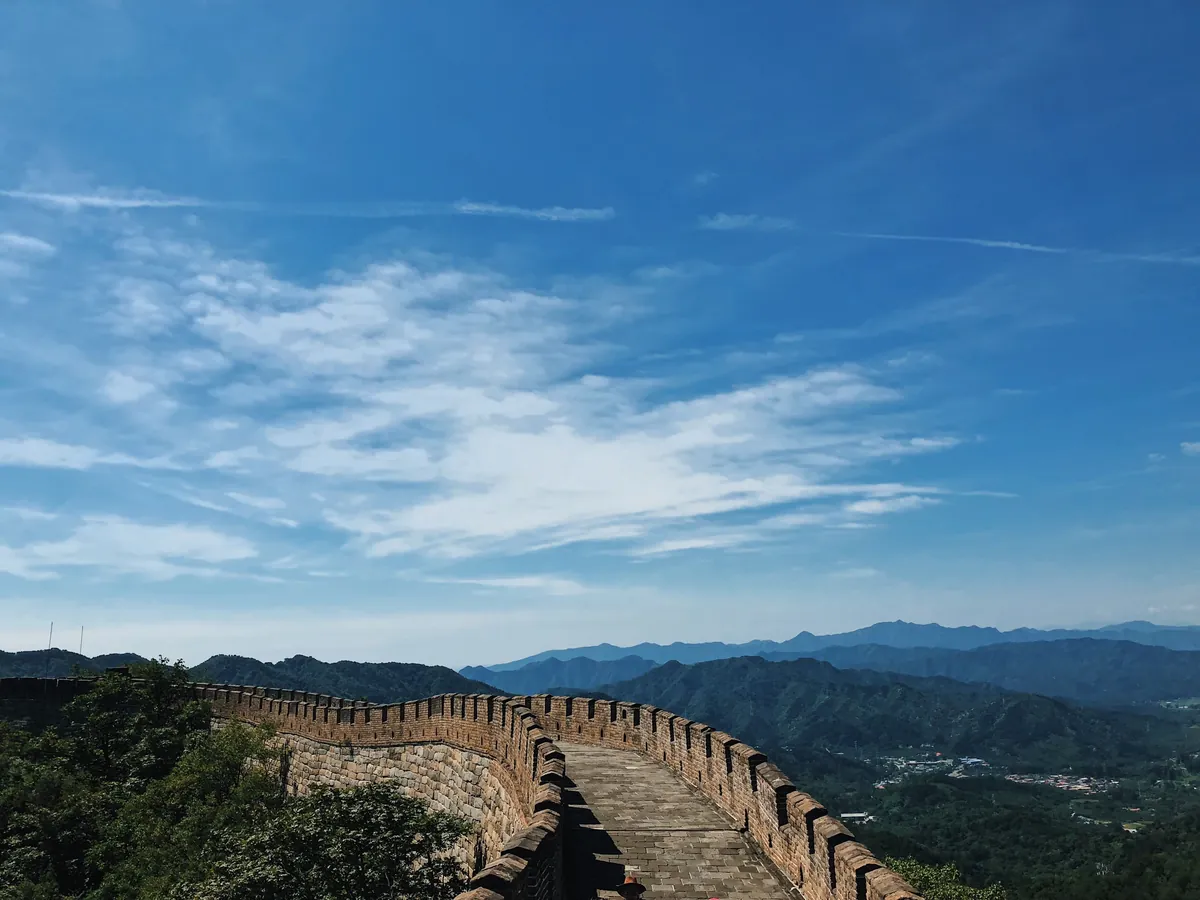
Mutianyu, the pack's section of the Great Wall, sits in Huairou District, 70 kilometres north-east of central Beijing, connected to the Jiankou section in the west and Lianhuachi in the east. First built in the mid-6th century under the Northern Qi, it predates the better-known Badaling section, and the wall seen today was largely rebuilt during the Ming dynasty under the general Xu Da, using granite that stands 7 to 8.5 metres high and 4 to 5 metres wide along its top, with watchtowers placed densely along its length.
The Terracotta Army, buried with China's first emperor Qin Shi Huang between 210 and 209 BCE to protect him in the afterlife, was described more than a century after its completion by the historian Sima Qian in the Records of the Grand Historian, the first of China's 24 dynastic histories; work on the mausoleum itself had begun in 246 BCE, soon after Qin Shi Huang took the throne. The army lay undiscovered until 29 March 1974, when the farmer Yang Zhifa, his five brothers and their neighbour Wang Puzhi struck it while digging a well about 1.5 kilometres east of the emperor's tomb mound at Mount Li.
The trip's rickshaw ride through Beijing's hutongs covers the narrow streets and alleys long associated with the city, a word of Mongolian origin meaning "water well" that first appeared during the Yuan dynasty. Dynastic-era emperors originally planned Beijing's residential districts according to the social classes of the much older Zhou dynasty, and by the turn of the 20th century, as the Qing court disintegrated and China's dynastic era ended, new hutongs began appearing haphazardly on the edges of the old city, without the planning that had shaped the originals.
Text adapted from the linked articles under CC BY-SA 4.0; edited for length.
On documentation, this trip typically needs an embassy-arranged visa ahead of travel — treat that as a planning signal only, and verify exact, current requirements with the relevant embassy or consulate before booking. It runs 9 days, from ₹1,35,000 per person.
Every dimension the Taro team tags this pack with — filter by any of these on the packs page.
9 days across China, starting from ₹1,35,000 per person.
Suited to Couples and Friends, with a suitable option for families and a moderate activity level.
This trip sits in the most involved, embassy visa-complexity band. Always confirm exact, current requirements with the relevant embassy or consulate before booking — this is a planning signal, not a legal statement.
Share your travel month, group size, budget comfort, and must-do experiences. The Taro team will shape the right route before any payment conversation.