Arctic Svalbard Polar Bears
8DFrom ₹6,85,000
A 8-day premium trip to Mostar, Bosnia and Herzegovina, taking in Stari Most bridge, Baščaršija old bazaar, Kravica Waterfalls and Vrelo Bosne springs.
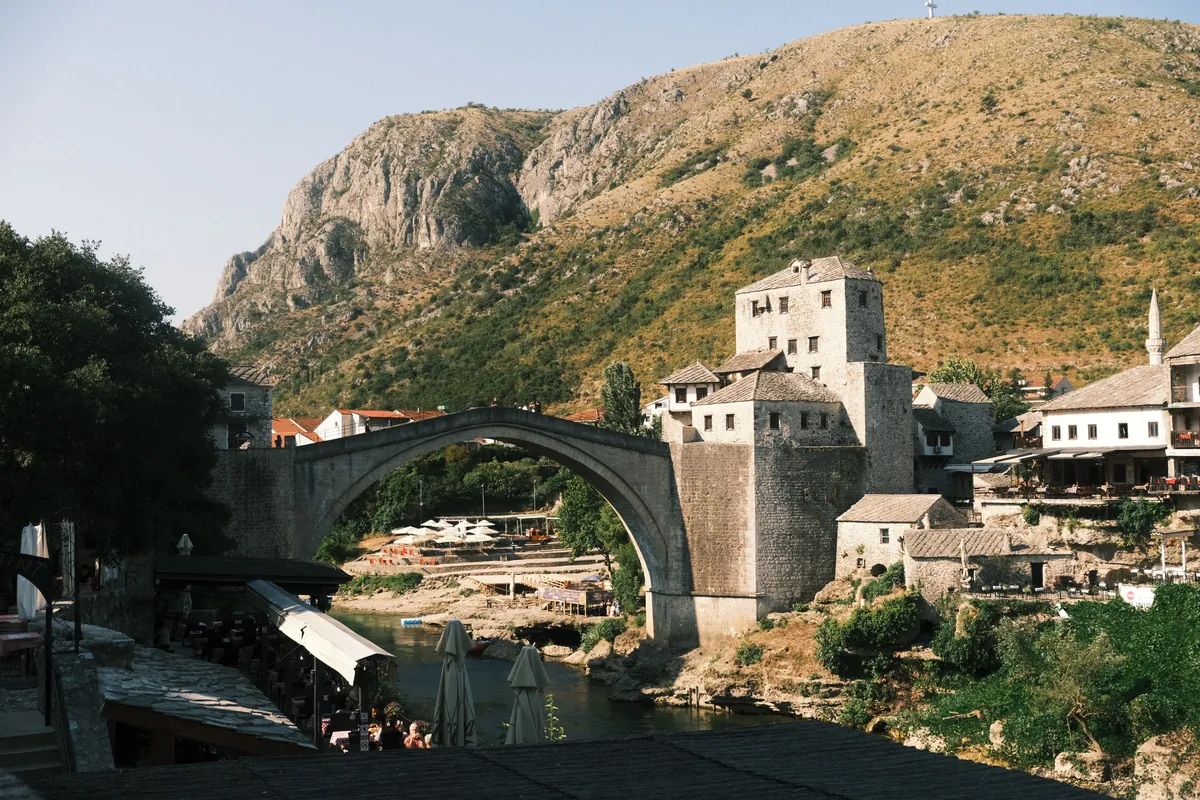
Bosnia Bridges & Bazaars begins in Mostar at Stari Most, the Old Bridge across the Neretva river that gives the city its name — mostari, the bridge keepers who once guarded it. Commissioned by Suleiman the Magnificent in 1557 and designed by Mimar Hayruddin, a student of the Ottoman architect Mimar Sinan, the single-arch stone bridge took nine years to complete and, on finishing in 1566–67, was the widest human-made arch in the world; it stands 24 metres above the river, spans 30 metres and is flanked by two fortified towers, Halebija and Tara. Destroyed by shelling during the Croat–Bosniak War on 9 November 1993, the bridge was rebuilt using Ottoman-era construction techniques by an international coalition led by UNESCO and the World Bank, reopening on 23 July 2004; each summer since 1968 it has hosted a diving competition in which local divers leap from the parapet into the Neretva below, a tradition now part of the Red Bull Cliff Diving World Series.
From Mostar the route reaches Baščaršija, Sarajevo's old bazaar and historic centre, founded in 1462 when Isa-Beg Isaković built the Ishaković han on the Miljacka's north bank. Ottoman-era craft quarters and mosques grew up around the site through the 16th century, led by the Gazi Husrev-beg Mosque of 1530, and the bazaar once held an estimated 12,000 commercial and craft shops trading alongside Venetian and Ragusan merchant colonies; its surviving landmarks include the Old Orthodox Church and the Old Synagogue, built between 1581 and 1587 and now home to the Jewish Museum of Bosnia and Herzegovina, along with covered bezistan markets still standing from the same century.
The trip continues to Kravica Waterfall, a wide tufa cascade on the Trebižat River in Herzegovina's karst country, about 40 kilometres south of Mostar near Ljubuški. The falls drop roughly 25 metres into a lake some 120 metres in radius at their base, with a small grotto of calcium-carbonate stalactites nearby, and were historically owned by Zaim-beg Selimić, a municipal councillor and benefactor from Ljubuški; the surrounding arid karst landscape turns green each spring as the falls run at their fullest, and cafés and picnic grounds line the approach to the water.
The route closes at Vrelo Bosne, a public park and protected Nature Monument set around the source springs of the Bosna river at the foothills of Mount Igman, on the outskirts of Sarajevo in the municipality of Ilidža. A three-kilometre avenue lined with Austro-Hungarian-era buildings leads from a spa complex toward the springs, passing a 16th-century bridge rebuilt from Roman-era stones, and the park — its trees cut for fuel during the Bosnian War and restored by local volunteers in 2000 — now draws more than 60,000 visitors a year to walk its paths beside bubbling streams and small waterfalls, closing out an eight-day route that has carried the traveller from a rebuilt Ottoman bridge in Mostar through Sarajevo's old bazaar, a Herzegovinian waterfall and a spring-fed park at the edge of the capital.
Text adapted from the linked articles under CC BY-SA 4.0; edited for length.
Every dimension the Taro team tags this pack with — filter by any of these on the packs page.
Share your travel month, group size, budget comfort, and must-do experiences. The Taro team will shape the right route before any payment conversation.