Arctic Svalbard Polar Bears
8DFrom ₹6,85,000
A 5-day mid-range trip to Belgrade, Serbia, taking in Belgrade Fortress, Skadarlija bohemian quarter, Zemun riverside and Petrovaradin Fortress.
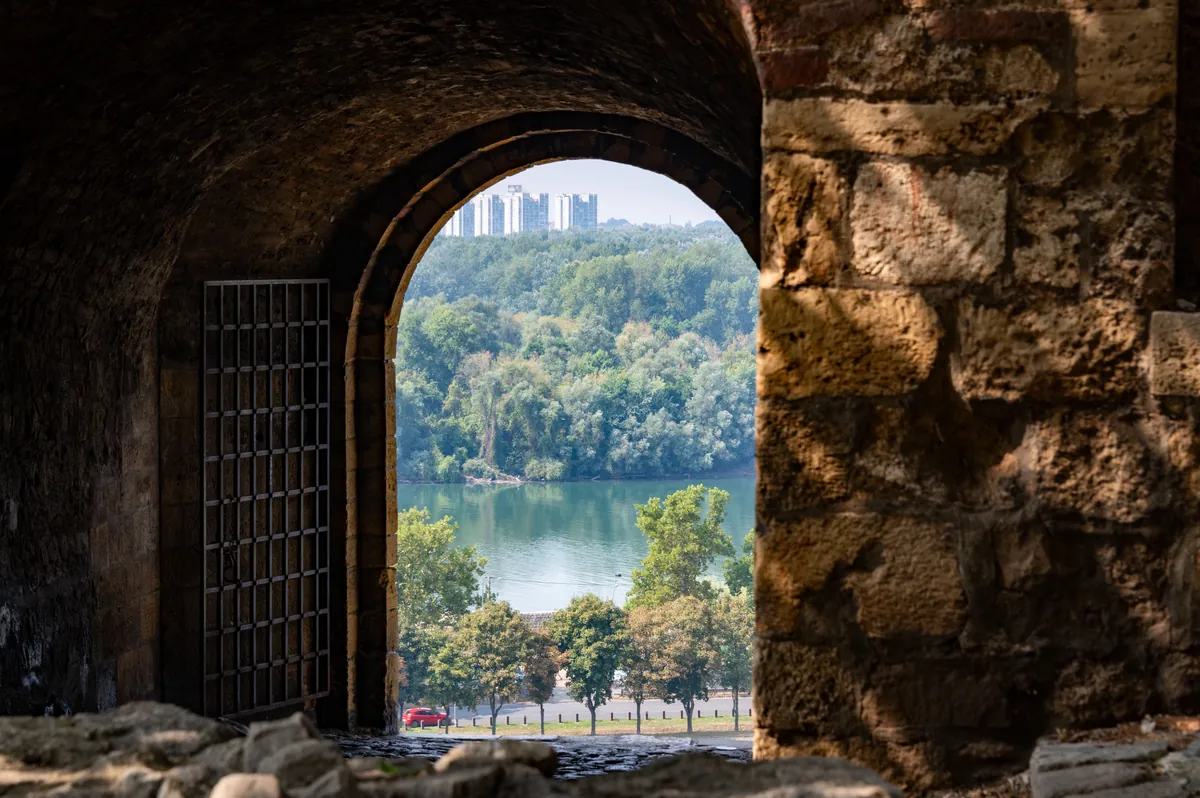
Belgrade Fortress & Riverside opens at the Belgrade Fortress itself, standing on a 125.5-metre ridge above the confluence of the Sava and Danube rivers in the Stari Grad municipality and comprising the old citadel's Upper and Lower Town together with Kalemegdan Park. The fortress marks the historical core of Belgrade — founded in the 3rd century BC as Singidunum by the Celtic Scordisci tribe, later held by Rome as part of its frontier against 'barbarian' Central Europe, and rebuilt around 535 by the Byzantine Emperor Justinian I after repeated destruction. The name Belgrade, meaning 'white town' in most Slavic languages, was first recorded in AD 878, by which point the fortress had already changed hands repeatedly between Bulgarian and Byzantine rulers — a pattern of contested control that continued for centuries afterward.
From the fortress the route drops into Skadarlija, Belgrade's bohemian quarter, less than 300 metres north-west of Terazije and centred on the short, winding Skadarska Street. Settlement in the area began around 1717 on what was then empty heath, with the street's character taking shape from 1830 when Roma families settled in abandoned trenches in front of the old ramparts, followed from 1835 by Serb and Turkish settlers who built the first proper houses with gardens. Protected by law since 1967 as a cultural-historical unit, Skadarlija today ranks as Belgrade's second most-visited attraction after Kalemegdan, likened locally to Montmartre in Paris for its concentration of traditional architecture and bohemian atmosphere.
The trip continues to Zemun, a separate town until it was absorbed into Belgrade in 1934, sitting on the Danube's right bank upstream of the city centre. Known in antiquity as the Celtic and Roman settlement of Taurunum, Zemun passed to the Kingdom of Hungary in the 12th century and was granted in the 15th century to the Serbian despot Đurađ Branković, before becoming an important Ottoman military outpost after the fall of the Serbian Despotate in 1459 — a long frontier history reflected today in its riverside core of Donji Grad, Gardoš, Ćukovac and Gornji Grad.
The route closes at Petrovaradin Fortress, nicknamed the 'Gibraltar on the Danube' and standing across the river in the town of Petrovaradin, part of Novi Sad. Its present southern section was begun in 1692 under Charles Eugène de Croÿ following the Austrian capture of Petrovaradin from 150 years of Ottoman control during the Great Turkish War, with major construction continuing from 1753 to 1776 and an elaborate four-level system of anti-mine tunnels, proposed by the engineer Albrecht Heinrich Schroeder, finally completed the same year. That tunnel network today runs over 16 kilometres, and archaeological digs at the site have traced continuous settlement back to a Paleolithic camp dated to between 19,000 and 15,000 BC.
Over five days the pack follows the Sava-Danube confluence from the ancient citadel at Kalemegdan, through the bohemian lanes of Skadarlija, across to the old Ottoman frontier town of Zemun, and upriver to the tunnelled fortress at Petrovaradin — a route across more than two millennia of contested riverside fortification.
Text adapted from the linked articles under CC BY-SA 4.0; edited for length.
Every dimension the Taro team tags this pack with — filter by any of these on the packs page.
Share your travel month, group size, budget comfort, and must-do experiences. The Taro team will shape the right route before any payment conversation.