Abu Dhabi + Yas Island
5DFrom ₹1,05,000
Sundarbans mangrove tiger boat safari, Dhaka rickshaw city.
Bangladesh Sundarbans + Tigers begins in Dhaka, the capital and largest city of Bangladesh, home to an estimated 36.6 million people, making it the second-largest city by population in the world and widely considered its most densely populated built-up urban area. The city's own name has an uncertain origin, variously traced to the dhak tree once common in the area, to Dhakeshwari, the region's patron Hindu goddess, or to the dhak drum once played there by official order. Urban settlement here dates back to the first millennium, when the area was part of the ancient Bikrampur district under the Sena dynasty and later the historic district of Sonargaon, before Dhaka itself became capital of the Mughal province of Bengal, Bihar and Orissa in 1610. Over 6 days the pack moves from that capital south to the mangrove tiger reserve on the delta, into Dhaka's own old city, and out to a working seaport and a historic river steamer.
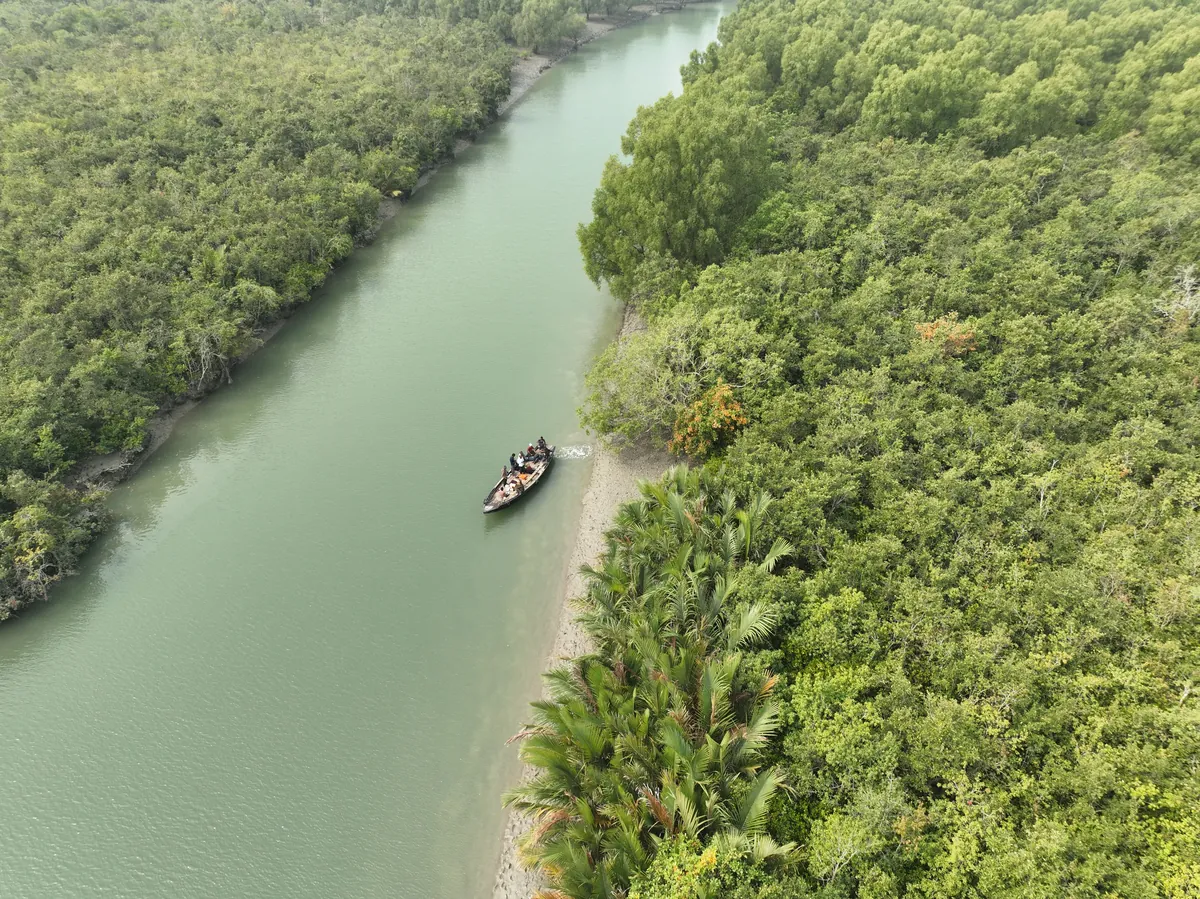
The pack's tiger reserve sits within the Sundarbans, a mangrove forest formed in the Ganges Delta by the confluence of the Ganges, Brahmaputra and Meghna rivers where they meet the Bay of Bengal. The forest spans from the Hooghly River in India's West Bengal all the way to the Baleswar River in Bangladesh's Khulna Division, and is made up of closed and open mangrove forest, agricultural land, mudflats and barren ground, threaded through by tidal waterways — the same waterways that carry visitors into the reserve from the Bangladeshi side.
Back in the capital, Old Dhaka is the term for the historic core of the city, set on the banks of the Buriganga River. In its own era it ranked among the largest and most prosperous cities on the Indian subcontinent and stood at the centre of the worldwide muslin trade, a settlement whose presence in the area dates as far back as 500 to 200 BC, when it passed in turn through the ancient Mahishya kingdom of Vanga, the Buddhist and Hindu kingdom of Kamarupa, the Pala Empire and the Chandra dynasty before falling under the Hindu Mahishya Sena dynasty. Many of its British- and Mughal-era buildings are today at risk of demolition for modern apartment blocks, and while conservationists have pushed for their protection, the government has so far shown limited interest in preserving them.
The Port of Mongla, in Khulna Division near the north shore of the Bay of Bengal on the Pashur river, is Bangladesh's second-largest and second-busiest seaport after the Port of Chittagong. It was founded in 1950 to serve the south-western region of what was then East Bengal, operating originally under the name Chalna Port, and as recently as July 2024 India obtained rights to operate a terminal at the port — a working harbour that gives the pack a different kind of stop from the tiger reserve and old city that came before it.
The trip's rocket steamer refers to the fleet of paddle steamers long operated by the Bangladesh Inland Water Transport Corporation on the country's rivers, withdrawn from regular commercial service in 2022. Of the four vessels, the PS Ostrich, built in 1929, has since been renovated and leased to a private tour operator, the PS Lepcha (1938) and PS Tern (1950) have been put out to tender for similar leases, and the PS Mahsud, built in 1928, is being kept by the government specifically for tourism — the same paddle steamers that give this pack its closing ride.
Text adapted from the linked articles under CC BY-SA 4.0; edited for length.
On documentation, this trip is typically handled on arrival, going by this trip’s visa-complexity band — treat that as a planning signal only, and verify exact, current requirements with the relevant embassy or consulate before booking. It runs 6 days, from ₹55,000 per person.
Every dimension the Taro team tags this pack with — filter by any of these on the packs page.
6 days across Bangladesh, starting from ₹55,000 per person.
Suited to Couples and Friends, with a suitable option for families and a moderate activity level.
This trip falls into the on-arrival complexity band. Always confirm exact, current requirements with the relevant embassy or consulate before booking — this is a planning signal, not a legal statement.
Share your travel month, group size, budget comfort, and must-do experiences. The Taro team will shape the right route before any payment conversation.