Costa Rica Rainforest + Beaches
8DFrom ₹1,85,000
A 5-day premium trip to San Blas Islands, Panama, taking in Guna Yala comarca, Gardi Sugdub island, Mola textile craft and Carti Sugtupu village.
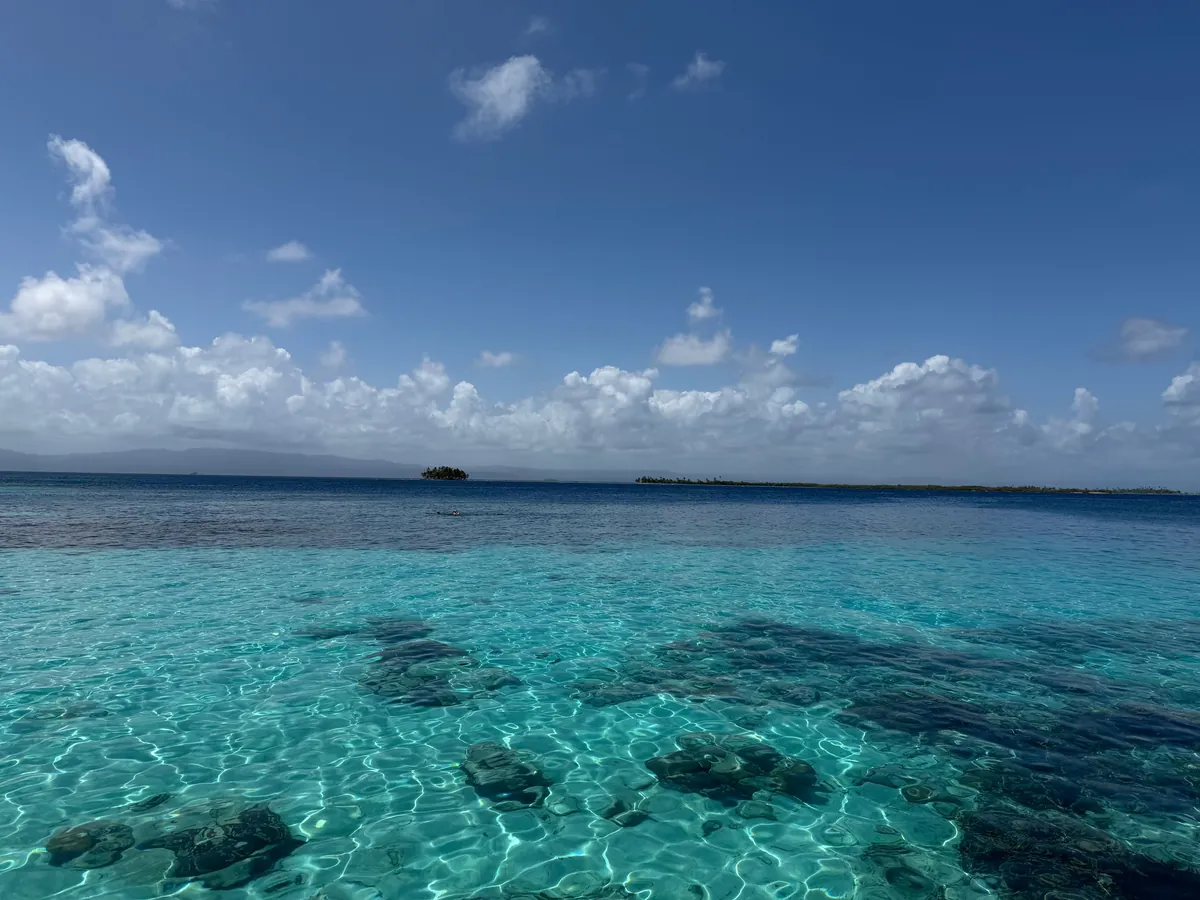
San Blas Islands Guna Yala Escape opens in Guna Yala, the indigenous comarca that occupies a narrow, 373-kilometre strip of Panama's Caribbean coast between the province of Colón and the Colombian border. Home to the Guna people — more than 95 percent of its roughly 32,000 residents — the comarca takes in an archipelago of 365 islands, of which about 50 are inhabited, governed by the General Congress Guna, the region's highest political authority, where elected community leaders called sahilas meet twice a year. The Guna settled these islands from the mid-19th century onward, moving out from riverside communities on the mainland to shelter from disease and insects while staying close to coastal trade routes, and won a formal measure of self-government after the 1925 Guna Revolution, when islanders under Nele Kantule briefly declared the independent Republic of Tule before a negotiated peace secured Panama's commitment to protect Guna customs and autonomy — a status later formalised as the Guna District of San Blas in 1938.
Within the archipelago lies Gardi Sugdub, also spelled Cartí Sugtupu, the largest of four populated Carti Islands at 400 metres long and 150 metres wide, sitting about 1,200 metres off the mainland coast and reachable by boat from the onshore settlement of Carti. The island holds a small harbour, a museum and a disused schoolhouse, and in June 2024 around 300 of its families relocated to the newly built mainland village of Isber Yala after years of overcrowding — a move some islanders describe as the country's first climate-driven relocation, tied to government projections that rising seas could submerge the island by 2050, though other residents point out the island has also grown through land reclamation and note that Guna families stayed through the 1882 Panama earthquake's three-metre waves.
Across the comarca, Guna women produce molas, the hand-sewn textile panels that form the front and back of the traditional dulemor blouse and give this stretch of Panama much of its visual identity. Made using reverse appliqué — cutting through two to seven layers of different-coloured cloth so each layer's colour shows through in a pattern, then turning and stitching the edges nearly invisible — a single mola can take anywhere from two weeks to six months to complete, with quality judged by the number of layers, the fineness of the stitching and the balance of its design. The craft traces back to Guna body-painting traditions that were transferred onto cloth after contact with Spanish colonists and missionaries, and it carries real political weight: a 1919 Panamanian ban on mola dress and nose piercing, part of a forced-assimilation drive, provoked such resistance among Guna women that the custom is credited with helping secure the comarca's later autonomous status.
The route closes back on Carti Sugtupu itself, where daily island life still runs on fishing, subsistence agriculture and the sale of molas that, for many Guna families, remains the principal source of household income. Seafood caught around the reefs and cayos — lobster, crab, squid and octopus — is flown out to Panama City markets, while small ecotourism guesthouses concentrated around the Gardi island group give visitors a close view of a five-day route built entirely around the palm-covered islets, coral reefs and stitched textiles of one of the Americas' longest-standing indigenous self-governed territories.
Text adapted from the linked articles under CC BY-SA 4.0; edited for length.
Every dimension the Taro team tags this pack with — filter by any of these on the packs page.
Share your travel month, group size, budget comfort, and must-do experiences. The Taro team will shape the right route before any payment conversation.