Bahamas Pig Beach + Diving
5DFrom ₹1,95,000
A 6-day premium beach break in Tulum with cenote diving and Mayan ruins.
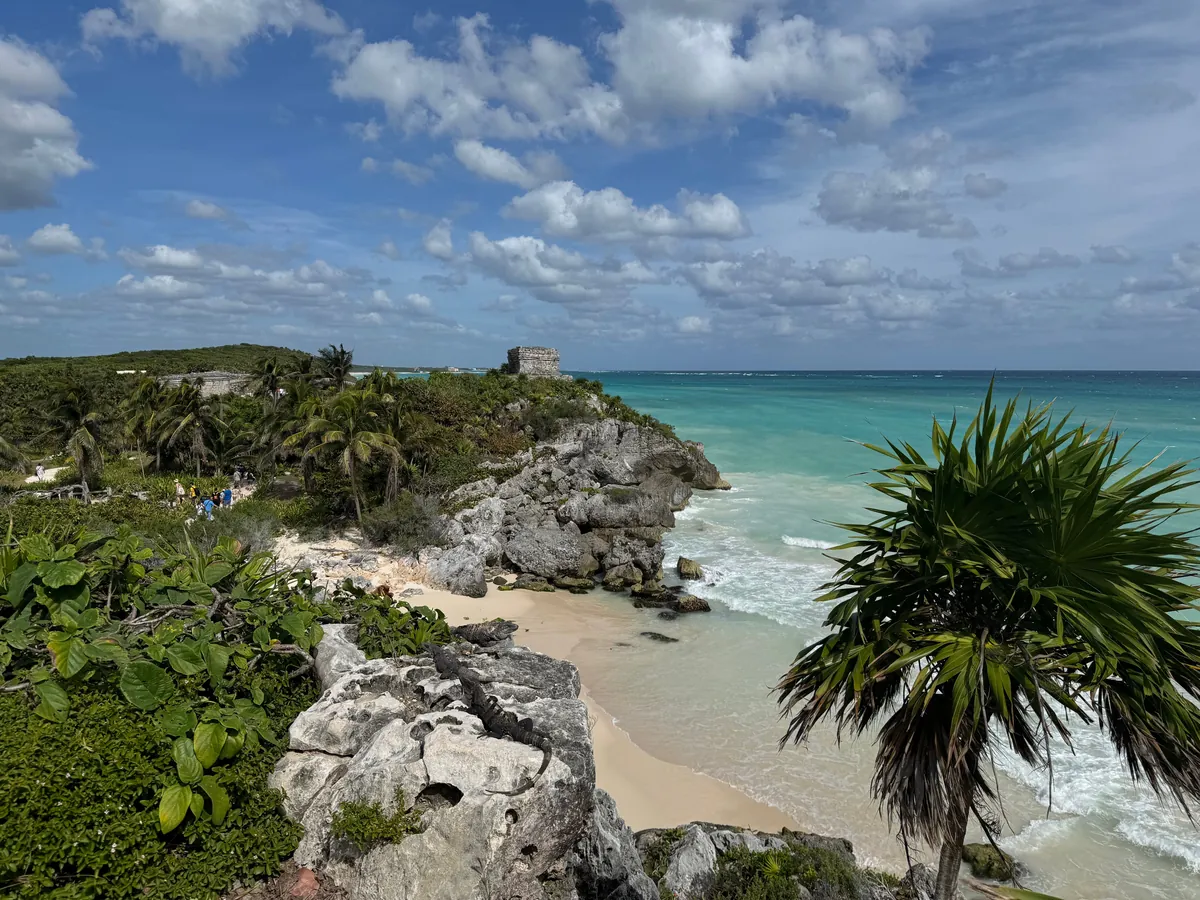
The route opens at the cliff-top Mayan ruins of Tulum, a walled port city built atop 12-metre cliffs on the Yucatán Peninsula's Caribbean coast that served as an outlet for the larger inland city of Coba. Tulum reached its greatest prominence between the 13th and 15th centuries and was among the last cities built and occupied by the Maya, its people remaining for roughly seventy years after Spanish exploration began before the city was finally abandoned by the end of the 16th century. It was defended by a landward wall averaging 3 to 5 metres high and up to 400 metres long, with watchtowers at its corners, while its most striking structures — El Castillo, the Temple of the Frescoes and the Temple of the Descending God — are decorated with images of a winged 'diving god' figure and, in the Temple of the Frescoes, murals in a style associated with highland Mexico. A small shrine on El Castillo is believed to have served as a beacon guiding trading canoes through a break in the offshore reef.
North of the ruins, the Dos Ojos cenote system is part of a flooded cave network whose exploration began in 1987 and which was found in January 2018 to connect with the neighbouring Sistema Sac Actun, together forming the longest known underwater cave system in the world. The system's 28 known sinkhole entrances, or cenotes, and its clear water — visibility here is generally limited only by available light rather than water clarity — made it the site in 2010 of Carlos Coste's Guinness World Record for the longest distance swum underwater on a single breath, 150 metres.
Sian Kaʼan Biosphere Reserve, whose Yucatec Maya name means 'gate of heaven', was established in 1986 and became a UNESCO World Heritage Site the following year. More than 200 conservation projects run in partnership with scientists, fishermen and local communities protect its eight natural areas, which shelter species including the Yucatán black howler monkey, the American crocodile, the ocelot and the jabiru stork, alongside the offshore reefs of Banco Chinchorro.
The Coba ruins, 47 kilometres northwest of Tulum, were first settled between 50 BC and 100 AD and grew after 100 AD into one of the largest and most powerful Maya city-states in the northern Yucatán, its influence reaching across much of Quintana Roo and into Yucatán state between roughly 200 and 600 AD. The city is the hub of the largest known network of raised stone causeways, or sacbeob, built by the ancient Maya, and researchers identified the names of fourteen of its rulers, including a woman named Yopaat who governed between 500 and 780 AD, through work published in 2020. Its Nohoch Mul pyramid, 42 metres tall, carries carvings of the same 'Descending God' figure found at Tulum, and remains one of the few Maya pyramids in the region that visitors could still climb before closures during the COVID-19 pandemic.
Across the route, the journey traces a single Maya trading network built around the same coast and cave-fed water table: the fortified port of Tulum, the flooded caverns that once supplied its fresh water, the protected wilderness of Sian Kaʼan to its south, and the inland causeway hub of Coba that Tulum once served. Each stop belongs to the same Late Classic and Postclassic Maya world that linked coast and interior across the Yucatán.
Text adapted from the linked articles under CC BY-SA 4.0; edited for length.
Every dimension the Taro team tags this pack with — filter by any of these on the packs page.
Share your travel month, group size, budget comfort, and must-do experiences. The Taro team will shape the right route before any payment conversation.