Costa Rica Rainforest + Beaches
8DFrom ₹1,85,000
A 6-day premium trip to Panajachel, Guatemala, taking in San Pedro La Laguna, San Juan La Laguna weavers, Volcán San Pedro and Santiago Atitlán market.
Lake Atitlán Volcano Villages opens in San Pedro La Laguna, a town on the southwest shore of Lake Atitlán that sits at the base of Volcán San Pedro and has been home to the Tz'utujil Maya people for centuries. The town occupies a plateau with roads running down either side of a steep ridge to two docks on the lakeshore — a municipal dock connecting by boat to Panajachel, and a second linking to Santiago Atitlán — with a small beach area used for swimming and kayaking. San Pedro's roughly 13,000 residents are more than 90 percent indigenous, and alongside the Catholicism introduced during Spanish colonization, about half the population still practices traditional Maya rituals, including beliefs tied to xocomil, a midday wind said locally to "carry away sin." Local crops include corn, beans, coffee and avocado, and the Museo Tz'unun 'Ya documents the town's history and the formation of the lake itself.
A short boat ride away, San Juan La Laguna is a smaller, quieter municipality of villages where a local law bars outsiders from buying land, leaving a population that is about 95 percent Tz'utujil and an economy still centred on agriculture and, increasingly, tourism. The town's textile tradition runs through Trama Textiles, a women's weaving cooperative of just over a dozen members who work traditional Mayan backstrap looms; before tourism reached the lake around the turn of the millennium, women here had to carry their woven goods over the surrounding mountains to sell in other communities. Female-led cooperatives in San Juan have also revived traditional ethnobotanical dyeing, using native plants, bark and minerals to produce the organic colorants that distinguish the town's textiles within the region's artisan economy. The cooperative structure itself traces back to Guatemala's 36-year civil war, when women across the highlands organized weaving groups to support families left without income.
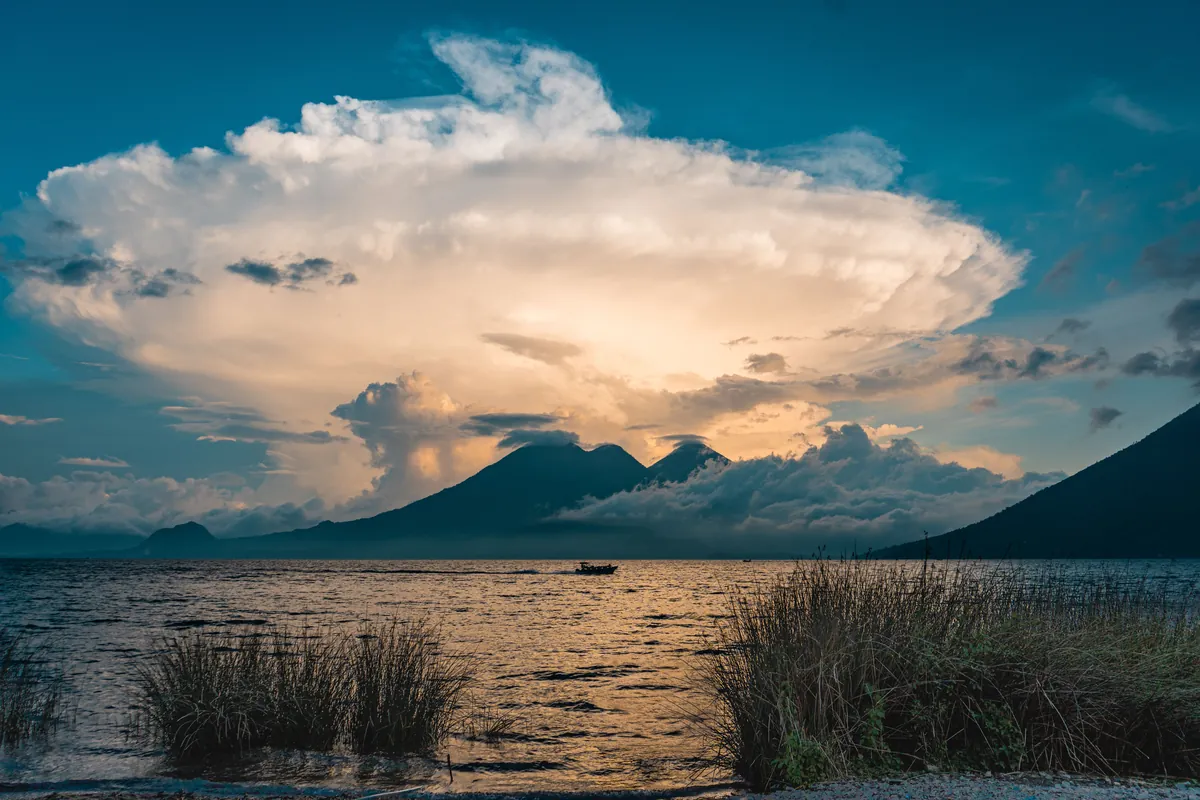
Rising directly behind San Pedro town is Volcán San Pedro itself, a 3,020-metre stratovolcano on the shore of Lake Atitlán and part of the Sierra Madre range, its slopes climbed by hikers who use the village at its base as a starting point. The volcano's near-symmetrical cone is one of three that ring this stretch of the lake, giving San Pedro's rooftops and docks their backdrop and giving climbers reaching the summit a wide view back down over the water toward Panajachel and Santiago Atitlán.
The route closes in Santiago Atitlán, a lakeside municipality sitting on a bay between Volcán San Pedro to the west, Volcán Tolimán to the southeast and Volcán Atitlán to the south, reached by boat from across the lake or by road via San Lucas Tolimán. Once the pre-Columbian capital of the Tz'utujil people under the name Chuitinamit, the town today is home to the Cojolya Weaving Center and Museum, run by the Cojolya Association of Maya Women Weavers, which traces the history and process of backstrap-loom weaving and the evolution of traditional Tz'utujil dress. Santiago Atitlán also carries a heavier modern history — Roman Catholic priest Stanley Rother was assassinated here by right-wing death squads in 1981, and in December 1990 Guatemalan soldiers opened fire on an unarmed crowd, killing 14 — memory that sits alongside the boats, looms and volcano views that make up this six-day loop of Lake Atitlán's shoreline villages.
Text adapted from the linked articles under CC BY-SA 4.0; edited for length.
Every dimension the Taro team tags this pack with — filter by any of these on the packs page.
Share your travel month, group size, budget comfort, and must-do experiences. The Taro team will shape the right route before any payment conversation.