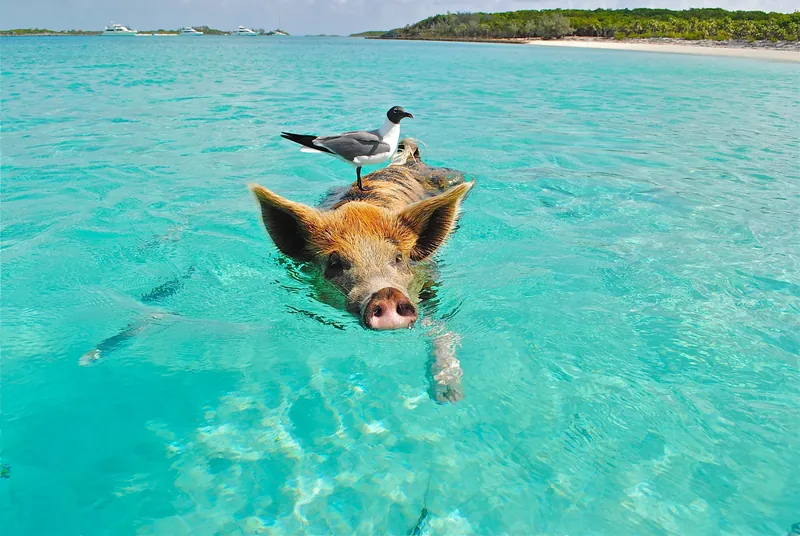
Bahamas Pig Beach + Diving
5DFrom ₹1,95,000
A 8-day premium trip to Santo Domingo, Dominican Republic, taking in Ciudad Colonial, Alcázar de Colón, Los Haitises National Park and Saona Island.
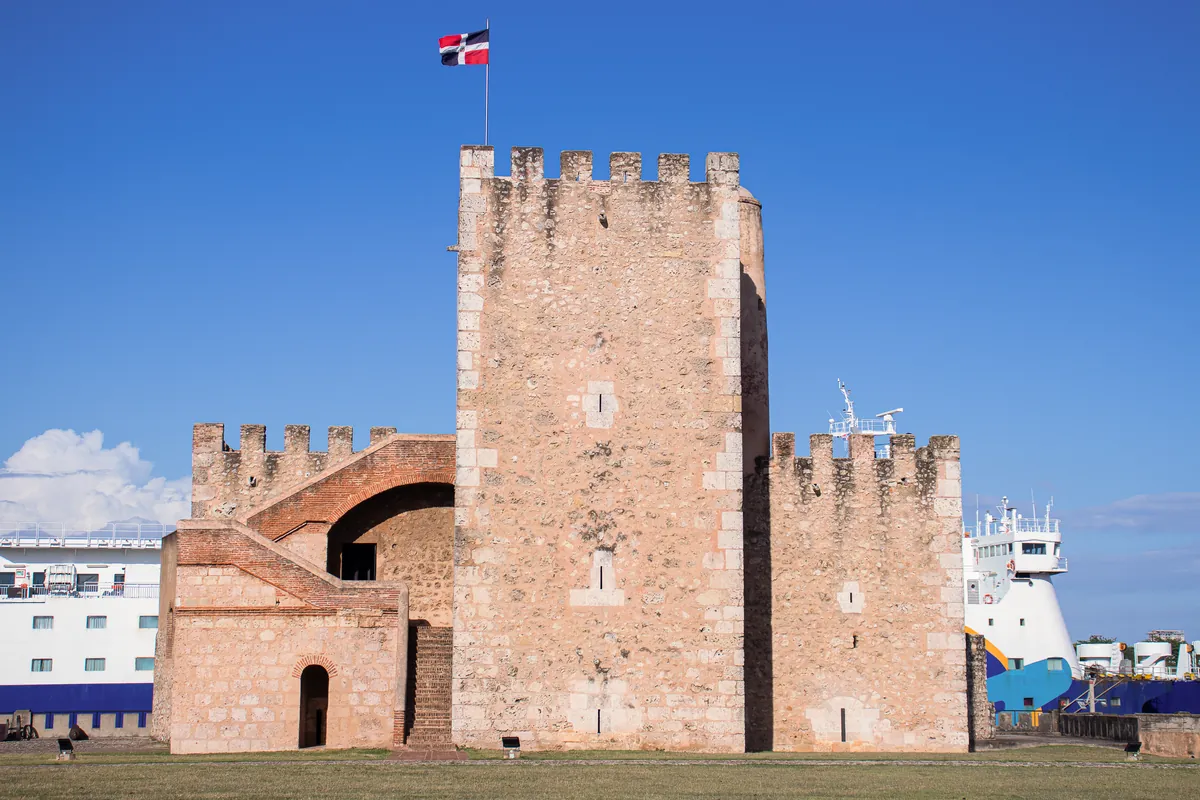
Santo Domingo to Punta Cana opens in Ciudad Colonial, the historic core of Santo Domingo and the oldest continuously inhabited European-founded settlement anywhere in the Americas. Established on the Ozama river's western bank in the early 1500s under governor Nicolás de Ovando, after a 1502 hurricane forced relocation from an earlier site on the opposite bank, the walled quarter covers just over a square kilometre and holds the New World's oldest paved street, the cobblestoned Calle Las Damas, laid in 1502 and lined by landmarks including the Fortaleza Ozama and the National Pantheon of the Dominican Republic. An English siege led by William Penn and Robert Venables was repelled here in 1655, and the district — the main tourist draw in a city whose government and commerce have since moved to more modern quarters — was declared a UNESCO World Heritage Site for its concentration of early colonial architecture.
At the heart of the old city stands the Alcázar de Colón, the first fortified European palace built anywhere in the Americas, constructed between 1511 and 1514 for Diego Columbus, son of Christopher Columbus and governor of the colony. Modelled on an existing house in Salamanca, Spain, and built in a largely Gothic style with Renaissance touches in its arcades, the palace was home to three generations of the Columbus family — Diego's children Juana, Isabel, Luis and Cristóbal were all born within its walls — before falling into disrepair by the mid-18th century; sacked once by the English pirate Francis Drake in 1586, the palace stood abandoned for nearly two centuries until its restoration into a museum between 1955 and 1957, and today its 22 surviving rooms, roughly half the original fifty, display a collection of European late medieval and Renaissance furnishings and a notable set of 15th-to-17th-century Flemish tapestries.
From the colonial capital the route reaches Los Haitises National Park on the country's remote northeast coast, established in 1976 and expanded to 826 square kilometres in 1996. A limestone karst landscape of conical hills, sinkholes and caverns bearing pre-Columbian pictographs and petroglyphs, the park receives around 2,000 millimetres of rain a year and shelters the greatest diversity of fauna among the Dominican Republic's protected areas, including two endangered endemic mammals, the Hispaniolan hutia and Hispaniolan solenodon, and the world's largest population of the endemic Ridgway's hawk; most visitors arrive by boat from Sabana de la Mar, passing mangrove-fringed islets alive with circling frigatebirds and pelicans.
The route closes on Saona Island, a 110-square-kilometre reserve within Cotubanamá National Park off the southeast coast, where Christopher Columbus landed in May 1494 and named the island for his native Savona. Pre-Columbian pictographs survive in the island's Cueva de Cotubanamá, and after centuries of depopulation following Spanish colonisation, the fishing village of Mano Juan was only established in 1944; the island today draws more visitors than any other protected area in the Dominican Republic, its white-sand beaches, lagoons and reefs home to green and loggerhead sea turtles, manatees and 112 recorded bird species — an eight-day arc from Santo Domingo's five-centuries-old streets to a fully protected island at the country's eastern edge.
Text adapted from the linked articles under CC BY-SA 4.0; edited for length.
Every dimension the Taro team tags this pack with — filter by any of these on the packs page.
Share your travel month, group size, budget comfort, and must-do experiences. The Taro team will shape the right route before any payment conversation.