Why Uzbekistan works
Uzbekistan, officially the Republic of Uzbekistan, sits in Central Asia bordered by Kazakhstan, Kyrgyzstan, Tajikistan, Afghanistan, and Turkmenistan, and is one of only two doubly landlocked countries in the world, the other being Liechtenstein. With more than 39 million people, it is the most populous country in Central Asia, and Uzbek, spoken by over 89 percent of the population, is the official language, alongside significant Russian- and Tajik-speaking minorities, the latter concentrated in the south around Samarkand and Bukhara. The country stretches 1,425 kilometres from west to east across 448,978 square kilometres, bordering all four of the other Central Asian states, a distinction unique among them.
The land's history runs through some of Central Asia's most consequential empires. Eastern Iranian nomads known as Scythians founded early kingdoms in Khwarazm, Sogdiana, and Bactria from the eighth to sixth centuries BC, and the region later prospered as a hub of Silk Road trade and, following the early Muslim conquests, as a centre of the Islamic Golden Age. The Khwarazmian Empire fell to the Mongol invasion of the thirteenth century, but the region's defining transformation came under Timur, who rose from tribal struggles in Transoxiana in the 1380s to build the Timurid Empire; he gathered artisans and scholars from across his conquered territories into his capital, Samarkand, and his grandson Ulugh Beg became one of the era's most consequential astronomers, presiding over what is remembered as the Timurid Renaissance. Turko-Mongol Shaybanids later conquered the Timurid territories in the sixteenth century, Russia absorbed most of Central Asia through the nineteenth century with Tashkent as the seat of Russian Turkestan, and the Uzbek Soviet Socialist Republic, created by national delimitation in 1924, became a major Soviet producer of cotton before Uzbekistan declared independence in 1991.
Samarkand's Registan Square stands as the clearest physical record of that Timurid inheritance: built around three madrasas — the Ulugh Beg Madrasa from the Timurid period itself, and the Sherdar and Tilakari madrasas added later under the Janid dynasty — the square is known for its soaring iwans, turquoise domes, and intricate tilework, and is counted among Central Asia's foremost examples of Timurid and Persian-influenced architecture. Uzbekistan holds five cultural UNESCO World Heritage sites in total, including the historic centres of Bukhara and Shakhrisyabz, the walled old city of Itchan Kala in Khiva, and the wider Samarkand "Crossroads of Cultures" listing, alongside two natural sites, the Western Tien-Shan and the Cold Winter Deserts of Turan, reflecting a landscape that runs from irrigated river valleys and oases to the vast Kyzylkum Desert.
Uzbekistan's terrain is largely dry and continental: less than 10 percent of the country is intensively cultivated irrigated land, the rest given over to desert and mountains, with Khazret Sultan, at 4,643 metres, as the country's highest recognised point. Summers average around 40 degrees Celsius and winters can drop to roughly minus 23, with annual precipitation typically no more than 100 to 200 millimetres, and the Aral Sea, largely desiccated by Soviet-era cotton irrigation, stands as one of the clearest markers of how thoroughly that dry climate and its water use have reshaped the region's geography.
Uzbek cuisine reflects the country's grain-farming economy and pastoral traditions: bread and noodles are central to the diet, and mutton, drawing on an abundant sheep population, appears throughout the country's dishes. Palov, a rice dish cooked with meat, carrots, and onions, is Uzbekistan's signature dish, prepared in regional variations across the country, alongside shurpa, a meat and vegetable soup, noodle dishes such as laghman and norin, and stuffed dumplings including manti and chuchvara. Green tea remains the everyday drink, served in the chaikhanas, or teahouses, that hold real cultural significance as gathering places, and tea itself functions as an automatic gesture of hospitality offered to any guest, alongside meals built around the same grains, meat, and vegetables that define Uzbek cooking more broadly.
- Uzbekistan — Wikipedia, CC BY-SA 4.0
- Registan — Wikipedia, CC BY-SA 4.0
Text adapted from the linked articles under CC BY-SA 4.0; edited for length.
Trip Snapshot
Highlights
Suitable For
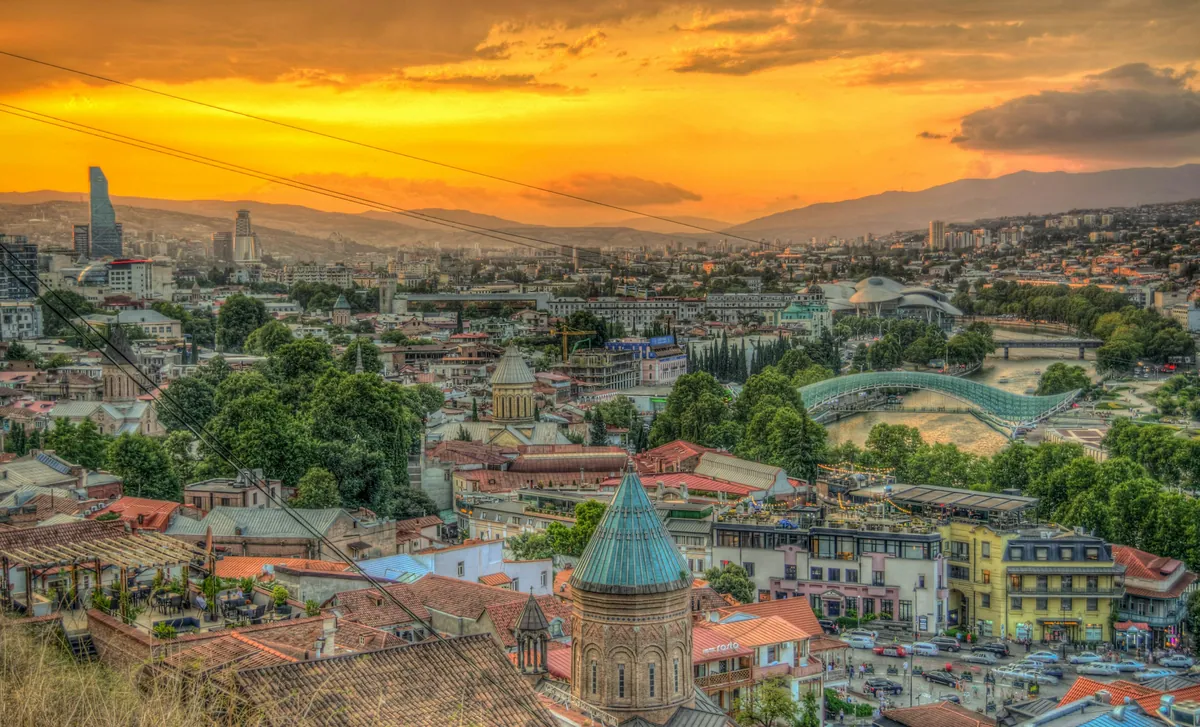
Uzbekistan, in frame
A quick visual sense of the landscapes, stays, and atmosphere your itinerary can be built around.
Build a Uzbekistan itinerary around your dates.
Share your travel month, group size, budget comfort, and must-do experiences. The Taro team will shape the right route before any payment conversation.