Why Tunis & Sidi Bou Said works
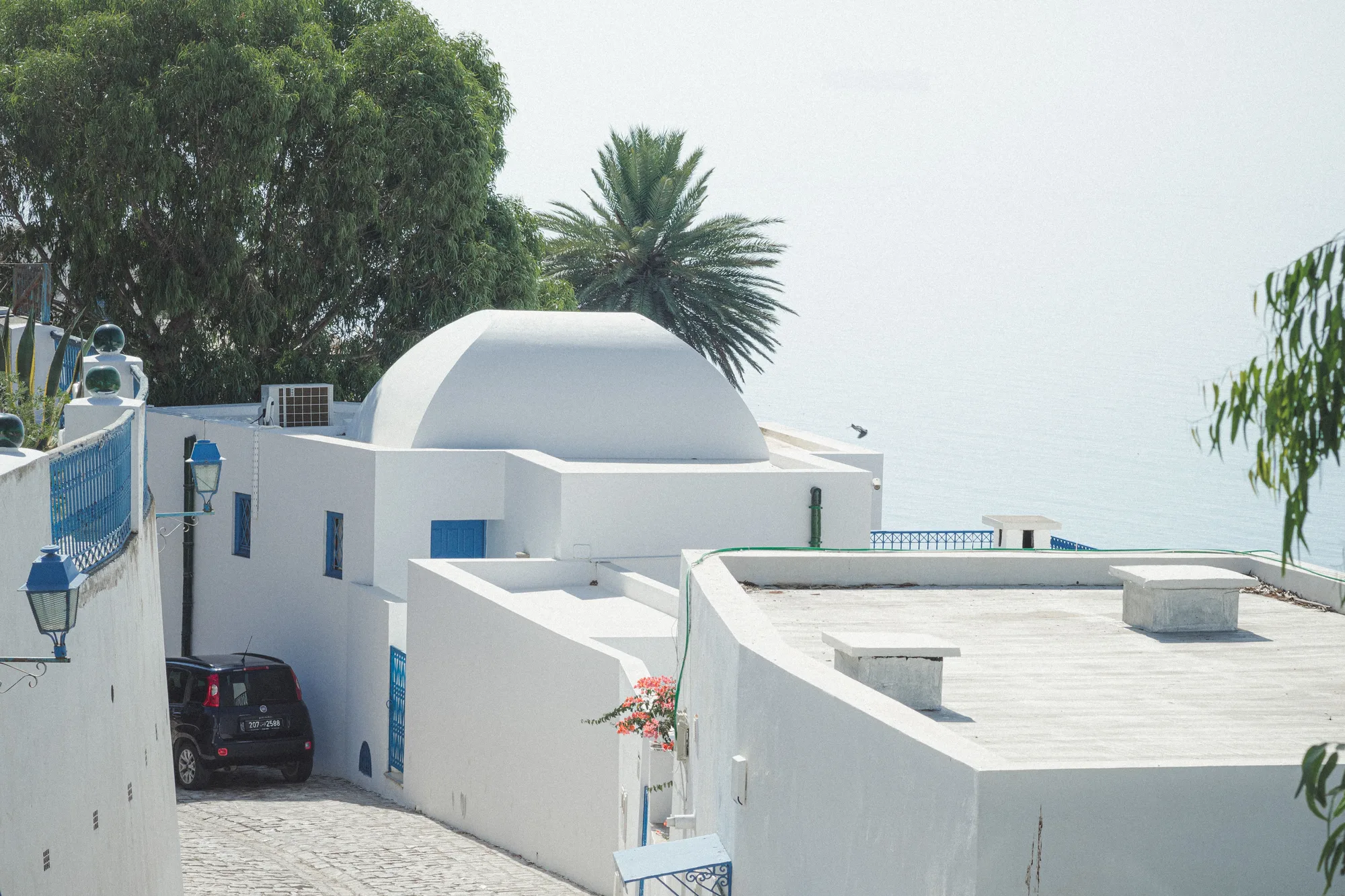
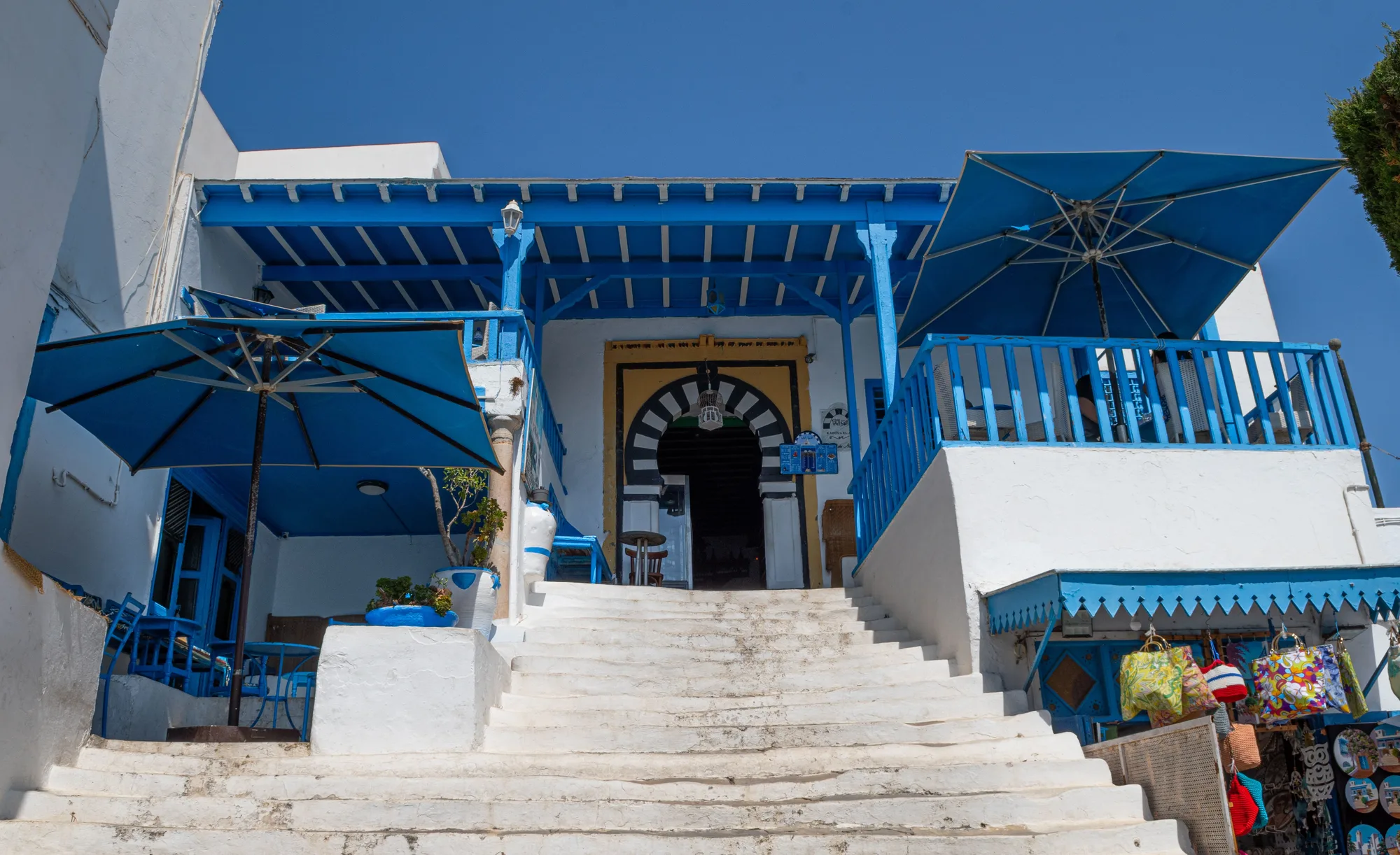
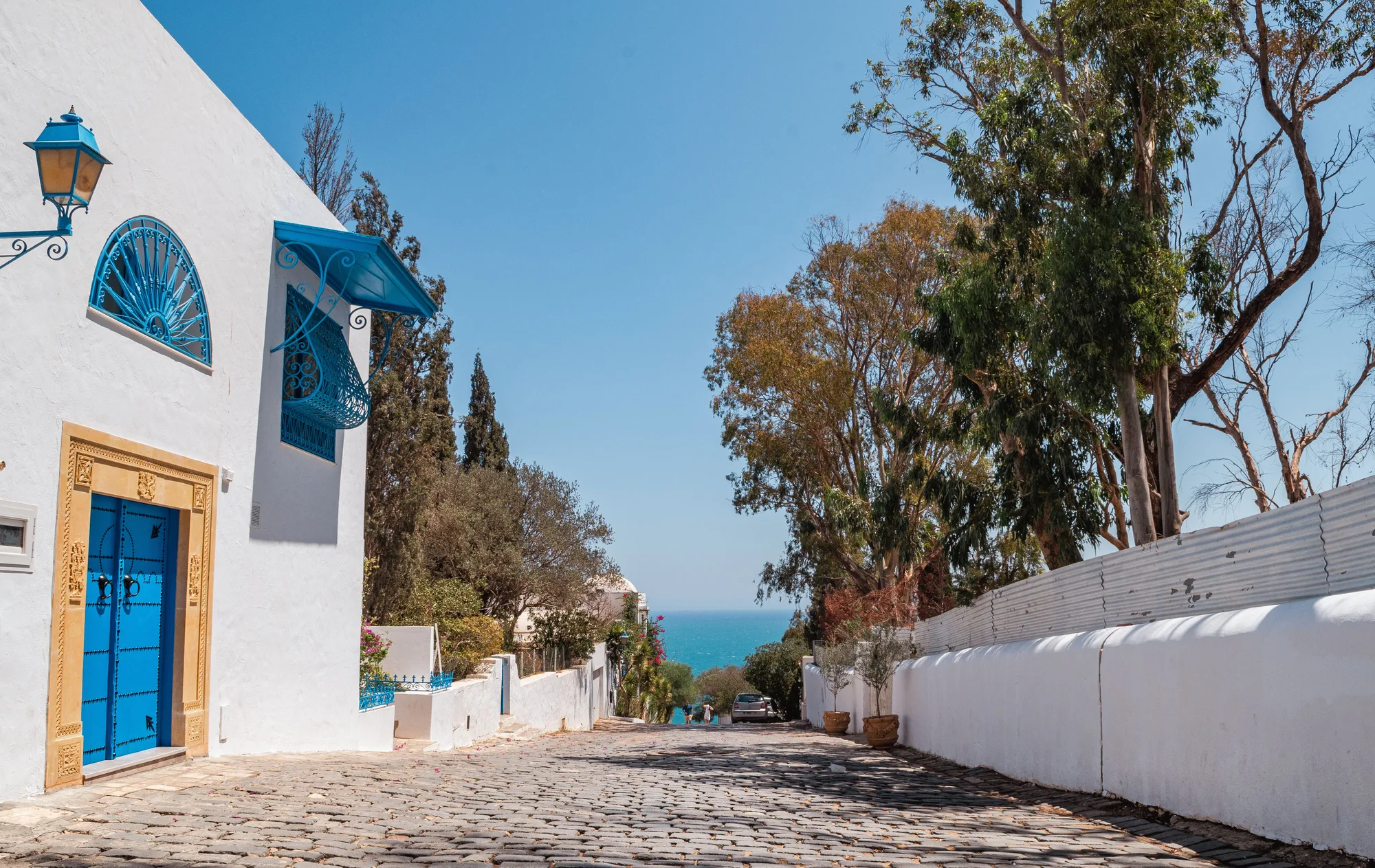
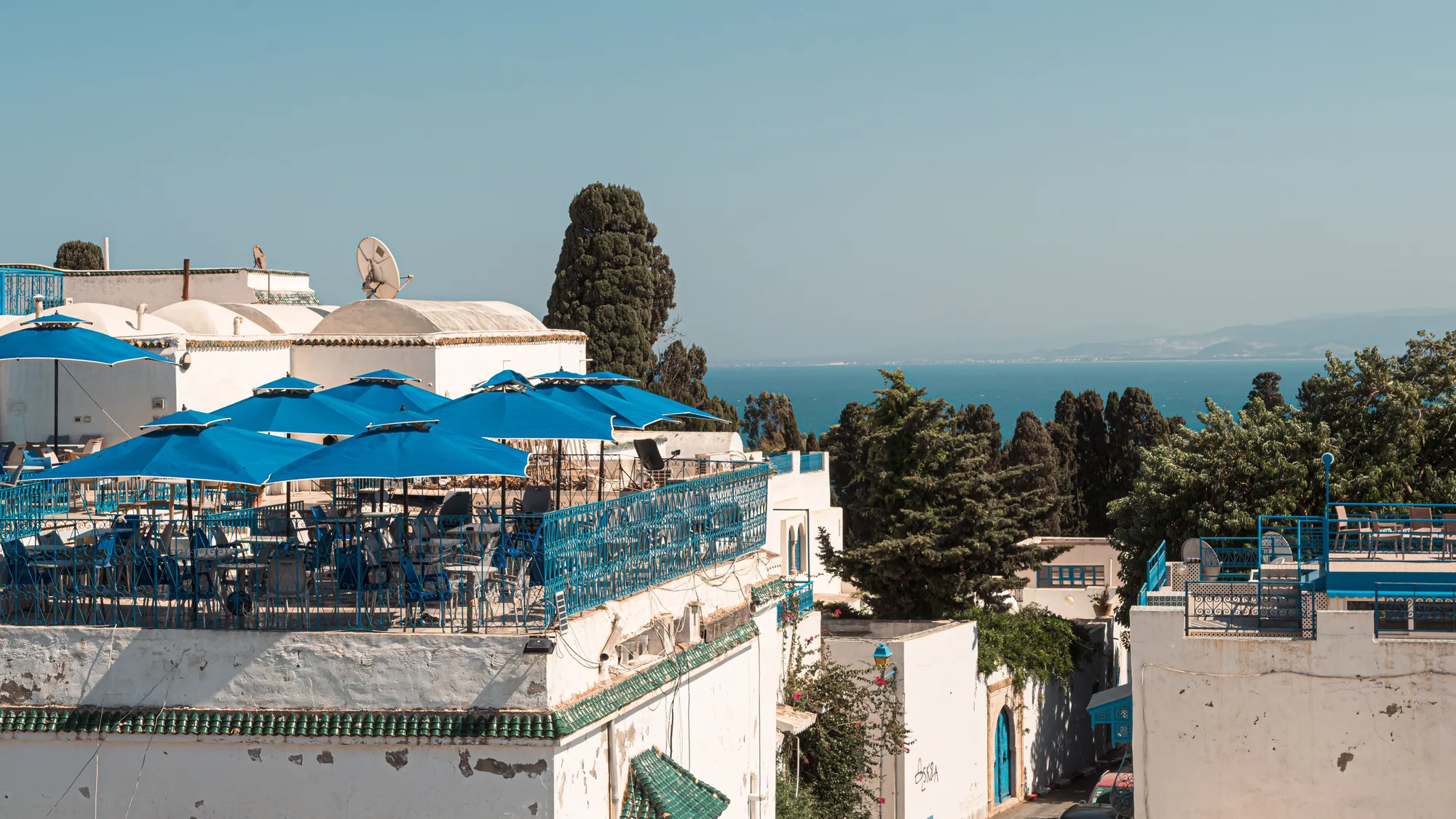
Tunis rewards visitors on two very different registers within a single day trip. The old city's medina, a UNESCO World Heritage Site founded in the 7th century, is a dense warren of covered souks selling perfume, chechia felt caps and copperware, its lanes threading past the Zitouna Mosque and grand Ottoman-era palaces now serving as museums or restaurants -- genuinely disorienting in the best way, and best explored slowly with no fixed destination. A short tram ride north along the coast, Sidi Bou Said flips the register entirely: a hilltop village where every building, by strict local ordinance, is painted white with Andalusian-blue doors, window grilles and balustrades, its café terraces looking out over the Gulf of Tunis from a clifftop that has drawn artists and writers, including Paul Klee and Simone de Beauvoir, for over a century. The village's cobbled main street climbs past souvenir stalls to Cafe des Nattes and Cafe Sidi Chabaane, both institutions for mint tea and views that stretch to the Mediterranean horizon. Between the two, the ruins of ancient Carthage -- the Phoenician and later Roman city that once rivalled Rome itself -- scatter across a modern suburb, with the Antonine Baths, Byrsa Hill and a small but excellent museum tracing the Punic Wars and the city's eventual absorption into the Roman Empire. All three sites connect easily by the TGM light rail, making a single well-planned day cover Tunisia's ancient, medieval and Mediterranean-chic layers at once.
Trip Snapshot
Suitable For
Tunis & Sidi Bou Said, in frame
A quick visual sense of the landscapes, stays, and atmosphere your itinerary can be built around.
Tunis & Sidi Bou Said questions, answered
When is the best time to visit Tunis & Sidi Bou Said?
March to May, September to November (mild Mediterranean shoulder seasons)
What is the weather like in Tunis & Sidi Bou Said?
Mediterranean, 10-35°C, hot dry summers, mild wet winters
Do I need a visa to travel to Tunisia?
Visa required for Indian nationals — apply in advance through the Tunisian embassy/consulate; no e-Visa currently available for India (verify visa rule before travel). Visa rules change without notice — confirm current requirements with the destination's embassy or consulate before you book.
What currency is used in Tunisia?
TND — Tunisian Dinar
What languages are spoken in Tunisia?
Arabic, French
Build a Tunis & Sidi Bou Said itinerary around your dates.
Share your travel month, group size, budget comfort, and must-do experiences. The Taro team will shape the right route before any payment conversation.