Why Taiwan works
Taiwan, officially the Republic of China, is an island country in East Asia lying between the East and South China Seas in the northwestern Pacific, with mainland China to the northwest, Japan to the northeast, and the Philippines to the south. Its main island covers 35,808 square kilometres, with rugged mountain ranges dominating the eastern two-thirds and flat, densely populated plains along the west, where Taipei, New Taipei City, and Keelung together form the largest metropolitan area. The wider territory under Taiwanese control comprises 168 islands in total, and with around 23.9 million people concentrated mostly on that western plain, Taiwan is among the most densely populated places in the world.
People have lived on Taiwan for at least 25,000 years, and the ancestors of today's Taiwanese Indigenous peoples settled the island around 6,000 years ago, developing the Austronesian language family that later spread across the Pacific. Large-scale Han Chinese migration began in the 17th century under Dutch colonial rule and continued under the Kingdom of Tungning, the island's first predominantly Han Chinese state, before the Qing dynasty annexed Taiwan in 1683. Qing China ceded the island to Japan in 1895 after the First Sino-Japanese War, and Japanese rule, which lasted until 1945, brought railways, an extensive sanitation system, and a formal education system alongside restrictive policies toward the Han and Indigenous populations. Following Japan's surrender in the Second World War, the Republic of China under Chiang Kai-shek and the Kuomintang took control, and the ROC government relocated to Taiwan entirely in 1949 after losing mainland China in the Chinese Civil War, setting the island on the separate political path it has followed since.
Taiwan's landscape rewards the trip inland as much as along the coast: the eastern mountains include Yu Shan, at 3,952 metres the highest peak on the island and, by that measure, the fourth-highest point on any island in the world, part of a chain of five rugged ranges running parallel to the east coast. The heavily forested eastern mountains support a wide range of wildlife and several protected ecoregions, in contrast to the intensively farmed and urbanised lowlands of the west. Taiwan's active tectonic setting, the same boundary responsible for its mountain ranges, also produces frequent earthquakes and submarine volcanic activity in the Taiwan Strait, a reminder that the dramatic terrain visitors see, from Taroko Gorge's marble canyon walls on the east coast to Sun Moon Lake in the central highlands, is still actively forming.
The island's climate follows its geography north to south: the north and centre are subtropical, the south is tropical, and the mountains are cooler and temperate, with the whole island seeing hot, humid weather from June through September and average rainfall around 2,600 millimetres a year. The summer East Asian Monsoon arrives with the rainy season in May and June, and typhoons are most frequent from July through September, while winters bring steady rain to the northeast and mostly sunny conditions to the central and southern parts of the island. This range of conditions, from marine tropical coastlines to temperate high country, is part of why Taiwan's landscapes vary so much between a short drive from Taipei's basin to the alpine terrain further inland.
Taiwanese culture blends traditional Chinese heritage, Indigenous Austronesian traditions, and decades of Japanese colonial influence, a mix that becomes most visible in the country's food. Well-known dishes include beef noodle soup, gua bao, braised pork rice, oyster vermicelli, and Taiwanese fried chicken, alongside bubble tea, invented in Taiwan in the 1980s and now found worldwide. Night markets are central to how Taiwanese food reaches both residents and visitors, drawing coverage abroad — The Guardian in 2014 named Taiwan's night markets among the finest street-food destinations anywhere — and the Michelin Guide began reviewing restaurants in Taiwan in 2018, formalising international attention that Taiwanese cuisine had built through its markets long before.
- Taiwan — Wikipedia, CC BY-SA 4.0
Text adapted from the linked articles under CC BY-SA 4.0; edited for length.
Trip Snapshot
Highlights
Suitable For
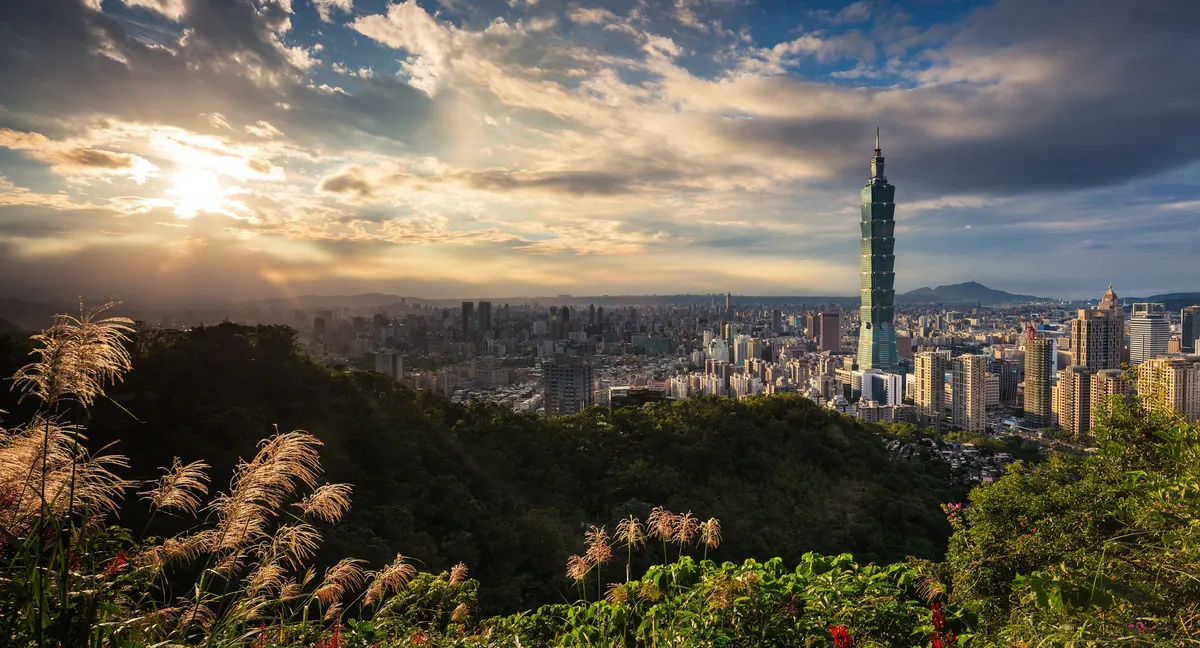
Taiwan, in frame
A quick visual sense of the landscapes, stays, and atmosphere your itinerary can be built around.
Build a Taiwan itinerary around your dates.
Share your travel month, group size, budget comfort, and must-do experiences. The Taro team will shape the right route before any payment conversation.