Why Sri Lanka works
Sri Lanka, officially the Democratic Socialist Republic of Sri Lanka and formerly known as Ceylon, is an island country in South Asia in the Indian Ocean, southwest of the Bay of Bengal and separated from India by the Gulf of Mannar and the Palk Strait. It shares maritime borders with the Maldives to the southwest and India to the northwest, and lies across the Bay of Bengal from Bangladesh and Myanmar to the northeast; Colombo is its executive and judicial capital, largest city, and cultural centre, while neighbouring Sri Jayawardenepura Kotte is the legislative capital. The country has a population of 22 million, about 74 percent Sinhalese and 15 percent Tamil, alongside long-established communities of Moors, Indian Tamils, Burghers, Malays, Chinese, and Vedda, and a documented history stretching back more than 3,000 years, with evidence of prehistoric human settlement dating back 125,000 years.
According to the Mahāvaṃsa, a Pali chronicle from the fifth century CE, Sinhalese history traditionally begins in 543 BCE with Prince Vijaya, who sailed to the island with 700 followers after being expelled from the Vanga kingdom and founded the Kingdom of Tambapanni near present-day Mannar. The Anuradhapura period that followed, from 377 BCE to 1017 CE, saw Anuradhapura serve as the country's capital for nearly 1,400 years, during which ancient Sri Lankans built distinctive tanks, dagobas, and palaces, and Buddhism arrived from India during the reign of Devanampiya Tissa, reshaping the island's society and its architecture.
Sri Lanka sits on the Indian Plate, mostly flat to rolling coastal plains rising into mountains only in the south-central interior, where Pidurutalagala, the island's highest point, reaches 2,524 metres. The island has 103 rivers, the longest being the 335-kilometre Mahaweli, feeding 51 natural waterfalls of at least 10 metres, including the 263-metre Bambarakanda Falls, along a coastline stretching 1,585 kilometres. Sri Lanka and the Western Ghats of India were among the first 18 global biodiversity hotspots identified for their high levels of species endemism, and the island has the highest biodiversity per unit area among Asian countries for flowering plants and nearly all vertebrate groups, with 27 percent of its 3,210 flowering plant species and 22 percent of its mammals found nowhere else, alongside a recorded avifauna of 453 bird species.
The island's tropical, ocean-moderated climate ranges from mean temperatures of 17°C in the Central Highlands, where frost can occur for a few winter days, up to 33°C in low-altitude areas, with monsoon winds off the Indian Ocean and Bay of Bengal driving sharply different rainfall patterns: the wet zone and windward highland slopes receive up to 2,500 millimetres of rain a year, the dry zone across much of the east, southeast, and north gets 1,200 to 1,900 millimetres, and the arid northwest and southeast coasts receive as little as 800 to 1,200 millimetres. In the nineteenth and twentieth centuries, Sri Lanka developed into a plantation economy known for cinnamon, rubber, and Ceylon tea, which remains a trademark national export today, an era that also saw modern ports built under British rule raise the island's importance as a centre of regional trade.
Sri Lanka's tourism industry has been recovering strongly in recent years: revenue reached more than $1.5 billion in the first half of 2024, a 78 percent increase year-on-year, while tourist arrivals rose to 1.01 million over the same period, up 62 percent from 2023, growth the government attributes to a global marketing campaign, improvements at SriLankan Airlines, and a free tourist visa programme introduced for visitors from selected countries, allowing stays of up to 30 days.
- Sri Lanka — Wikipedia, CC BY-SA 4.0
Text adapted from the linked articles under CC BY-SA 4.0; edited for length.
Trip Snapshot
Highlights
Suitable For
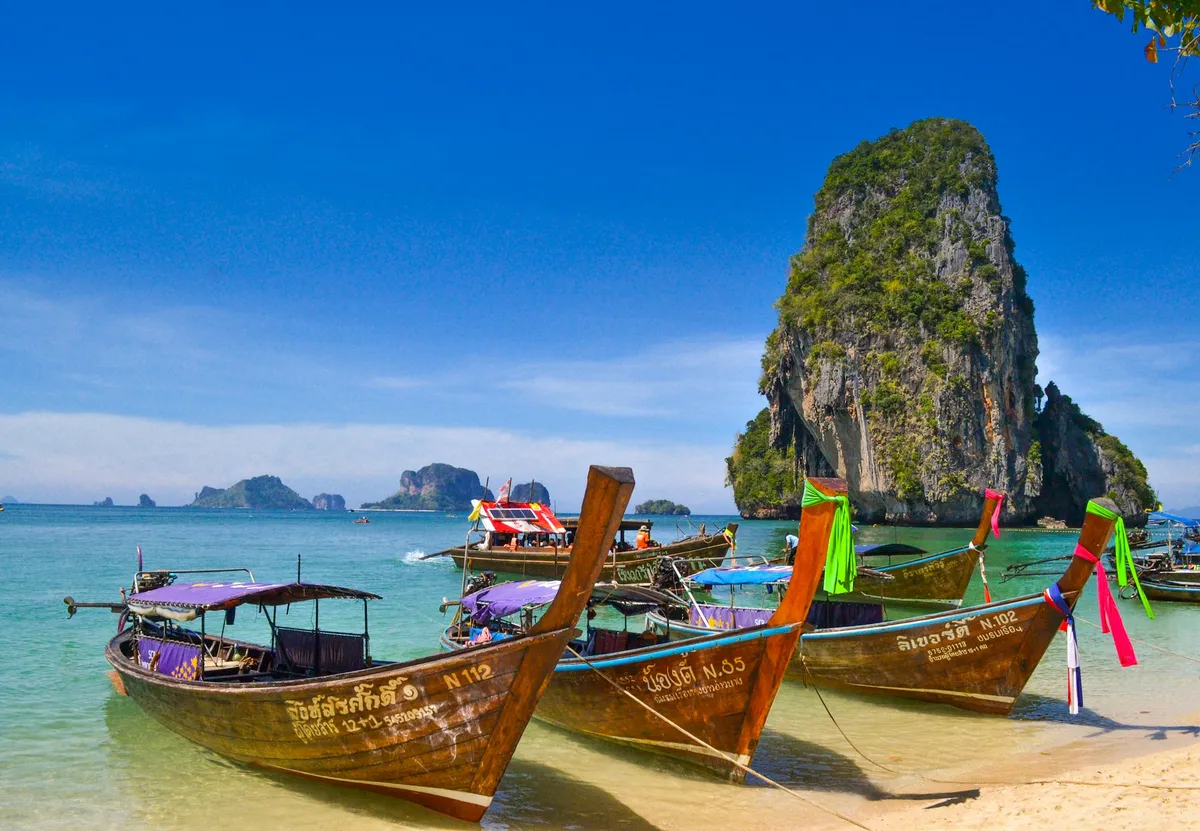
Sri Lanka, in frame
A quick visual sense of the landscapes, stays, and atmosphere your itinerary can be built around.
Sri Lanka questions, answered
When is the best time to visit Sri Lanka?
December to March (West), May to September (East)
What is the weather like in Sri Lanka?
Tropical, 27-30°C
Do I need a visa to travel to Sri Lanka?
ETA (Electronic Travel Authorization) required. Visa rules change without notice — confirm current requirements with the destination's embassy or consulate before you book.
What currency is used in Sri Lanka?
Sri Lankan Rupee (LKR)
What languages are spoken in Sri Lanka?
Sinhala, Tamil, English widely spoken
Build a Sri Lanka itinerary around your dates.
Share your travel month, group size, budget comfort, and must-do experiences. The Taro team will shape the right route before any payment conversation.