Why Rishikesh Yoga Retreat works
Rishikesh, also known as Hrishikesh, is a municipal corporation and tehsil of the Dehradun district in the Indian state of Uttarakhand, situated on the right bank of the Ganges and known as a pilgrimage town for Hindus associated with famous sages and yogis, its banks lined with temples and ashrams. Nicknamed the "Gateway to the Garhwal Himalayas," it is a vegetarian-only, alcohol-free city that has hosted the International Yoga Festival every year since 1999, a tradition that helped earn it the name Yoga Capital of the World. Rishikesh is also the starting point for the four Char Dham pilgrimage sites of Badrinath, Kedarnath, Gangotri, and Yamunotri, as well as for Himalayan destinations such as Harsil, Chopta, and Auli, and as of 2021 had a total population of 322,825 across the city and its 93 surrounding villages.
The town's history is bound up with the Ganges itself: Rishikesh formed part of the "Kedarkhand" described in the Skanda Purana, and legend holds that Rama performed penance here after killing the demon king Ravana, while his brother Lakshmana is said to have crossed the river using two jute ropes at the spot where the Lakshman Jhula suspension bridge now stands. The original 248-foot iron-rope bridge, built in 1889, was washed away by flooding in 1924 and rebuilt in 1927 by the United Provinces Public Works Department, connecting the Tapovan, Tehri, and Jonk, Pauri Garhwal districts, before collapsing again in 2020; a second, stronger bridge is being built in its place. A separate suspension bridge, Ram Jhula, was built nearby at Sivananda Nagar in 1986.
Geographically, Rishikesh sits at an average elevation of 340 metres in the Tehri Garhwal region, at the point where the Ganges, after flowing 249 kilometres through narrow Himalayan valleys, emerges from the mountains before reaching the plains at the pilgrimage town of Haridwar; because the river's major polluting points lie further downstream in Uttar Pradesh, the water at Rishikesh remains relatively unaffected. The city has been ranked 31st for air quality among Indian cities with a population under 300,000 under the National Clean Air Programme. Its climate is humid subtropical, with an average maximum temperature of 40°C and average minimum of 7°C, July as the wettest month with 444 millimetres of rainfall, and November the driest, with just 10 millimetres.
Rishikesh has served as a haven for yogis, saints, and practitioners since ancient times, but the city's global reputation grew sharply after the Beatles visited Maharishi Mahesh Yogi's ashram there in February 1968, drawn by his teaching of transcendental meditation; the band composed numerous songs during their stay, many of which appeared on their self-titled double album, known as the "White Album." Western visitors who followed in their footsteps established new yoga and meditation centres, reinforcing Rishikesh's identity as the Yoga Capital of the World, and many go on to train as certified yoga teachers themselves.
Daily life along the river centres on the Ganga Aarti, a Hindu ritual involving music and offerings to fire, performed at dusk at Triveni Ghat, while the Ram Jhula and Lakshman Jhula bridges connect to temples and ashrams along the eastern riverbank, including the Sivananda Ashram and Divine Life Society at Sivananda Nagar, founded by Swami Sivananda. Further afield, the Neelkanth Mahadev Temple sits in forest 28 kilometres from town, Vashishtha Guha, a cave associated with the sage Vashishtha, lies 21 kilometres to the north, and the Neergarh Waterfall, about 5 to 7 kilometres from Lakshman Jhula along the Rishikesh–Badrinath Highway, drops in two stages down rocky cliffs, drawing visitors for a swim in its stream during the summer months.
- Rishikesh — Wikipedia, CC BY-SA 4.0
Text adapted from the linked articles under CC BY-SA 4.0; edited for length.
Trip Snapshot
Highlights
Suitable For
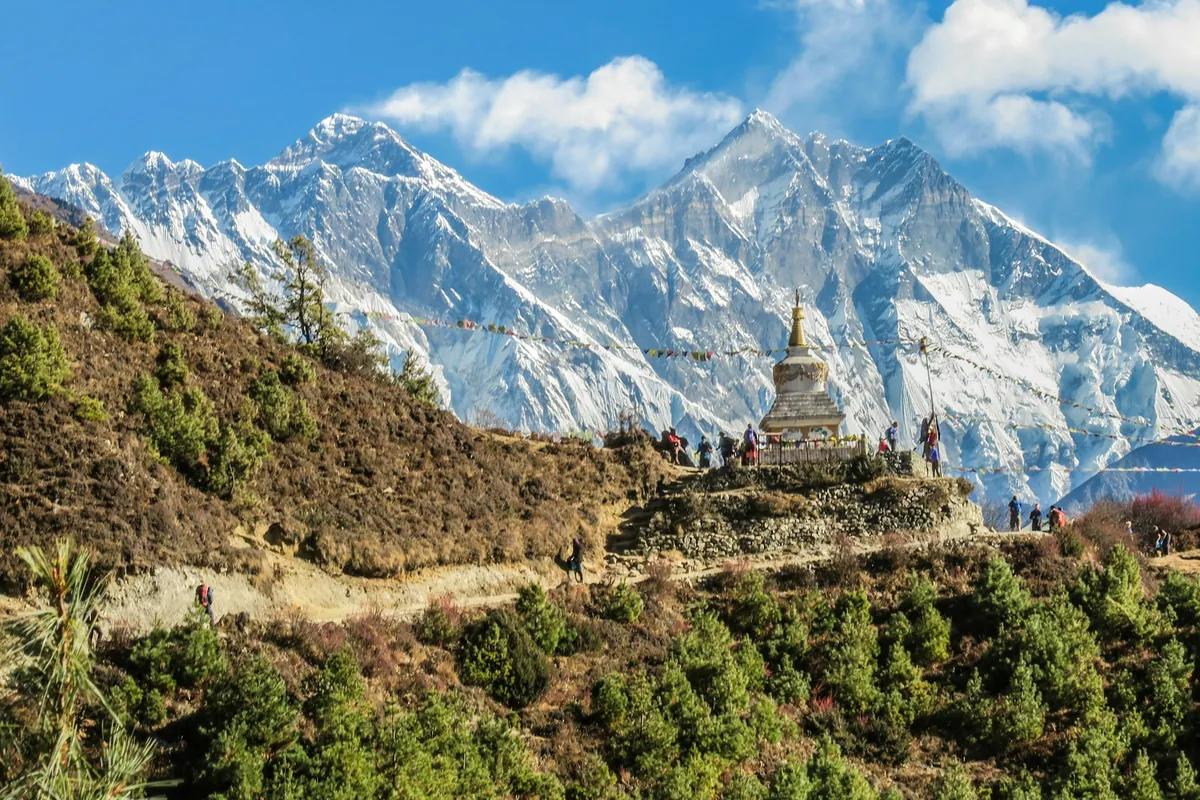
Rishikesh Yoga Retreat, in frame
A quick visual sense of the landscapes, stays, and atmosphere your itinerary can be built around.
Build a Rishikesh Yoga Retreat itinerary around your dates.
Share your travel month, group size, budget comfort, and must-do experiences. The Taro team will shape the right route before any payment conversation.