Why Punakha works
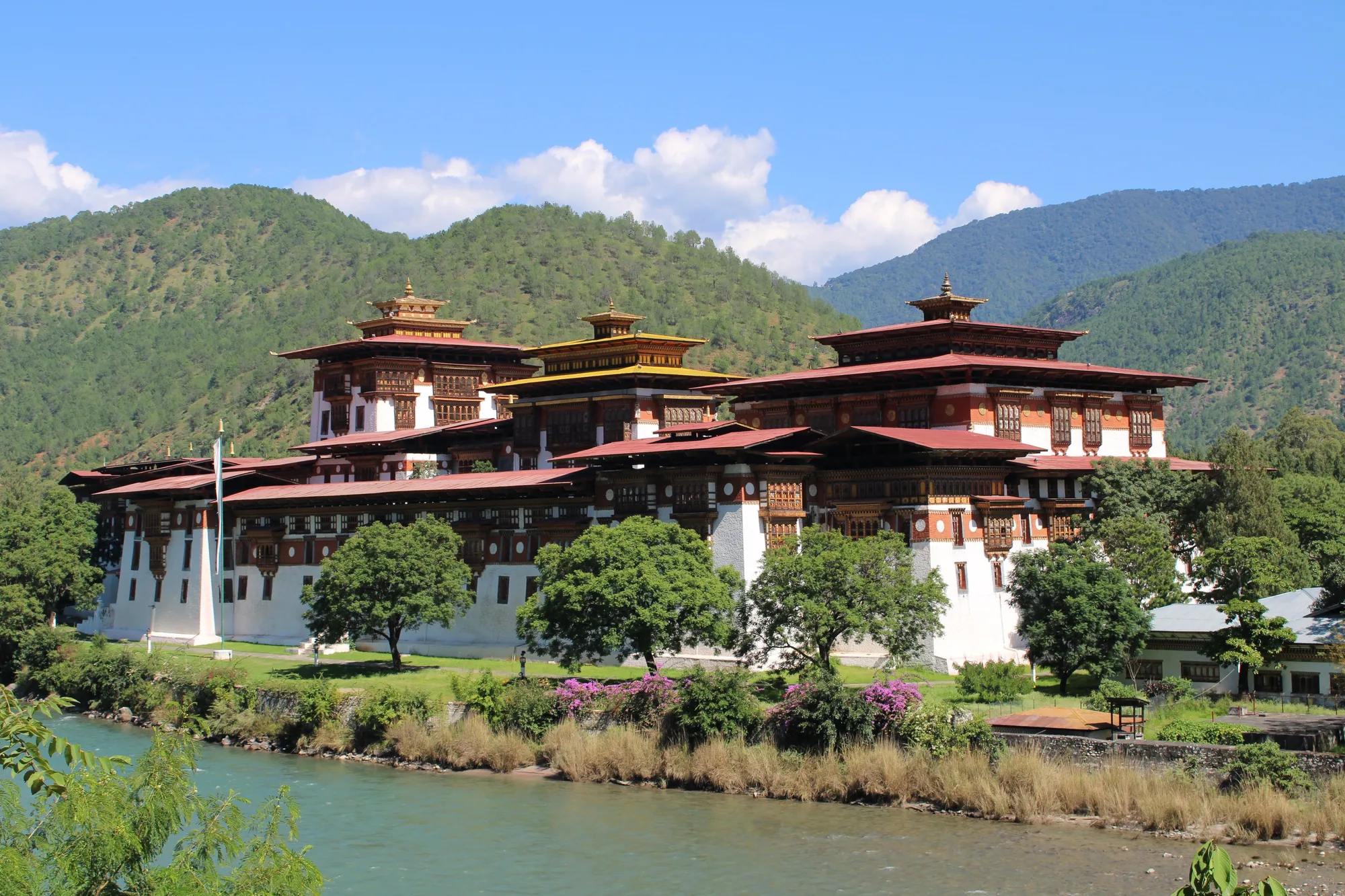
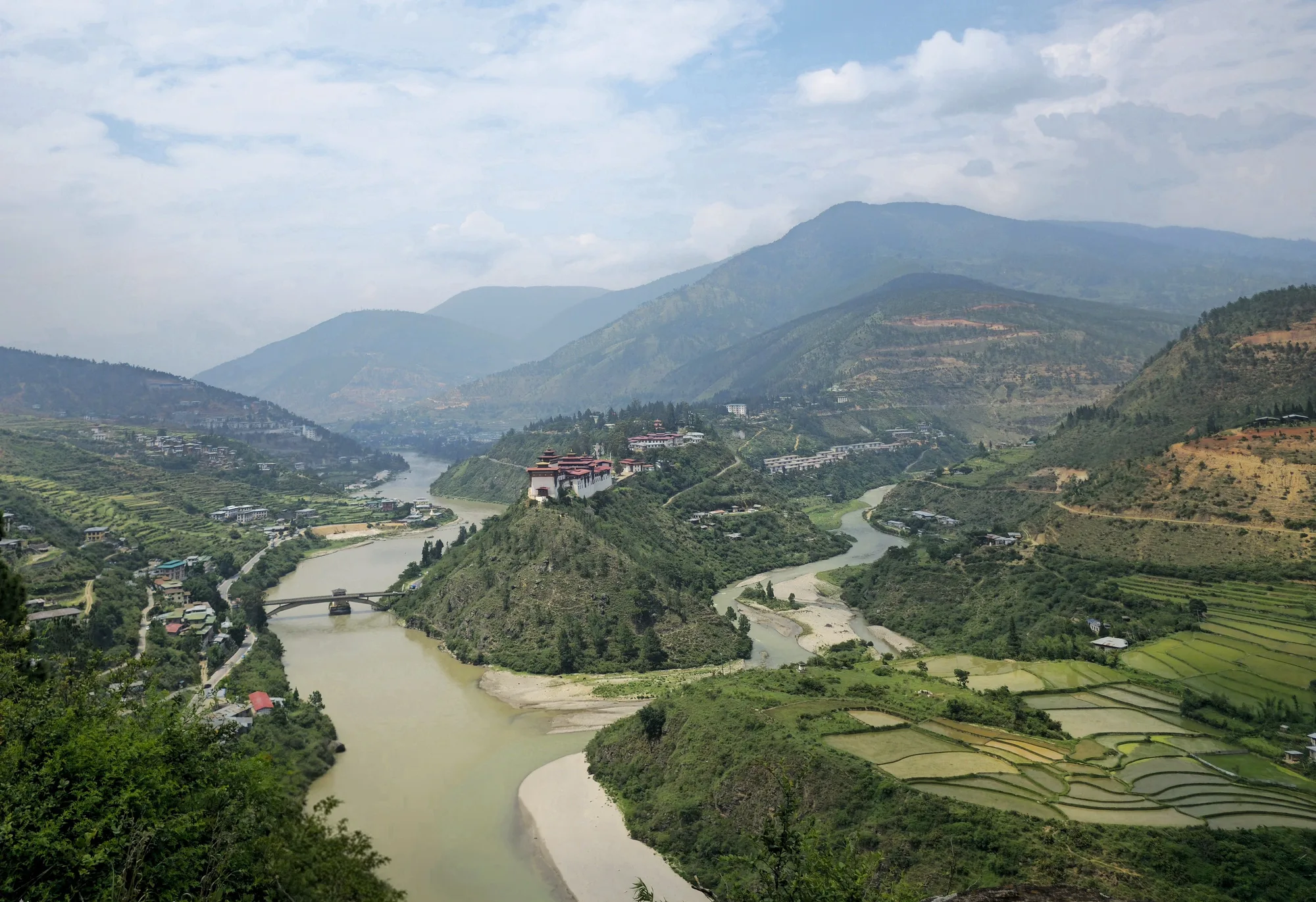
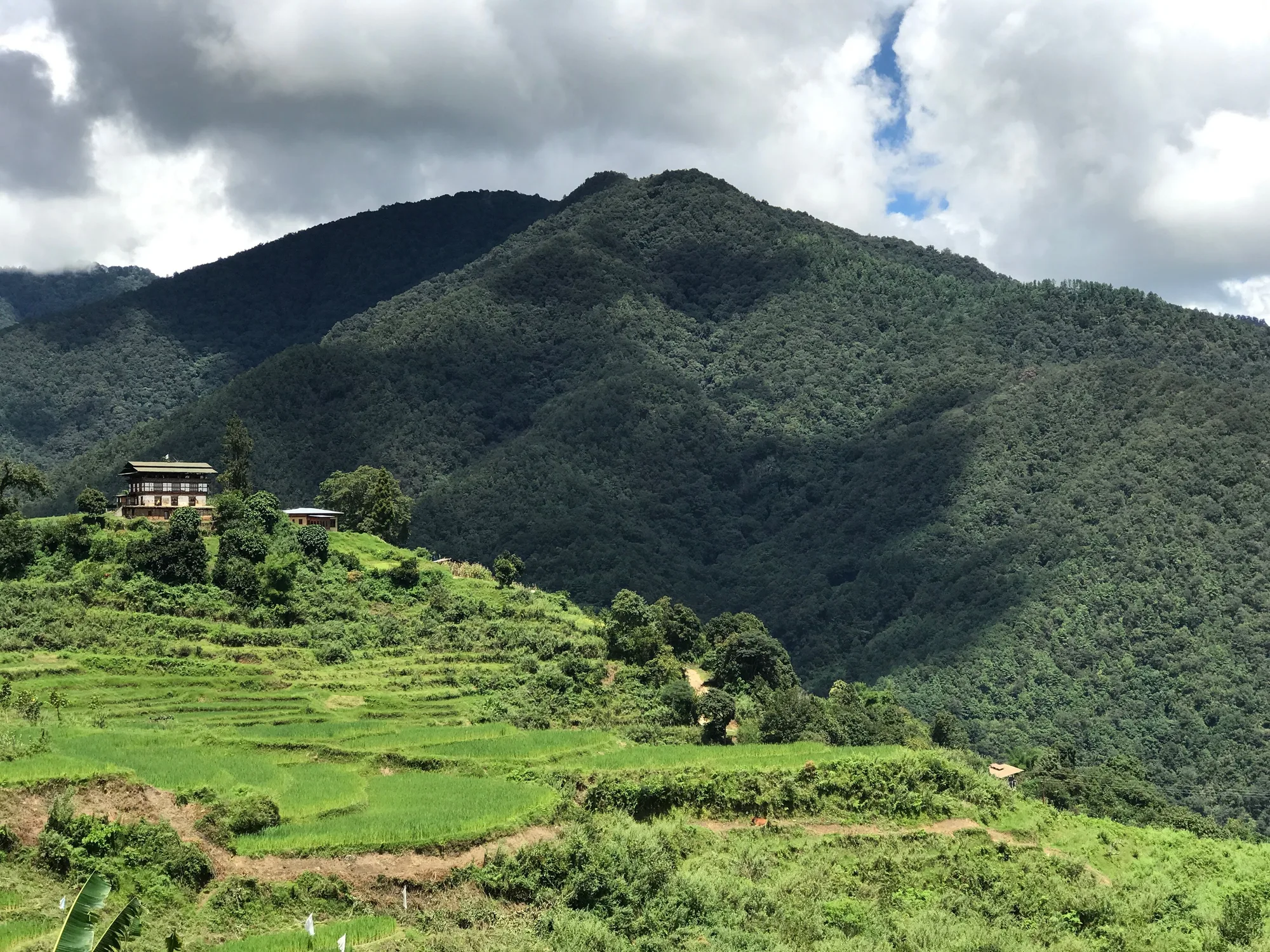
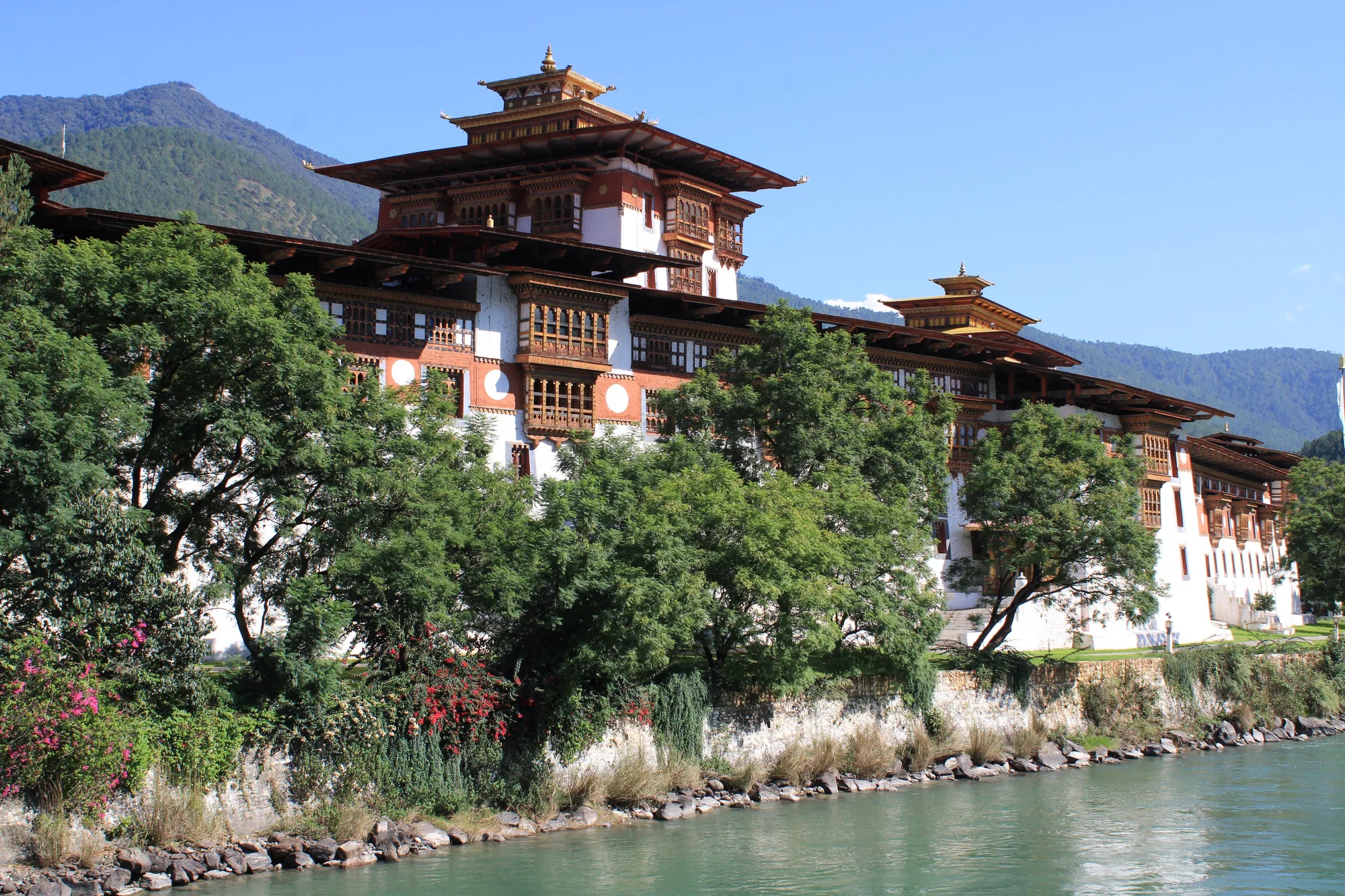
Punakha Dzong occupies the confluence of the Pho Chhu and Mo Chhu rivers, roughly three hours' drive over the Dochula Pass from Thimphu, and is widely considered Bhutan's most beautiful fortress-monastery — a title it earns through setting as much as architecture. Built in 1637 to serve as the seat of Bhutan's government before Thimphu took over that role, the dzong remains the winter residence of the country's central monastic body and hosts the annual Punakha Drubchen and Tshechu festivals, when monks perform masked dances re-enacting a 17th-century Tibetan invasion repelled from these very walls. A cantilevered wooden bridge crosses the Mo Chhu to the dzong's entrance, and in spring the approach is framed by blooming jacaranda trees against the whitewashed fortress walls. Beyond the dzong, the Punakha valley itself is one of Bhutan's most fertile, its terraced rice paddies giving way to red rice cultivation at lower, warmer elevations than most of the country allows. The suspension bridge near Punakha town, one of Bhutan's longest, offers valley views and access to the Khamsum Yulley Namgyal Chorten, a hilltop temple reached by a walk through rice fields. Punakha's lower altitude than Thimphu or Paro makes it noticeably warmer, and its combination of dzong, river and farmland scenery makes it a natural two-night stop on any Bhutan itinerary.
Trip Snapshot
Suitable For
Punakha, in frame
A quick visual sense of the landscapes, stays, and atmosphere your itinerary can be built around.
Punakha questions, answered
When is the best time to visit Punakha?
March to May, September to November
What is the weather like in Punakha?
Subtropical valley, milder than Thimphu, 15-28°C
Do I need a visa to travel to Bhutan?
No visa required for Indian nationals — entry permit and Sustainable Development Fee apply; carry passport or voter ID. Visa rules change without notice — confirm current requirements with the destination's embassy or consulate before you book.
What currency is used in Bhutan?
BTN — Bhutanese Ngultrum (at par with INR, both accepted)
What languages are spoken in Bhutan?
Dzongkha, English widely spoken
Build a Punakha itinerary around your dates.
Share your travel month, group size, budget comfort, and must-do experiences. The Taro team will shape the right route before any payment conversation.