Why Poland works
Poland, officially the Republic of Poland, is a country in Central Europe extending from the Baltic Sea in the north to the Sudetes and Carpathian Mountains in the south, bordered by Lithuania and Russia to the northeast, Belarus and Ukraine to the east, Slovakia and the Czech Republic to the south, and Germany to the west. It is composed of sixteen voivodeships, is the fifth most populous member state of the European Union with more than 38 million people, and covers 312,696 square kilometres as the EU's fifth-largest country by land area. Warsaw is the capital and largest city, with Kraków, Wrocław, Łódź, Poznań, and Gdańsk among the other major cities.
Prehistoric human activity in the region dates to the Lower Paleolithic, with continuous settlement since the end of the last glacial period, and by the early medieval period the land was inhabited by the West Slavic Polans, who gave Poland its name. Statehood took shape alongside the conversion of a pagan Polans ruler to Christianity in 966 under the Roman Catholic Church, and the Kingdom of Poland emerged in 1025; in 1569 it cemented a long-standing association with Lithuania to form the Polish–Lithuanian Commonwealth, which was one of the great powers of Europe under an elective monarchy and adopted Europe's first modern constitution in 1791. The country was later partitioned by neighbouring states at the end of the eighteenth century, regained independence in 1918 as the Second Polish Republic, and was invaded by Germany and then the Soviet Union in September 1939, opening a Second World War that brought the Holocaust and millions of Polish casualties before Poland fell into the Eastern Bloc as a Warsaw Pact signatory until the Solidarity movement, which emerged in 1980, helped bring about the fall of the Iron Curtain.
Poland's landscape runs from the flat Central European Plain across its central and northern regions bordering the Baltic Sea to hilly, mountainous terrain in the south, with an average elevation of about 173 metres and a 770-kilometre coastline running from the Bay of Pomerania to the Gulf of Gdańsk, marked by sand dunes and lagoons including the Hel Peninsula and the Vistula Lagoon, shared with Russia. Among its landmarks, the historic Old Towns of Kraków, Warsaw, Wrocław, Gdańsk, Poznań, Lublin, Toruń, and Zamość anchor the country's architectural heritage, alongside the Wieliczka Salt Mine, with its labyrinthine tunnels, underground lake, and chapels carved by miners out of rock salt beneath the ground. More than 100 castles stand across the country, largely within the Lower Silesian Voivodeship along the Piast Castles Trail and the Trail of the Eagles' Nests, and the largest castle in the world by land area sits at Malbork.
Poland's climate is temperate and transitional, ranging from oceanic in the north-west to continental in the south-east, with an alpine climate along the mountainous southern fringe; summers are warm, averaging around 20°C in July, and winters moderately cold, averaging −1.2°C in January, though summer highs can reach 40°C and winter lows in the Tatra and Bieszczady mountains can drop below −30°C. Lower Silesia in the southwest is the warmest and sunniest part of the country, while the northeast corner around Suwałki and Olecko is the coldest, affected by cold fronts from Scandinavia and Siberia, and precipitation peaks between June and September. The average annual air temperature between 2011 and 2020 was 9.33°C, about 1.11°C higher than the 2001–2010 period, with winters growing increasingly drier and seeing less snowfall.
In 2020, Poland's tourism industry was valued at 104.3 billion PLN, equivalent to 4.5 percent of Polish GDP that year, and employed nearly 200,000 people in accommodation and catering; in 2021 Poland ranked as the twelfth most visited country in the world by international arrivals. Visitors are drawn from the southern mountains to the Baltic beaches in the north, following trails of architectural and cultural heritage that also take in museums, zoological gardens, and theme parks, while sites including the German Auschwitz concentration camp in Oświęcim and the Skull Chapel in Kudowa-Zdrój represent a darker strand of the country's tourism.
- Poland — Wikipedia, CC BY-SA 4.0
Text adapted from the linked articles under CC BY-SA 4.0; edited for length.
Trip Snapshot
Highlights
Suitable For
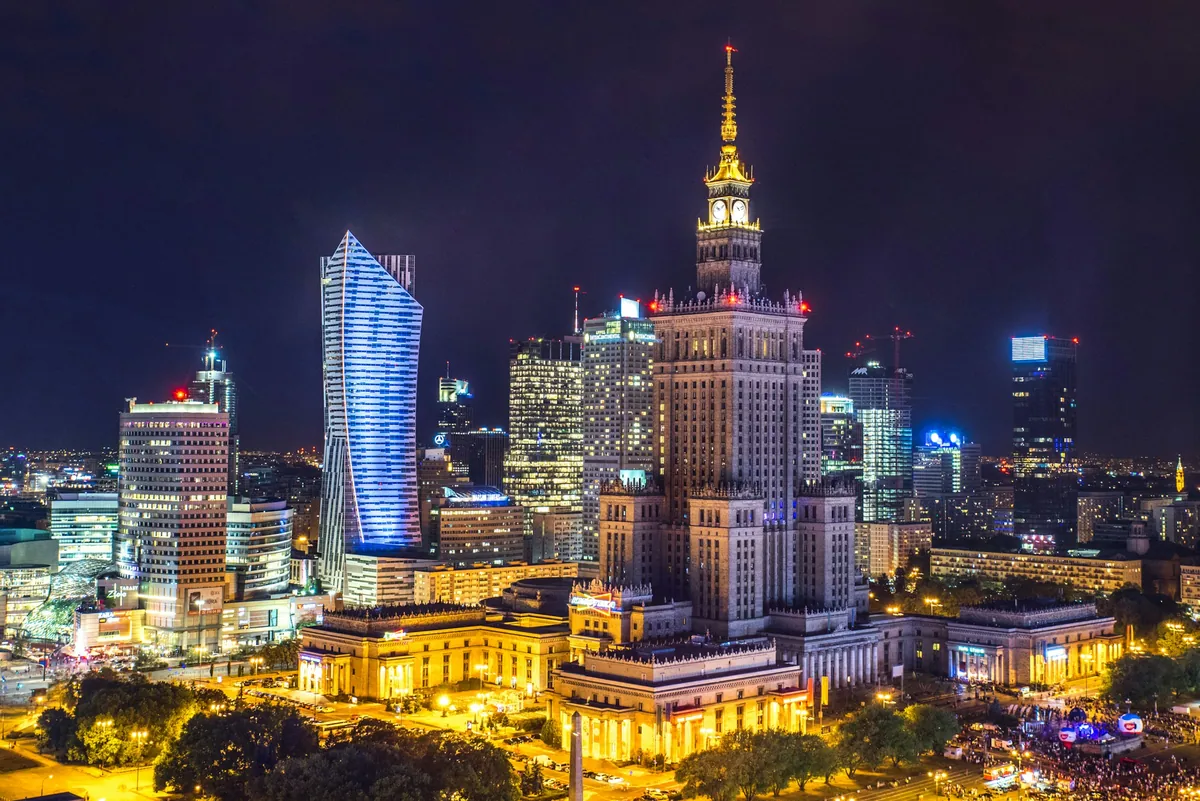
Poland, in frame
A quick visual sense of the landscapes, stays, and atmosphere your itinerary can be built around.
Build a Poland itinerary around your dates.
Share your travel month, group size, budget comfort, and must-do experiences. The Taro team will shape the right route before any payment conversation.