Why Peru works
Peru, officially the Republic of Peru, sits on the western coast of South America, bordered by Ecuador and Colombia to the north, Brazil to the east, Bolivia to the southeast, Chile to the south, and the Pacific Ocean to the south and west. It is a megadiverse country whose habitats range from the arid plains of the Pacific coast in the west to the peaks of the Andes running from north to southeast, and on to the tropical Amazon basin rainforest in the east, drained by the Amazon River. With an area of 1,285,216 square kilometres, Peru is the 19th-largest country in the world and the third-largest in South America, home to more than 32 million people, with Lima as its capital and largest city.
Peruvian territory carries one of the longest histories of civilization of any country, tracing back to the Caral–Supe civilization, which flourished along the Pacific coast between 3,000 and 1,800 BCE and is considered one of the cradles of civilization in the Americas; it was followed by cultures including the Cupisnique, the Chavín, whose religious centre stood at Chavín de Huántar, and later the Nazca, Moche, Wari, and Tiwanaku. In December 1532, conquistadors led by Francisco Pizarro, aided by Indigenous allies including the Chankas, Huancas, Cañaris, and Chachapoyas, defeated and captured the Inca emperor Atahualpa at the Battle of Cajamarca, opening decades of conflict that ended in Spanish colonization and the founding of the Viceroyalty of Peru, with its capital at Lima, then known as La Ciudad de los Reyes. Inca resistance held out until 1572, when Spanish forces overran the Neo-Inca State at Vilcabamba.
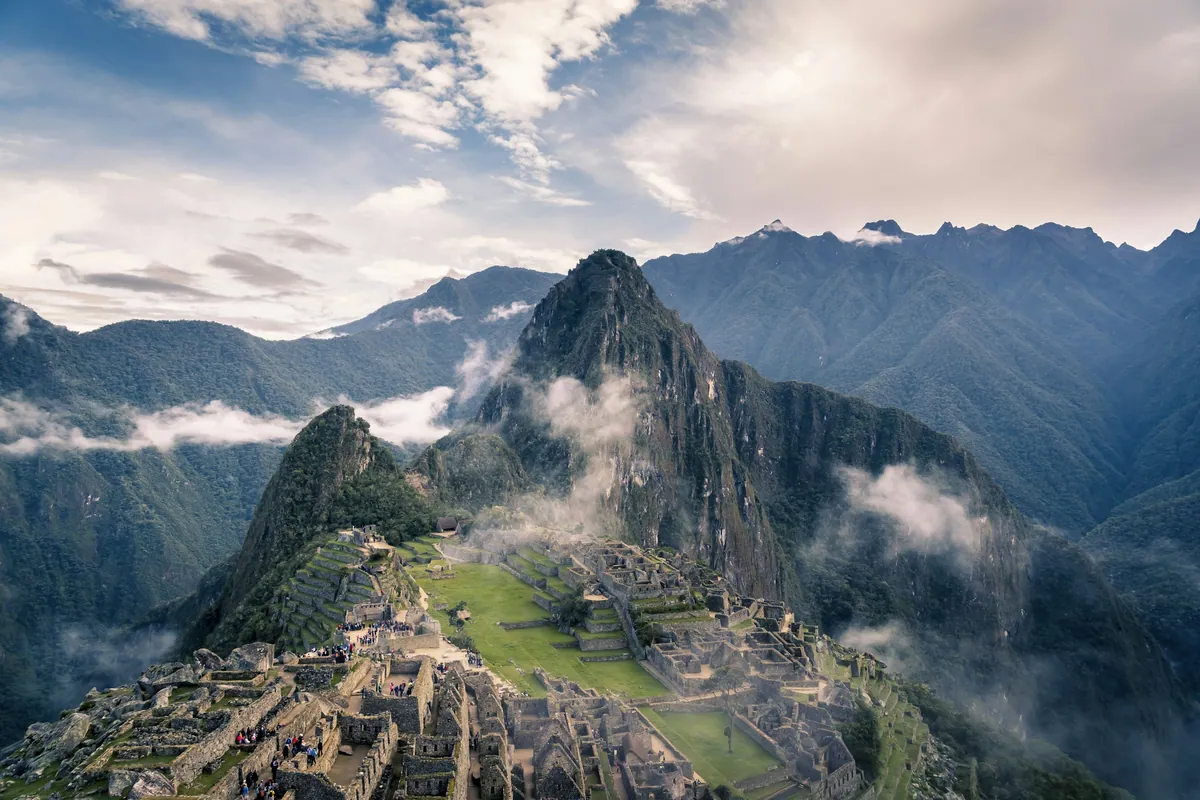
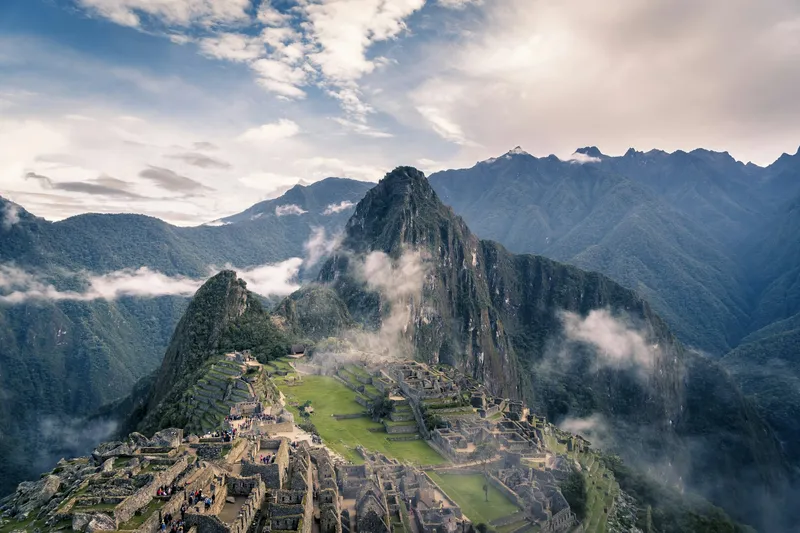
Peru's geography divides into three regions defined by the Andes, which run parallel to the Pacific coast: the costa, a narrow, largely arid coastal plain broken by valleys carved by seasonal rivers; the sierra, the Andean highlands that include the Altiplano plateau and the country's highest peak, the 6,768-metre Huascarán; and the selva, the Amazon rainforest that covers almost 60 percent of the country's area to the east. Cusco, in the sierra, is characterised by its Inca and colonial architecture and serves as the gateway to the Sacred Valley of the Incas and Machu Picchu, alongside other Cusco-region sites such as Qorikancha, Ollantaytambo, and Písac; further south, Arequipa draws visitors for its historic centre and the Colca Canyon, and Puno for Lake Titicaca.
Although Peru lies entirely within the tropics, the combination of tropical latitude, mountain ranges, varied topography, and the Humboldt and El Niño ocean currents gives the country a wide diversity of climates, with elevation ranging from −37 to 6,778 metres and annual precipitation from less than 20 millimetres in desert areas to more than 8,000 millimetres in tropical rainforest. The coastal region has moderate temperatures, low precipitation, and high humidity, apart from its warmer, wetter northern stretch; the mountain region sees frequent summer rain with temperature and humidity falling as elevation rises toward the frozen Andean peaks; and the Peruvian Amazon, covering more than half of the country, is marked by heavy rainfall and high temperatures except in its southernmost part, which has cold winters and seasonal rain.
Tourism accounts for an estimated 3.7 percent of Peru's gross domestic product, close to its pre-pandemic share of 3.9 percent, with annual international arrivals of roughly 4 million against 4.5 million in 2019, sector revenues that climbed to $5.3 billion by the end of 2025, a rise of $0.6 billion, and around 1.4 million jobs supported by the industry. Peruvian cuisine reflects the same layered history as its architecture, blending Amerindian and Spanish cooking with strong Chinese, African, Arab, Italian, and Japanese influences in dishes such as anticuchos, ceviche, and pachamanca, built on ingredients like potatoes — more than 3,000 varieties are grown on Peruvian terrain, according to the country's Instituto Peruano de la Papa — alongside tomatoes and maize, foods first carried into the Old World by the Columbian exchange that followed Spanish contact.
- Peru — Wikipedia, CC BY-SA 4.0
Text adapted from the linked articles under CC BY-SA 4.0; edited for length.
Trip Snapshot
Highlights
Suitable For
Peru, in frame
A quick visual sense of the landscapes, stays, and atmosphere your itinerary can be built around.
Peru questions, answered
When is the best time to visit Peru?
May to September (dry season)
What is the weather like in Peru?
Varies from tropical to alpine
Do I need a visa to travel to Peru?
Visa-free for Indian nationals (up to 183 days for tourism). Visa rules change without notice — confirm current requirements with the destination's embassy or consulate before you book.
What currency is used in Peru?
Peruvian Sol (PEN)
What languages are spoken in Peru?
Spanish, Quechua
Build a Peru itinerary around your dates.
Share your travel month, group size, budget comfort, and must-do experiences. The Taro team will shape the right route before any payment conversation.