Why Patagonia Adventure works
Patagonia is a geographical region in southern South America spanning parts of Argentina and Chile, taking in the southern Andes along with lakes, fjords, temperate rainforests, and glaciers to the west, and deserts, tablelands, and steppes toward the east. It is bounded by the Pacific Ocean to the west, the Atlantic to the east, and waterways including the Strait of Magellan, the Beagle Channel, and the Drake Passage to the south. The region's northern edge is not precisely fixed, but the Colorado and Barrancas rivers are commonly taken as the boundary on the Argentine side, putting the Argentine provinces of Neuquén, Río Negro, Chubut, and Santa Cruz, along with Patagones Partido in Buenos Aires Province, inside Patagonia, while on the Chilean side the region is usually reckoned to begin at the Huincul Fault.
Human habitation of Patagonia dates back thousands of years, with evidence of activity at Monte Verde in Chile dated to around 14,500 years before present, and the region appears to have been continuously inhabited since roughly 10,000 BC by successive cultures whose details remain poorly understood; excavated sites include caves such as Cueva del Milodón in Última Esperanza and Tres Arroyos on Tierra del Fuego. European explorers who encountered the region's Indigenous inhabitants found them taller than average Europeans of the time, prompting some to describe them as giants; according to Antonio Pigafetta, chronicler of the Magellan expedition, Magellan gave the name "Patagón" to the people and "Patagonia" to the region, a name most likely borrowed from a savage character in the 1512 Spanish chivalry novel that was a favourite of Magellan's own reading.
Among Patagonia's principal landmarks, Torres del Paine National Park in southern Chile, established in 1959, is centred on the Cordillera del Paine, an eastern spur of the Andes rising above the Patagonian steppe beside the Grey Glacier, its granite spires separated by valleys including the Valle del Francés and the Valle del Silencio. Across the border in Argentina, Monte Fitz Roy, also known as Cerro Chaltén, sits on the Southern Patagonian Ice Field near the village of El Chaltén and was first climbed in 1952 by French alpinists Lionel Terray and Guido Magnone. Nearby, the Perito Moreno Glacier in Los Glaciares National Park is one of 48 glaciers fed by the Southern Patagonian Ice Field, the world's third-largest reserve of fresh water; the glacier's terminus is five kilometres wide with an average height of 74 metres above Argentino Lake and a total ice depth of 170 metres, and it is named for the explorer Francisco Moreno, who studied the region in the nineteenth century.
Patagonia's climate is mostly cool and dry year-round, with the east coast warmer than the west in summer thanks to a branch of the southern equatorial current, while the west is washed by a cold current; prevailing westerly winds mean the western slopes receive far heavier precipitation than the east in a pronounced rain-shadow effect, with the islands near Torres del Paine recording annual precipitation of 4,000 to 7,000 millimetres. At Punta Arenas, in the extreme south, the mean temperature is 6°C with average extremes of 24.5 and −2°C, while further north at Puerto Montt the mean annual temperature is 11°C. The Patagonian steppe supports characteristic mammals including the guanaco, the South American cougar, the Patagonian fox, and Darwin's rhea, species once hunted on foot with boleadoras by the Tehuelche before firearms and horses changed how the plains were worked.
In the second half of the twentieth century tourism became an increasingly important part of Patagonia's economy, growing from a remote backpacking destination to draw upmarket visitors, cruise passengers rounding Cape Horn or bound for Antarctica, and adventure travellers; its principal attractions include the Perito Moreno glacier, the Valdés Peninsula, the Argentine Lake District, and Ushuaia in Tierra del Fuego, itself a jumping-off point for onward Antarctic travel. That growth in tourism has also created markets for traditional crafts such as Mapuche handicrafts, guanaco textiles, and regional confectionery and preserves, alongside a separate trend of foreign buyers acquiring large tracts of Patagonian land, among them the businessman Luciano Benetton, whose Compañía de Tierras Sud has introduced new techniques to the region's long-standing sheep-rearing industry.
- Patagonia — Wikipedia, CC BY-SA 4.0
- Torres del Paine National Park — Wikipedia, CC BY-SA 4.0
- Fitz Roy — Wikipedia, CC BY-SA 4.0
- Perito Moreno Glacier — Wikipedia, CC BY-SA 4.0
Text adapted from the linked articles under CC BY-SA 4.0; edited for length.
Trip Snapshot
Highlights
Suitable For
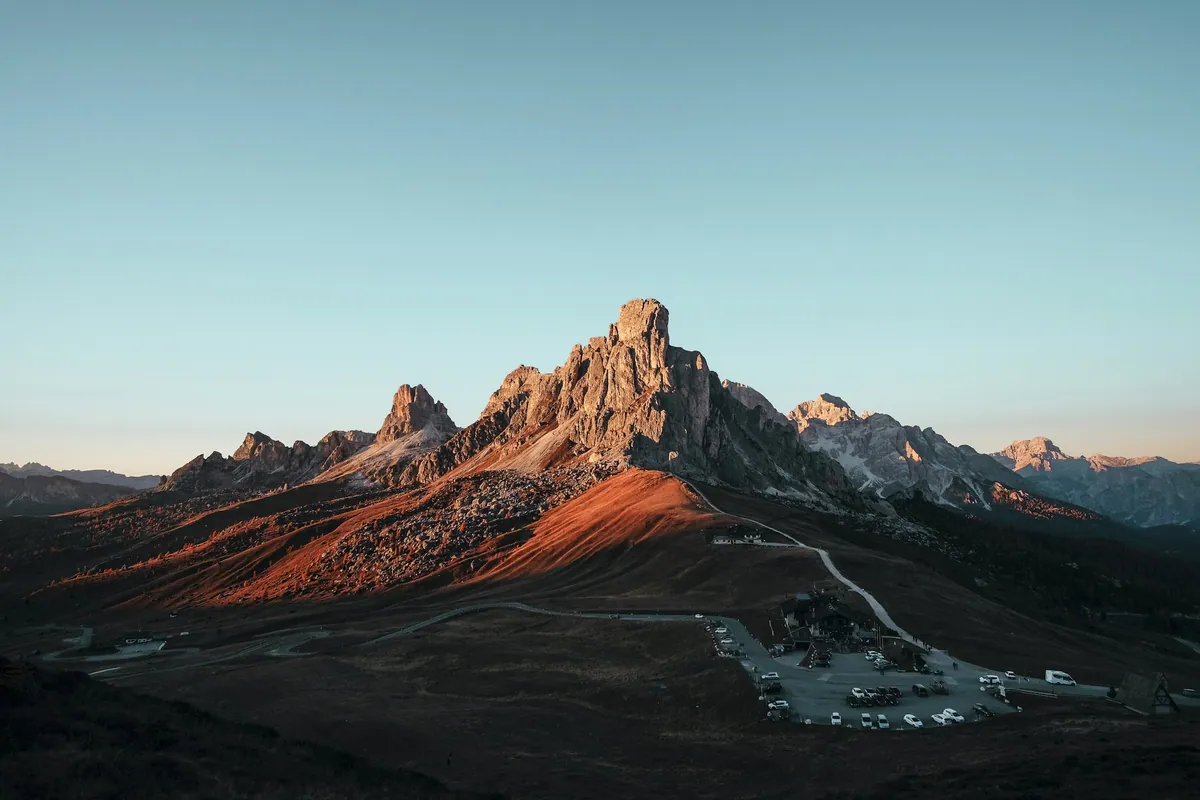
Patagonia Adventure, in frame
A quick visual sense of the landscapes, stays, and atmosphere your itinerary can be built around.
Build a Patagonia Adventure itinerary around your dates.
Share your travel month, group size, budget comfort, and must-do experiences. The Taro team will shape the right route before any payment conversation.