Why Pamukkale works
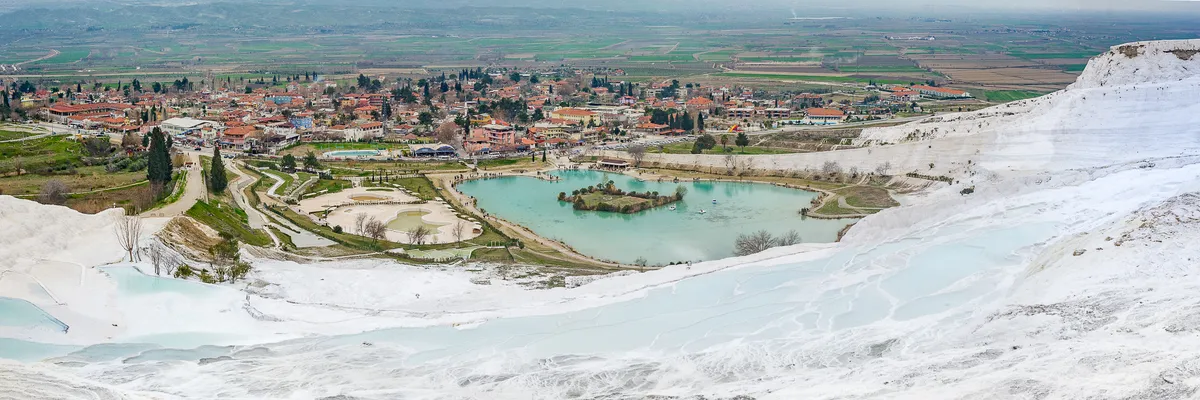
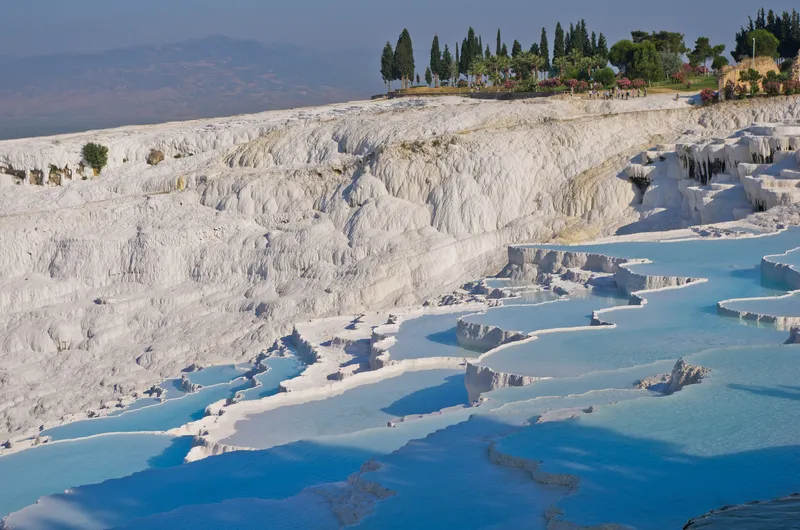
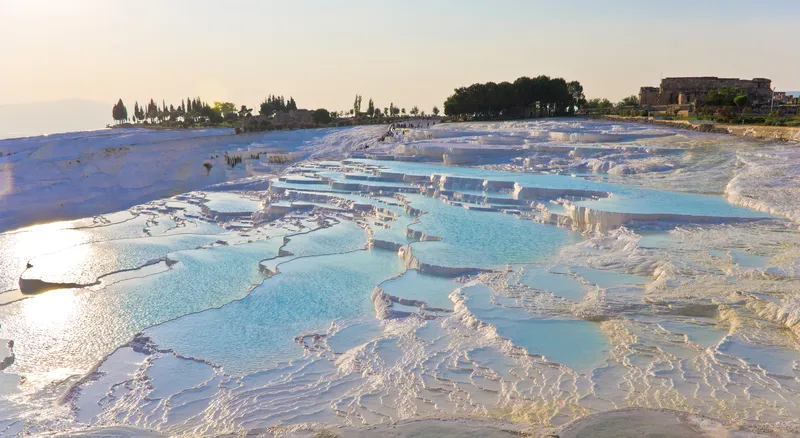
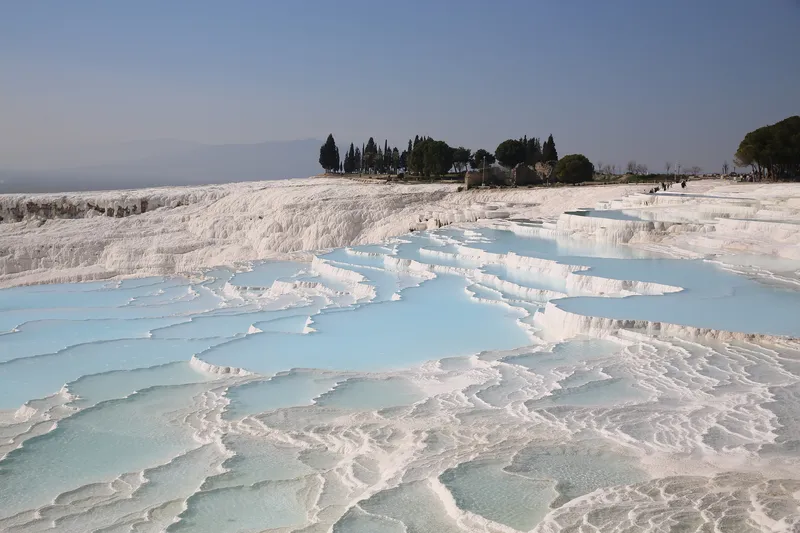
Pamukkale's white travertine terraces, formed over thousands of years as calcium-rich thermal springs cooled and deposited mineral layers down the hillside, give the site its Turkish name — 'Cotton Castle' — for their resemblance to piled cotton from a distance. The terraces hold shallow, warm pools that visitors can wade through barefoot along a designated path, protecting the fragile mineral formations from erosion caused by shoes; the water, a consistent 35°C, has drawn bathers since antiquity, when the Roman and later Byzantine city of Hierapolis was built directly atop the springs specifically to exploit their reputed healing properties. Hierapolis's ruins spread across the plateau above the terraces, including a well-preserved Roman theatre seating 12,000, a monumental necropolis with over 1,200 tombs — one of the largest surviving ancient cemeteries — and the Antique Pool, where visitors can swim among submerged marble columns toppled by a historical earthquake. The site draws large day-trip crowds from coastal resorts, so an early morning or late afternoon visit avoids both the heat and the busiest hours, when tour buses arrive en masse from Antalya and Bodrum. Cappadocia and Pamukkale are often combined into a single central Turkey itinerary, connected by short domestic flights, and nearby Aphrodisias, less visited but arguably more impressive archaeologically, offers a quieter ancient-ruins alternative for those with an extra day.
Trip Snapshot
Suitable For
Pamukkale, in frame
A quick visual sense of the landscapes, stays, and atmosphere your itinerary can be built around.
Pamukkale questions, answered
When is the best time to visit Pamukkale?
April to June, September to October
What is the weather like in Pamukkale?
Mediterranean, 5-35°C depending on season
Do I need a visa to travel to Turkey?
e-Visa for Indian nationals holding a valid Schengen/UK/US visa or visa-free entry stamp; else apply at embassy. Visa rules change without notice — confirm current requirements with the destination's embassy or consulate before you book.
What currency is used in Turkey?
Turkish Lira (TRY)
What languages are spoken in Turkey?
Turkish, English in tourist areas
Build a Pamukkale itinerary around your dates.
Share your travel month, group size, budget comfort, and must-do experiences. The Taro team will shape the right route before any payment conversation.