Why Ooty & Nilgiris works
Ooty is a town and the seat of the Nilgiris district in the Indian state of Tamil Nadu, sitting at an altitude of 2,240 metres in the Nilgiri Mountains, part of the Western Ghats, and known by the epithet "Queen of hill stations." It is separated from neighbouring Karnataka by the Moyar river to the north and from the Anaimalai and Palani hills to the south by the Palghat Gap, and covers a total town area of 30.36 square kilometres. Doddabetta, about 10 kilometres from Ooty, is the highest peak in the Nilgiris at 2,623 metres, and the surrounding hills form the Nilgiri Biosphere Reserve, the largest protected forest area in India.
The earliest reference to the Nilgiri Mountains appears in the Tamil Sangam epic Silappathikaram, from the 5th or 6th century CE, when the region was occupied by hill tribes including the Badagas, Todas, Kotas, Irulas, and Kurumbas. It later passed through the Chera, Chola, and Pandya kingdoms and dynasties including the Pallavas, Hoysalas, and the Vijayanagara empire, before Tipu Sultan captured the Nilgiris in the eighteenth century and the region came under British possession in 1799 as part of Coimbatore district in the Madras Presidency. In 1818, J. C. Whish and N. W. Kindersley, assistants to the Coimbatore collector John Sullivan, visited nearby Kotagiri and reported on the region's potential as a summer retreat; Sullivan established his own residence there in 1819 and began building the road connecting the hills to the plains, work that reached Coonoor between 1830 and 1832. Ooty was made a municipality in 1866 and later served as the summer capital of the Madras Presidency.
The town's landmarks reflect that colonial-era development around an artificial lake. Ooty Lake itself, created in 1824, covers 65 acres and offers boating alongside a boat house, with similar boating available at the Pykara falls and dam roughly 19 kilometres away, where the Pykara river cascades over drops of 55 and 61 metres. The Government Botanical Garden, laid out in 1842, holds a 20-million-year-old fossilised tree among its indigenous and exotic species and hosts an annual flower show in May, while the Government Rose Garden on the slopes of Elk Hill, at 2,200 metres, holds more than 20,000 rose varieties across 2,800 cultivars and is the largest rose garden in India. St. Stephen's Church, built in 1829, is among the oldest churches in the Nilgiris district, and the Nilgiri Mountain Railway, a metre-gauge line connecting Udagamandalam and Mettupalayam that opened in stages between 1899 and 1908, is the only rack railway in India and was added by UNESCO in July 2005 as an extension to the Mountain Railways of India World Heritage Site.
Ooty has a subtropical highland climate, with lower temperatures than the surrounding plains owing to its altitude — averaging 10 to 25°C in summer and 0 to 21°C in winter — and heavy rainfall during both the south-west and north-east monsoons, totalling about 1,100 millimetres a year. The region sits within the South Western Ghats montane rain forests ecoregion, where stunted evergreen trees grow in shola forest patches above 1,800 metres, festooned with epiphytes, amid native vegetation of meadows and grasslands on the hillsides. Mudumalai National Park, about 31 kilometres to the north-west and established in 1940 as India's first wildlife sanctuary, lies within the same biosphere reserve, which was itself declared a protected reserve in 1986 under UNESCO's Man and the Biosphere Programme.
Beyond the gardens and lakes, Ooty's other landmarks include a handful of traditional Toda huts on the hills above the Botanical Garden, a Tribal Museum opened in 1995 as part of the Tribal Research Centre about 10 kilometres from town, holding artefacts and photographs from the tribal groups of Tamil Nadu and the Andaman and Nicobar Islands, and the Ooty Radio Telescope, completed in 1970 as part of the National Centre for Radio Astrophysics of the Tata Institute of Fundamental Research. The town's economy today rests mainly on tourism and agriculture, and it remains connected to the plains both by the Nilgiri ghat roads and by the mountain railway that has carried visitors up from Mettupalayam for more than a century.
- Ooty — Wikipedia, CC BY-SA 4.0
Text adapted from the linked articles under CC BY-SA 4.0; edited for length.
Trip Snapshot
Highlights
Suitable For
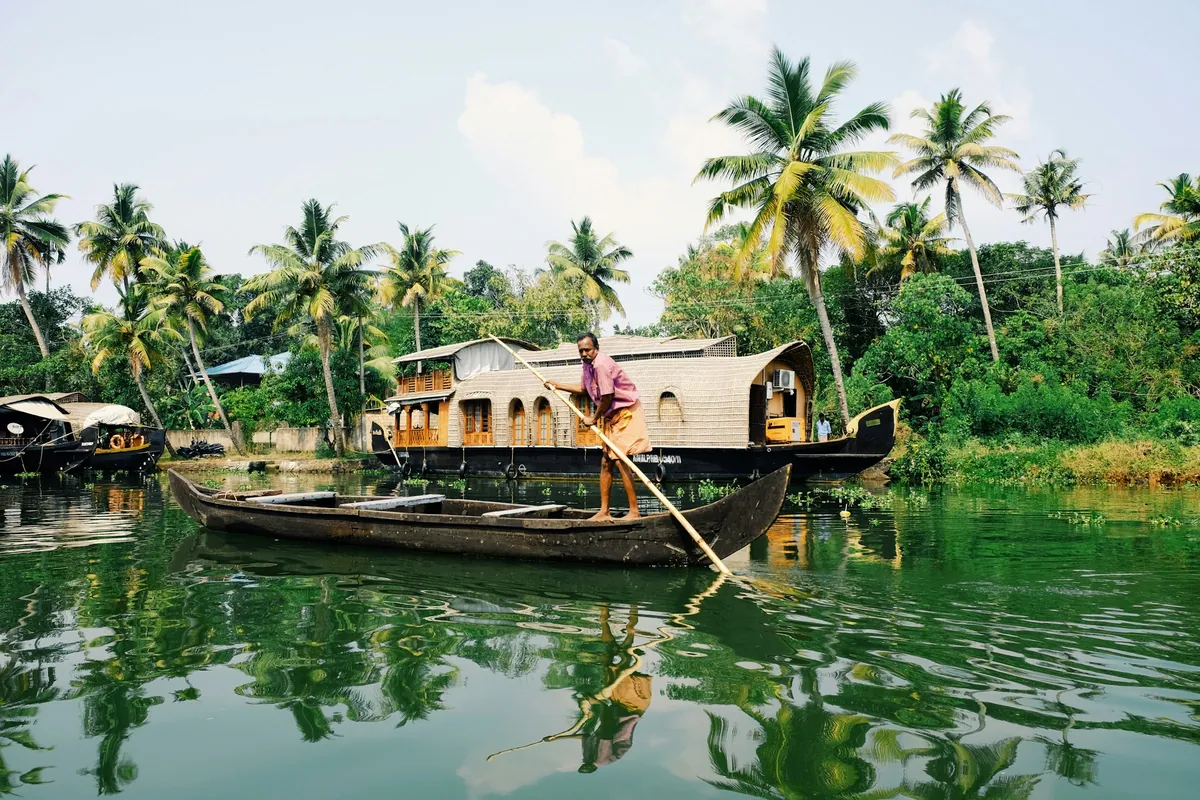
Ooty & Nilgiris, in frame
A quick visual sense of the landscapes, stays, and atmosphere your itinerary can be built around.
Build a Ooty & Nilgiris itinerary around your dates.
Share your travel month, group size, budget comfort, and must-do experiences. The Taro team will shape the right route before any payment conversation.