Why Norwegian Fjords Cruise works
Norway is a Nordic country occupying the western and northernmost part of the Scandinavian Peninsula in Northern Europe, with a rugged coastline broken by huge fjords and thousands of islands; the mainland coastline including fjords stretches 28,953 kilometres, reaching roughly 100,915 kilometres once every island is counted. Fjord cruises along the west coast typically call at two of the country's best-known inlets: the Sognefjord, nicknamed the King of the Fjords, and the Geirangerfjord. The Sognefjord is the longest and deepest fjord in Norway, stretching 205 kilometres inland from the ocean to the village of Skjolden in Luster Municipality, while the Geirangerfjord is a 15-kilometre branch off the Sunnylvsfjorden in the Sunnmøre region of Møre og Romsdal county, ending at the small village of Geiranger, where the Geirangelva river empties into it.
The unified kingdom of Norway was established in 872 as a merger of petty kingdoms, traditionally credited to Harald Fairhair after the Battle of Hafrsfjord in Stavanger, and has existed continuously since. From 1537 to 1814 Norway was part of Denmark–Norway, and from 1814 to 1905 it was in a personal union with Sweden. The fjords themselves are older than that human history by a much longer measure: the valley of the Sognefjord predates the glaciations of the Quaternary period, and the fjords of western Norway formed as rivers cut deeply into the land during the Cenozoic uplift of the Scandinavian Mountains, with later glacial and fluvial erosion following weaknesses in the crust. During the last glaciation, ice in this region reached a maximum thickness of nearly 3,000 metres.
A branch of the Sognefjord, the Nærøyfjord, is particularly noted for its unspoiled nature and dramatic scenery, narrowing to just 300 metres at its narrowest point; together with the Geirangerfjord, it forms the "West Norwegian Fjords" UNESCO World Heritage Site, inscribed in 2005. From the village of Flåm on the Sognefjord, the Flåm Railway climbs 864 metres to Myrdal Station over a distance of only 20 kilometres, one of the steepest unassisted railway climbs in the world. On the Geirangerfjord, a number of now-abandoned mountainside farms have been partly restored by the Storfjordens venner association, with Skageflå, Knivsflå, and Blomberg the most visited; Skageflå can be reached on foot from Geiranger, while the others require a boat excursion. The fjord is also known for its waterfalls, including the Seven Sisters Falls and the Suitor, which face one another across the water, and the Bridal Veil, named for the way it falls delicately over a rocky edge and appears as a thin veil when seen backlit by the sun.
Norway's climate, shaped by the Gulf Stream and prevailing westerlies, brings higher temperatures and more precipitation than would be expected at these northern latitudes, particularly along the coast. The mainland has four distinct seasons, with colder winters and less precipitation inland, while the southern and western areas, fully exposed to Atlantic storm fronts, see more rain and milder winters than the east; land to the east of the coastal mountains sits in a rain shadow with lower totals. Norway's high latitude also produces large seasonal swings in daylight: from late May to late July the sun never fully sets in areas north of the Arctic Circle, and the rest of the country gets up to twenty hours of daylight, while from late November to late January the sun never rises above the horizon in the north.
Tourism contributed 4.2% of Norway's gross domestic product as reported in 2016, and roughly one in fifteen people in the country work in the industry; travel is seasonal, with more than half of total visitors arriving between May and August. Along the Sognefjord, boats connect settlements including Leirvik, Vadheim, Høyanger, Balestrand, Gudvangen, Flåm, Aurlandsvangen, and Solvorn, while on the Geirangerfjord the Geiranger–Hellesylt Ferry, operated by Fjord1 Nordvestlandske, runs the length of the fjord as a car ferry that doubles as a sightseeing trip and is scheduled to require zero-emissions vessels from 2026.
- Norway — Wikipedia, CC BY-SA 4.0
- Sognefjord — Wikipedia, CC BY-SA 4.0
- Geirangerfjord — Wikipedia, CC BY-SA 4.0
Text adapted from the linked articles under CC BY-SA 4.0; edited for length.
Trip Snapshot
Highlights
Suitable For
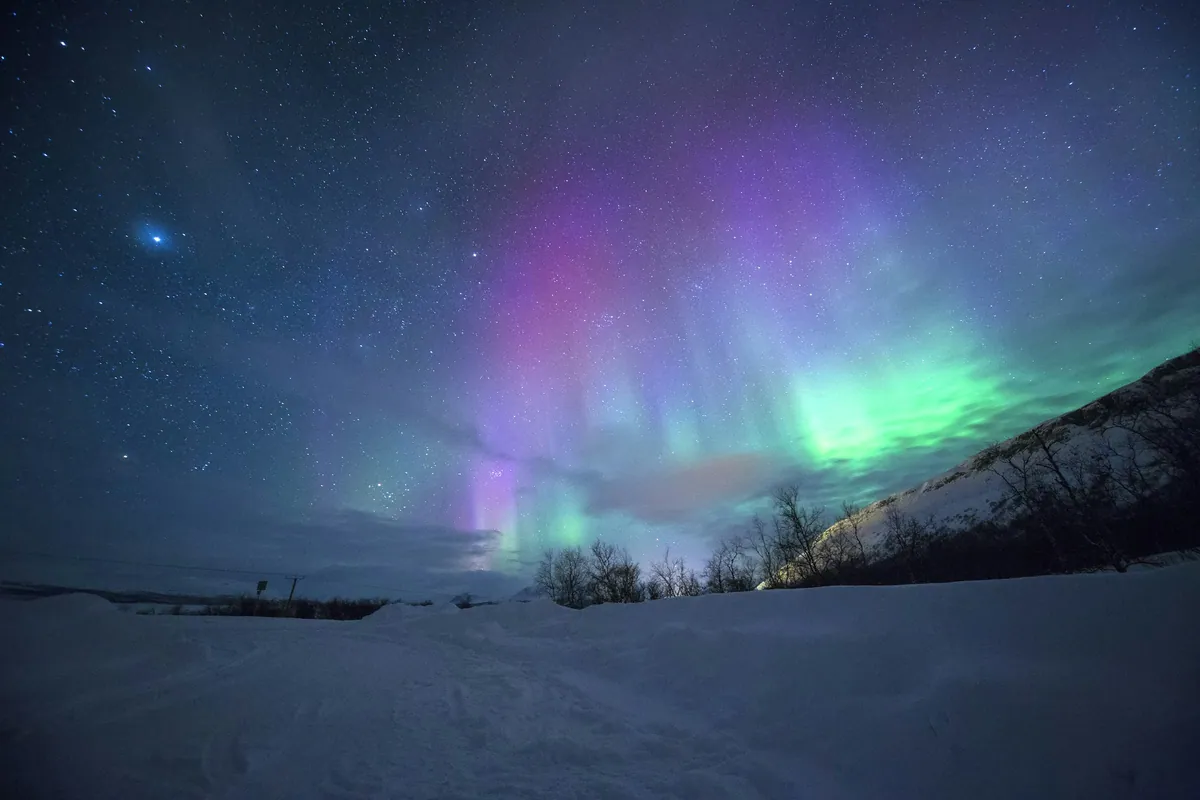
Norwegian Fjords Cruise, in frame
A quick visual sense of the landscapes, stays, and atmosphere your itinerary can be built around.
Build a Norwegian Fjords Cruise itinerary around your dates.
Share your travel month, group size, budget comfort, and must-do experiences. The Taro team will shape the right route before any payment conversation.