Why Myanmar works
Myanmar, also known as Burma, is a country in mainland Southeast Asia whose early history saw Tibeto-Burman-speaking Pyu city-states rise in Upper Myanmar and Mon kingdoms take shape in the south, before the Bamar people entered the upper Irrawaddy valley in the ninth century. Yangon, the country's largest city, and Mandalay remain its principal urban centres, while the Pagan Kingdom, founded in the 1050s by King Anawrahta, became the first unification of the Irrawaddy valley and its surrounding territory, establishing Burmese language, culture and Theravada Buddhism as the dominant forces across the region.
At Bagan, the Pagan Kingdom's capital, more than 10,000 Buddhist temples, pagodas and monasteries were built across the plains during the kingdom's height between the eleventh and thirteenth centuries, of which the remains of over 2,200 still stand today within what is now a UNESCO World Heritage Site. The kingdom fell to Mongol invasions in 1287, after which the region fragmented into competing states for some 250 years, later reunified under the Taungoo dynasty, which briefly built the largest empire in Southeast Asian history, and then the Konbaung dynasty, whose territory included modern Myanmar and, for a time, Assam, the Lushai Hills and Manipur before the British East India Company took control following three Anglo-Burmese Wars in the nineteenth century.
In Yangon, the Shwedagon Pagoda rises 112 metres from the 51-metre Singuttara Hill, its gilded stupa said by legend to enshrine hair relics of the Buddha and to be more than 2,500 years old; the crown at its summit is set with 5,448 diamonds and 2,317 rubies, topped by a single 76-carat diamond, and the gold plating covering its brick structure has been renewed over centuries by donations from monarchs and ordinary worshippers alike. Further north and east, Inle Lake in Shan State, the country's second-largest lake at an elevation of 880 metres, is home to the Intha people, known for a distinctive leg-rowing technique developed to navigate the lake's reed-choked, floating-garden-covered waters from small boats.
Bagan's temples were founded on a Buddhist calendar of pilgrimage that continued long after the kingdom's political power faded: even as new construction slowed after the fifteenth century, devotion concentrated on a handful of prominent temples such as the Ananda, the Shwezigon, the Sulamani and the Htilominlo, which received continued upkeep while thousands of smaller, less famous temples fell into disrepair. Inle Lake today faces its own environmental pressure, its open water area shrinking by roughly 32 percent between 1935 and 2000 as floating-garden agriculture expanded and silt run-off from surrounding hillsides increased.
Tourism in Myanmar centres on destinations including the cities of Yangon and Mandalay, religious sites in Mon State and at Pindaya, Bago and Hpa-An, nature trails around Inle Lake and Pyin Oo Lwin, the ancient cities of Bagan and Mrauk-U, and beaches at Ngapali and Ngwe-Saung. Inle Lake's own tourist season centres on a cluster of festivals held between August and October, among them the eighteen-day Hpaung Daw U Festival and the Thadingyut Festival of lights, both marked by traditional leg-rowed boat races on the lake.
- Myanmar — Wikipedia, CC BY-SA 4.0
- Bagan — Wikipedia, CC BY-SA 4.0
- Shwedagon Pagoda — Wikipedia, CC BY-SA 4.0
- Inle Lake — Wikipedia, CC BY-SA 4.0
Text adapted from the linked articles under CC BY-SA 4.0; edited for length.
Trip Snapshot
Highlights
Suitable For
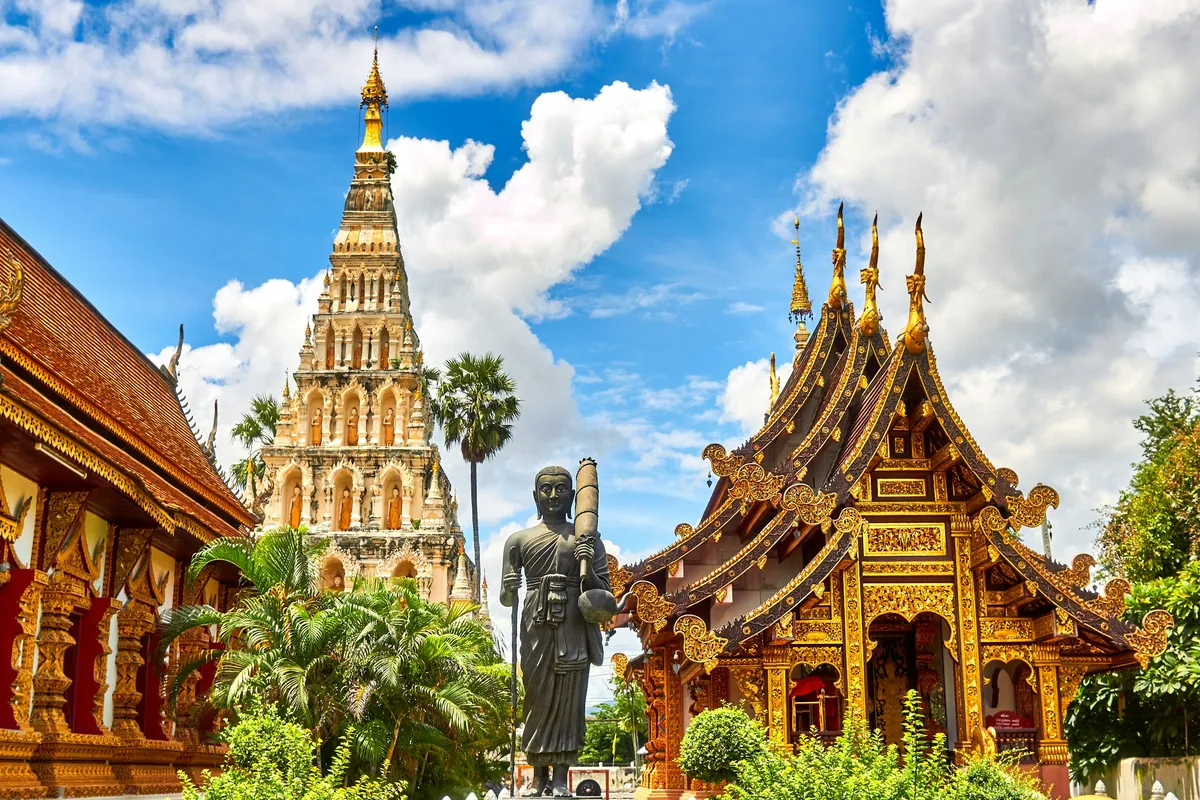
Myanmar, in frame
A quick visual sense of the landscapes, stays, and atmosphere your itinerary can be built around.
Build a Myanmar itinerary around your dates.
Share your travel month, group size, budget comfort, and must-do experiences. The Taro team will shape the right route before any payment conversation.