Why Mongolia works
Mongolia is a landlocked country in East Asia, bordered by Russia to the north and China to the south, covering 1,564,116 square kilometres and making it the 18th-largest country in the world and the second-largest landlocked nation after Kazakhstan. With a population of only 3.5 million, Mongolia is the world's most sparsely populated sovereign state outside Western Sahara, and roughly half of that population lives in the capital, Ulaanbaatar. The country forms a large part of the Mongolian Plateau, its landscape shaped by grassy steppe, mountains to the north and west, and the Gobi Desert to the south.
Mongolia's territory has been home to a succession of nomadic empires, including the Xiongnu, Xianbei, Rouran and Göktürk, before Temüjin united the Mongol tribes in the late twelfth century and took the title Genghis Khan in 1206, founding the Mongol Empire — the largest contiguous land empire in history, which at its height stretched from present-day Poland to Korea and covered some 22 percent of Earth's land area. His grandson Kublai Khan went on to conquer China and establish the Yuan dynasty, ruling from a new capital at what is now Beijing, before the Yuan fell to the Ming in 1368 and the Mongols retreated to their homeland. Mongolia declared independence from the collapsing Qing dynasty in 1911 under the Bogd Khaan, and again in 1921 with Soviet support, before adopting a new constitution in 1992 following the peaceful Democratic Revolution of 1990 and the shift to a multi-party system and market economy.
Naadam, Mongolia's main national festival, has been held for centuries and runs for three days each July, built around the "Three Manly Games" of archery, cross-country horse racing and wrestling; it takes place from 11 to 13 July to mark the anniversaries of the National Democratic Revolution and the founding of the Mongol state. Horse riding remains central to Mongolian culture well beyond the festival itself, from the long-distance races Naadam is known for to a tradition of trick riding, while Mongolian-style wrestling, said by some historians to date back roughly 7,000 years, draws hundreds of competitors from across the country's cities and aimags each year.
Mongolia has an extreme continental climate of long, cold winters and short summers, when most of the year's precipitation falls; January temperatures in Ulaanbaatar can average as low as −1.3 degrees Celsius overall, making it the world's coldest capital city, while the wider countryside regularly drops to −30 degrees Celsius or lower in winter under the influence of the Siberian Anticyclone. The Gobi Desert to the south is technically a desert steppe rather than true desert in the Mongolian sense — arid rangeland too sparse for marmots but able to support camels — with the surrounding aridity a product of the rain shadow cast by the Himalayas. The Gobi has also yielded fossils of dinosaurs, sea turtles and molluscs, evidence of the far wetter habitat that existed here before the Himalayas rose some 10 million years ago.
Mongolia's highest point, Khüiten Peak in the Tavan Bogd massif in the far west, reaches 4,374 metres, while forested land covers just over 11 percent of the country's total area, the rest given over largely to the grassland of the Mongolian–Manchurian steppe that has sustained pastoral, herding life here for millennia. The Uvs Lake basin, shared with Russia's Tuva Republic, is recognised as a natural World Heritage Site, one part of a landscape that still supports large mammals including saiga antelope, argali sheep, Siberian ibex, elk and reindeer across its plains and mountains.
- Mongolia — Wikipedia, CC BY-SA 4.0
Text adapted from the linked articles under CC BY-SA 4.0; edited for length.
Trip Snapshot
Highlights
Suitable For
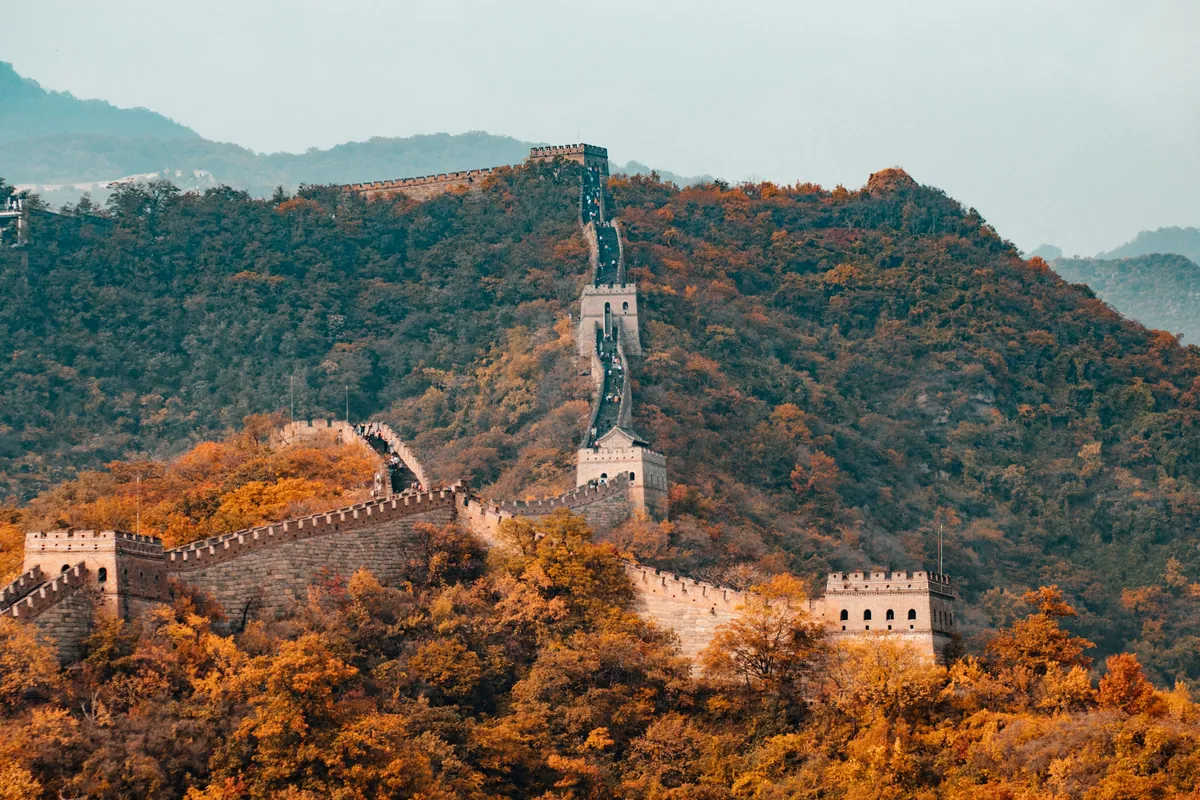
Mongolia, in frame
A quick visual sense of the landscapes, stays, and atmosphere your itinerary can be built around.
Build a Mongolia itinerary around your dates.
Share your travel month, group size, budget comfort, and must-do experiences. The Taro team will shape the right route before any payment conversation.