Why Mexico works
Mexico, officially the United Mexican States, is a country in North America bordered by the United States to the north and Guatemala and Belize to the southeast, with the Pacific Ocean to the west and the Gulf of Mexico and Caribbean Sea to the east. Covering 1,972,550 square kilometres, it is the thirteenth-largest country in the world by area, and Mexico City is its capital and largest city. Human presence in Mexico dates back at least to 11,500 BC, and the region that became known as Mesoamerica is considered one of the world's cradles of civilization, home over time to the Olmec, Maya, Zapotec, Teotihuacan and Purépecha civilisations.
Spanish conquest of the Aztec Empire began in 1519 when Hernán Cortés founded Veracruz, culminating in the 1521 capture of Tenochtitlan and the founding of Mexico City on its ruins, ushering in three centuries of colonial rule as New Spain. Mexico's independence movement began with Miguel Hidalgo y Costilla's 1810 Cry of Dolores, commemorated annually on 16 September as the country's independence day; a fragile early republic gave way, after decades of conflict, to the Mexican Revolution of 1910 to 1920, a decade-long upheaval that reshaped the country's politics for the rest of the twentieth century. The long-ruling Institutional Revolutionary Party, founded in 1929, lost the presidency for the first time in 2000, to Vicente Fox.
Mexico's coastlines hold some of its most visited destinations: on the Yucatán Peninsula, the resort town of Cancún anchors the Riviera Maya, a coastal strip that runs south past Playa del Carmen and the ecological parks of Xcaret and Xel-Há to Tulum, known for its Maya ruins overlooking the Caribbean. Elsewhere, Acapulco's beaches and high-rise hotels and Cabo San Lucas, known for marlin fishing at the southern tip of the Baja California peninsula, draw visitors to Mexico's Pacific coast. As of 2017, Mexico was the sixth most-visited country in the world and the highest earner from tourism anywhere in Latin America, with most visitors arriving from the United States and Canada.
Mexico's climate varies sharply with the country's size and topography, split broadly by the Tropic of Cancer into a temperate north, where winters turn cooler, and a tropical south, where temperatures stay fairly constant year-round and change mainly with elevation. The Trans-Mexican Volcanic Belt carries the country's highest peaks, including Pico de Orizaba at 5,700 metres, and Mexico ranks fourth in the world for overall biodiversity and among the 17 recognised megadiverse countries, with more than 200,000 recorded species — first in the world for reptile diversity and second for mammals.
Mexican cuisine grew from the meeting of Spanish and indigenous culinary traditions during the colonial era, combining native ingredients such as corn, beans, squash, chocolate and avocado with pork, beef, chicken, wheat and citrus brought by the Spanish; from this fusion came dishes including pozole, mole, barbacoa, tamales and the wide repertoire of tacos and Mexican street food eaten today. Traditional techniques such as nixtamalizing corn and grinding on a molcajete or metate, inherited from pre-Columbian cooks, remain part of Mexican kitchens, and in 2005 Mexico became the first country to put forward its gastronomy for UNESCO World Heritage status, a bid that was ultimately turned down.
- Mexico — Wikipedia, CC BY-SA 4.0
Text adapted from the linked articles under CC BY-SA 4.0; edited for length.
Trip Snapshot
Highlights
Suitable For
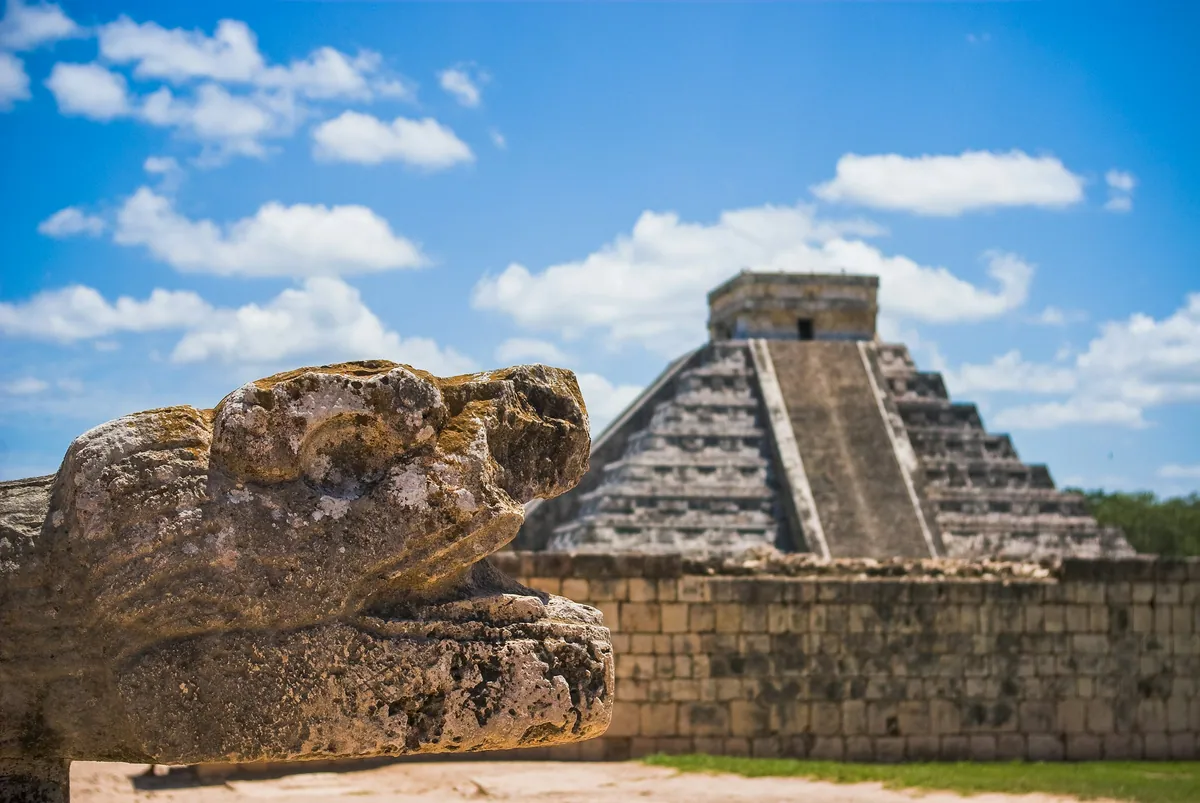
Mexico, in frame
A quick visual sense of the landscapes, stays, and atmosphere your itinerary can be built around.
Build a Mexico itinerary around your dates.
Share your travel month, group size, budget comfort, and must-do experiences. The Taro team will shape the right route before any payment conversation.