Why London & UK works
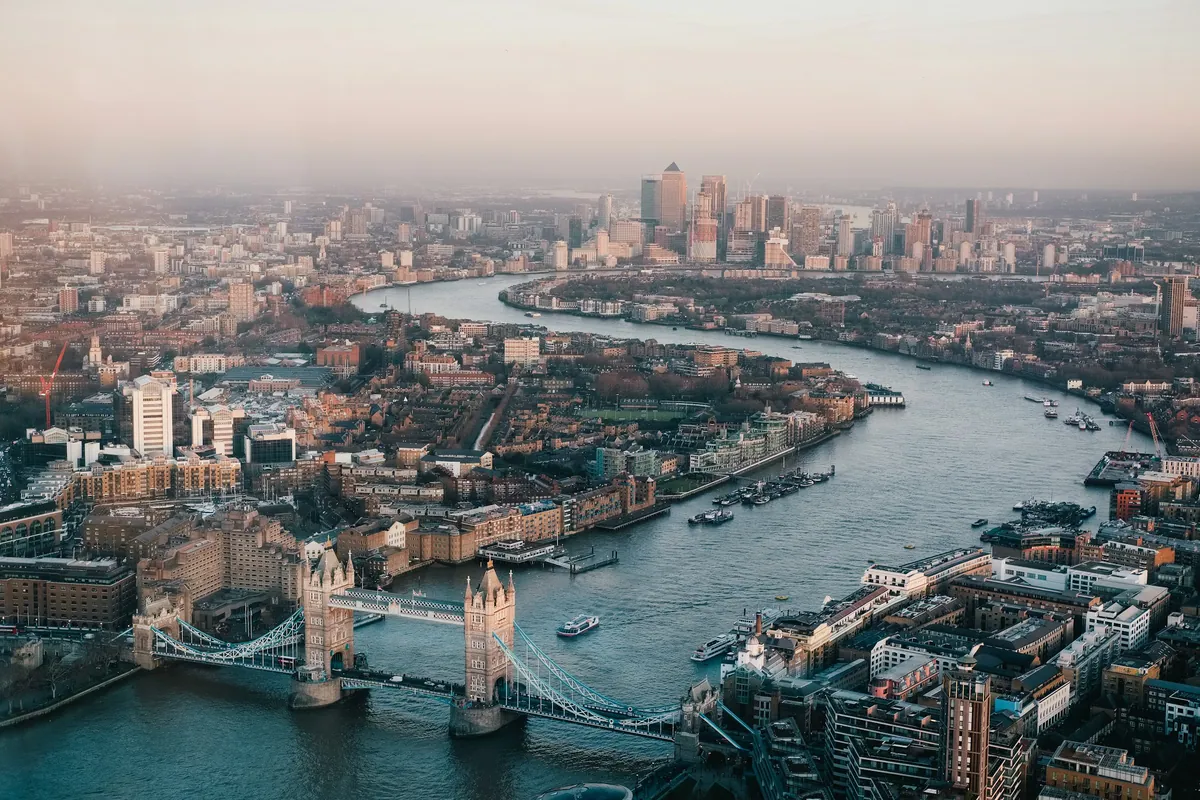
London is the capital and largest city of both England and the United Kingdom, standing on the River Thames in southeast England at the head of a 50-mile tidal estuary that runs down to the North Sea; the wider metropolitan area is home to some 15.4 million people, making it the largest in Western Europe. The United Kingdom itself, formally the United Kingdom of Great Britain and Northern Ireland, comprises England, Scotland, Wales and Northern Ireland, with Edinburgh, Cardiff and Belfast serving as the national capitals of the latter three; it shares its only land border with the Republic of Ireland and is otherwise surrounded by the Atlantic Ocean, the North Sea, the English Channel, the Celtic Sea and the Irish Sea. London's ancient core, the City of London, was founded by the Romans as Londinium and has kept its medieval boundaries, while the City of Westminster to its west has been the seat of national government for centuries.
The Romans founded their first major settlement here around AD 47, only for Boudica's Iceni tribe to burn it down in AD 61; the rebuilt city went on to become the principal city of Roman Britain, with a population of about 60,000 at its height in the second century. Following the Norman Conquest, William I was crowned in the newly completed Westminster Abbey on Christmas Day 1066 and built the Tower of London to assert control over the city, while the Palace of Westminster grew up alongside the abbey as the seat of England's royal court and, in time, its Parliament. London's population climbed from around 50,000 in 1530 to roughly 225,000 by 1605, and the city became the world's largest from about 1831 to 1925 during the unprecedented urbanisation of the Industrial Revolution, a period that also brought the London Underground, the world's first urban rail network, in 1863.
London holds four UNESCO World Heritage Sites: Kew Gardens, the Tower of London, the ensemble of the Palace of Westminster with Westminster Abbey and the Church of St Margaret, and the historic settlement at Greenwich, home to the Royal Observatory that defines the prime meridian and Greenwich Mean Time. The West End, in inner west London, is the city's principal shopping and entertainment district, home to London's theatre scene around Leicester Square and Piccadilly Circus; Agatha Christie's The Mousetrap has run continuously in the West End's theatres since 1952, making it the world's longest-running play. The British Museum, founded in Bloomsbury in 1753 and now holding some seven million artefacts from around the world, was the most visited attraction in the United Kingdom in 2024, followed by the Natural History Museum, Windsor Great Park and Tate Modern, with nine of the UK's ten most-visited attractions that year located in London.
Most of the United Kingdom has a temperate climate, cool and rainy through the year, with temperatures rarely falling below freezing or rising above 30 degrees Celsius; upland areas of England, Wales, Northern Ireland and much of Scotland see a somewhat harsher subpolar oceanic climate, while Scotland's higher elevations turn subarctic and its mountain summits approach tundra conditions. London itself sits at the milder, lower-lying end of this range, its position on the Thames sheltering it from the more extreme weather found further north and at altitude across the rest of the country.
London is a leading global tourist destination, ranked the world's top city for cross-border visitor spending in 2015 at an estimated US$20.23 billion, with tourism employing around 700,000 full-time workers in 2016 and contributing some £36 billion a year to the city's economy; London accounts for 54 percent of all inbound visitor spending in the UK. The London Underground, opened in 1863 and now the third-longest metro system in the world, serves 272 stations and carries over four million journeys a day, while double-decker buses, an emblem of the city since the AEC Regent III RT first appeared in 1947, run a network of more than 675 routes around the clock. London is also one of the world's leading centres of higher education, with an international student population of around 110,000 and institutions including Imperial College London, University College London and the London School of Economics regularly ranked among the world's top universities.
- London — Wikipedia, CC BY-SA 4.0
- United Kingdom — Wikipedia, CC BY-SA 4.0
Text adapted from the linked articles under CC BY-SA 4.0; edited for length.
Trip Snapshot
Highlights
Suitable For
London & UK, in frame
A quick visual sense of the landscapes, stays, and atmosphere your itinerary can be built around.
Build a London & UK itinerary around your dates.
Share your travel month, group size, budget comfort, and must-do experiences. The Taro team will shape the right route before any payment conversation.