Why Israel works
Israel, officially the State of Israel, is a country in the Southern Levant region of West Asia, bordered by Lebanon to the north, Syria to the northeast, Jordan to the east, and Egypt to the southwest. Its western coast lies on the Mediterranean Sea, its southern tip reaches the Red Sea, and to the east lies Earth's lowest point, near the Dead Sea. Jerusalem is the government seat and proclaimed capital, while Tel Aviv is Israel's largest urban area and economic centre.
Early references to "Canaan" and "Canaanites" appear in ancient Near Eastern and Egyptian texts from around 2000 BCE, describing populations organized as politically independent city-states; during the Late Bronze Age, from 1550 to 1200 BCE, large parts of Canaan became vassal states of the New Kingdom of Egypt before the Late Bronze Age collapse threw the region into disorder. The ancestors of the Israelites are thought to have descended from Semitic-speaking peoples native to the area, with modern archaeology suggesting the Israelites branched from Canaanite populations through settlement of the central highlands and the development of a religion centred on Yahweh, speaking an archaic form of Hebrew known as Biblical Hebrew. Centuries later, after capturing Babylon in 539 BCE, Cyrus the Great issued a proclamation allowing the exiled Judean population to return, and construction of the Second Temple was completed around 520 BCE under Achaemenid rule; Alexander the Great conquered the region in 332 BCE, and the Hellenistic tensions that followed under later rulers culminated in the Maccabean Revolt of 167 BCE, which by 142/141 BCE had secured Hasmonean autonomy and an independent Jewish kingdom.
Israel sits in the Levant area of the Fertile Crescent at the eastern end of the Mediterranean, lying between latitudes 29° and 34° N. Its sovereign territory, per the demarcation lines of the 1949 Armistice Agreements, covers approximately 20,770 square kilometres, of which two per cent is water, and the country is narrow enough — about 100 kilometres at its widest, against 400 kilometres from north to south — that its Mediterranean exclusive economic zone covers double the country's land area.
Israeli cuisine combines local dishes with Jewish cuisine brought by immigrant communities, and since the late 1970s a fusion style has developed, drawing on Mizrahi, Sephardi, and Ashkenazi cooking traditions alongside foods common across Levantine, Arab, Middle Eastern, and Mediterranean cuisines, including falafel, hummus, shakshouka, couscous, and za'atar. Schnitzel, pizza, hamburgers, French fries, rice, and salad are all common, and ptitim, a form of Israeli couscous, was invented in the 1950s in response to rice shortages during a period of national austerity. Roughly half of the Jewish population reports keeping kosher at home, and kosher restaurants made up around a quarter of the total as of 2015. Architecture in Israel reflects successive waves of Jewish immigration: early 20th-century Jewish architects blended Occidental and Oriental styles, before an influx of German Jewish architects fleeing Nazi persecution, including Erich Mendelsohn, introduced the modernist Bauhaus style that produced Tel Aviv's White City, now a UNESCO heritage site.
Between Jerusalem's layered ancient history, Tel Aviv's Mediterranean coastline, and the descent toward the Dead Sea at the planet's lowest point, Israel's geography compresses an unusually wide range of landscape and history into a narrow strip of territory. That compression is visible in the country's cuisine as much as its geography, where dishes drawn from Middle Eastern, Mediterranean, and diaspora Jewish traditions sit side by side in the same restaurants and home kitchens described above.
- Israel — Wikipedia, CC BY-SA 4.0
Text adapted from the linked articles under CC BY-SA 4.0; edited for length.
Trip Snapshot
Highlights
Suitable For
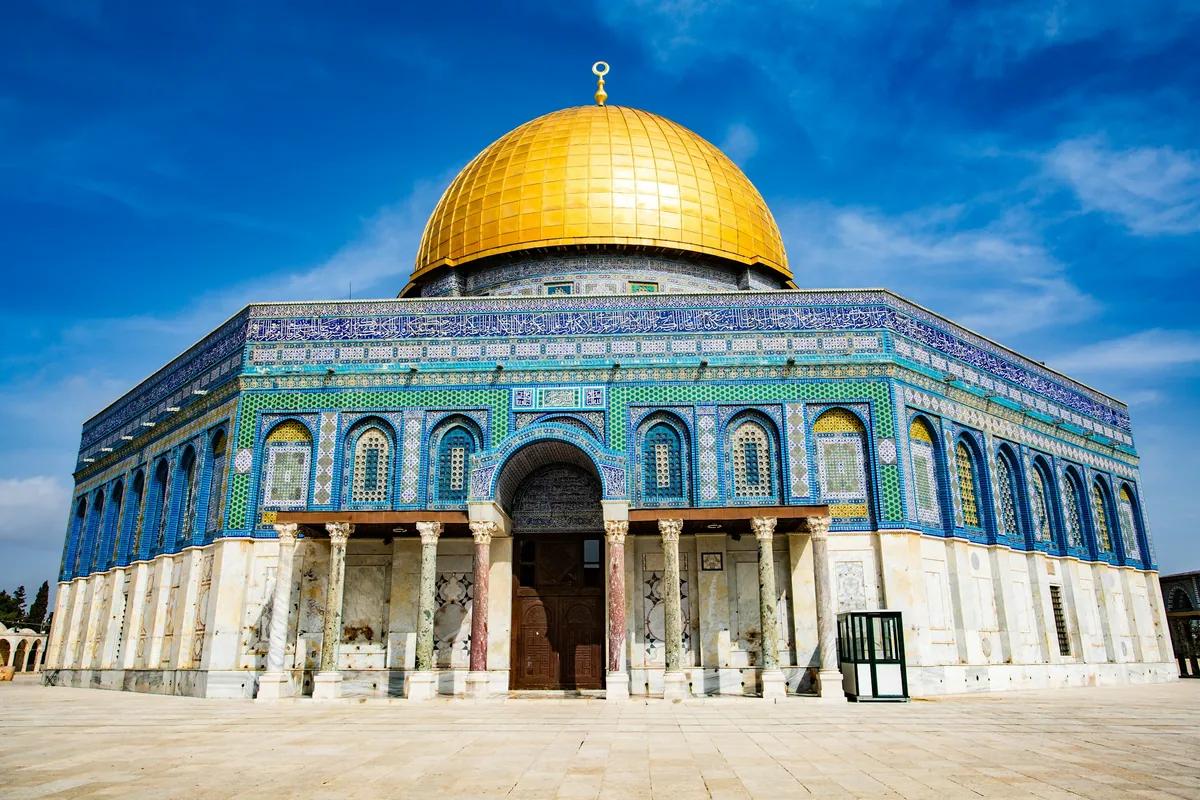
Israel, in frame
A quick visual sense of the landscapes, stays, and atmosphere your itinerary can be built around.
Build a Israel itinerary around your dates.
Share your travel month, group size, budget comfort, and must-do experiences. The Taro team will shape the right route before any payment conversation.