Why Iceland works
Iceland is a Nordic island country between the Arctic Ocean and the North Atlantic Ocean, located on the Mid-Atlantic Ridge between Europe and North America and counted as Europe's westernmost and most sparsely populated country. Its capital and largest city, Reykjavík, is home to about 35% of the country's roughly 395,000 residents, and Icelandic is its official language. Warmed by the Gulf Stream despite lying just south of the Arctic Circle, Iceland has a temperate climate overall, though its latitude and marine setting keep summers cool and give most of the country a polar climate.
According to the Landnámabók and Íslendingabók, monks known as the Papar, possibly connected to a Hiberno-Scottish mission, lived in Iceland before Scandinavian settlers arrived; an excavated cabin in Hafnir on the Reykjanes peninsula has been carbon-dated to abandonment sometime between 770 and 880, and a longhouse uncovered in Stöðvarfjörður in 2016 may date to as early as 800. The Swedish Viking explorer Garðar Svavarsson became the first to circumnavigate Iceland in 870, establishing it as an island and building a house at Húsavík, and when he departed the following summer his crewman Náttfari stayed behind with two slaves, settling at what is now Náttfaravík as the island's first documented permanent residents. The Norwegian-Norse chieftain Ingólfr Arnarson built his homestead in present-day Reykjavík in 874, a date that marks the traditional start of Iceland's settlement era.
Iceland is the only large insular landmass in the world situated on a mid-ocean ridge above sea level, and likely the only place where the drifting apart of two major tectonic plates can be observed directly above the surface, since the island sits astride the Mid-Atlantic Ridge where the Eurasian and North American plates are pulling away from each other. Geologically young at 16 to 18 million years old, Iceland forms the surface expression of the Iceland Plateau, a large igneous province shaped by the Iceland hotspot and the Mid-Atlantic Ridge running through it, making the island highly active geologically, with volcanoes including Hekla, Eldgjá, Herðubreið, and Eldfell. The 1783–1784 eruption of Laki caused a famine that killed nearly a quarter of the island's population and sent dust and haze across much of Europe.
The island's interior is a volcanic plateau of sand and lava fields, mountains, and glaciers, with glacial rivers running through the lowlands to the sea, and this landscape has produced the geysers and frequent eruptions for which Iceland is known. That same geothermal activity shapes daily life as much as tourism, powering the country's energy needs and even its traditional cooking, where dark rye bread has long been baked underground in geothermally heated ground.
Icelandic cuisine centres on fish, lamb, and dairy, with little use of herbs or spices, and, given the island's climate, fruits and vegetables were historically absent from traditional dishes, though greenhouse cultivation has made them more common today. Þorramatur, a selection of traditional dishes eaten around the month of Þorri, beginning the first Friday after 19 January, includes skyr, a yogurt-like cheese, hákarl, cured shark, cured ram, singed sheep heads, black pudding, flatkaka flatbread, and dried fish, while puffin, often prepared by broiling, is considered a local delicacy. A typical breakfast includes pancakes, cereal, fruit, and coffee, lunch may take the form of a smörgåsbord, and dinner, the main meal of the day for most Icelanders, usually centres on fish or lamb.
- Iceland — Wikipedia, CC BY-SA 4.0
Text adapted from the linked articles under CC BY-SA 4.0; edited for length.
Trip Snapshot
Highlights
Suitable For
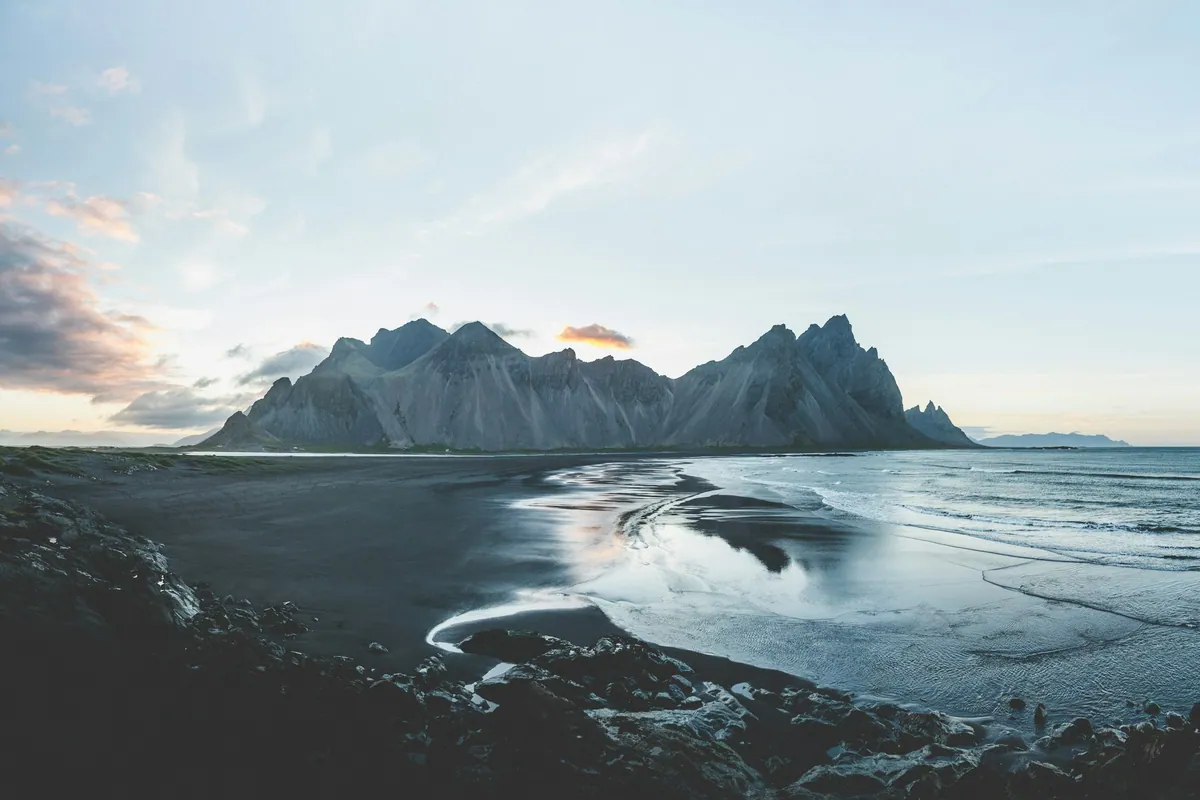
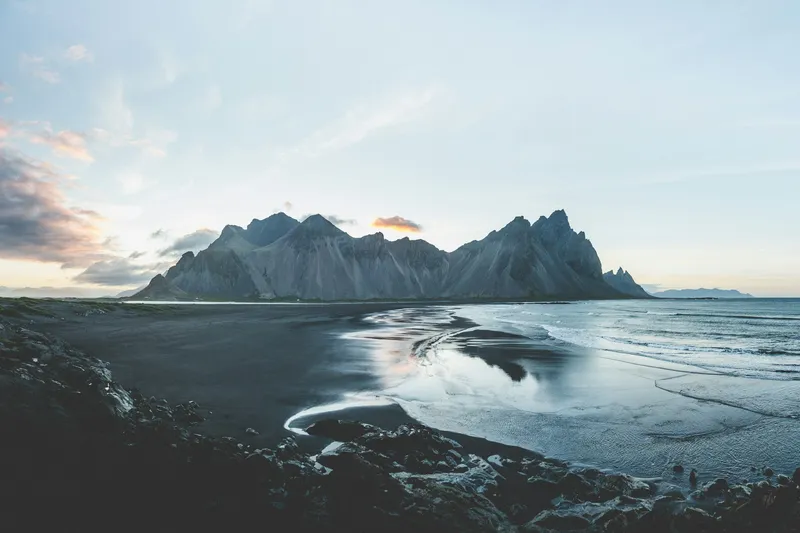
Iceland, in frame
A quick visual sense of the landscapes, stays, and atmosphere your itinerary can be built around.
Iceland questions, answered
When is the best time to visit Iceland?
June to August (summer), September to March (Northern Lights)
What is the weather like in Iceland?
Subarctic oceanic, 0-15°C
Do I need a visa to travel to Iceland?
Schengen Visa required. Visa rules change without notice — confirm current requirements with the destination's embassy or consulate before you book.
What currency is used in Iceland?
Icelandic Krona (ISK)
What languages are spoken in Iceland?
Icelandic, English widely spoken
Build a Iceland itinerary around your dates.
Share your travel month, group size, budget comfort, and must-do experiences. The Taro team will shape the right route before any payment conversation.