Why Hungary works
Hungary is a landlocked country in Central Europe, spanning much of the Carpathian Basin and bordered by Slovakia to the north, Ukraine to the northeast, Romania to the east and southeast, Serbia to the south, Croatia and Slovenia to the southwest, and Austria to the west. It lies within the Danube River's drainage basin and is dominated by great lowland plains, with a population of over 9.5 million, consisting mostly of ethnic Hungarians, or Magyars, and a significant Romani minority. Hungarian is the official language, one of the few in Europe outside the Indo-European family, and Budapest is the country's capital, largest city, and cultural and economic centre.
In 972, the ruling prince Géza of the Árpád dynasty began integrating Hungary into Christian Western Europe, and his son, Saint Stephen I, became the first King of Hungary after defeating his pagan uncle Koppány, going on to have Hungary recognised as a Catholic Apostolic Kingdom and receiving the insignia of royalty from Pope Sylvester II. By 1006, Stephen had consolidated his power and begun sweeping reforms to convert Hungary into a Western-style feudal state, switching the country's administration to Latin, which remained the official language of government until as late as 1844. King Saint Ladislaus later completed Stephen's work, further consolidating the Hungarian state and strengthening Christianity across the kingdom.
Hungary's geography has traditionally been defined by its two main waterways, the Danube and Tisza rivers, reflected in the country's tripartite division into Dunántúl, "beyond the Danube" or Transdanubia, Tiszántúl, "beyond the Tisza," and Duna–Tisza köze, "between the Danube and Tisza." The Danube flows north to south through the centre of the country, and Hungary's entire territory lies within its drainage basin. Transdanubia, stretching west from the centre of the country toward Austria, is a largely hilly region shaped by low mountains, including the easternmost stretch of the Alps, Alpokalja, the Transdanubian Mountains at the centre of Transdanubia, and the Mecsek and Villány mountains in the south; the region's highest point is Írott-kő, in the Alps, at 882 metres.
Hungary holds the largest synagogue in Europe, built in 1859 in Moorish Revival style with a capacity of 3,000 people, alongside one of the largest medicinal baths in Europe, completed in 1913 in Modern Renaissance style in Budapest's city park, one of the largest basilicas in Europe, the second-largest territorial abbey in the world, and the largest early Christian necropolis outside Italy. Hungarian Art Nouveau, distinct from the Historicism that preceded it, drew on the country's own architectural character, and Ödön Lechner, its most significant figure, drew initial inspiration from Asian architecture reflecting the eastern origins of the Hungarians before turning to traditional Hungarian decorative designs, producing an original synthesis of styles.
Traditional dishes such as goulash, gulyás stew or soup, feature prominently in Hungarian cuisine, often flavoured with paprika, a Hungarian innovation and one of the most common spices used in the country's cooking, along with tejföl, a thick sour cream used to soften a dish's flavour. Halászlé, a rich fisherman's soup made from several kinds of poached fish, is another well-known dish, alongside chicken paprikash, foie gras made from goose liver, pörkölt stew, vadas, a game stew with vegetable gravy and dumplings, trout with almonds, and túrós csusza, dumplings served with fresh quark cheese and thick sour cream. Desserts include the Dobos torte and rétes, strudels filled with apple among other fillings.
- Hungary — Wikipedia, CC BY-SA 4.0
Text adapted from the linked articles under CC BY-SA 4.0; edited for length.
Trip Snapshot
Highlights
Suitable For
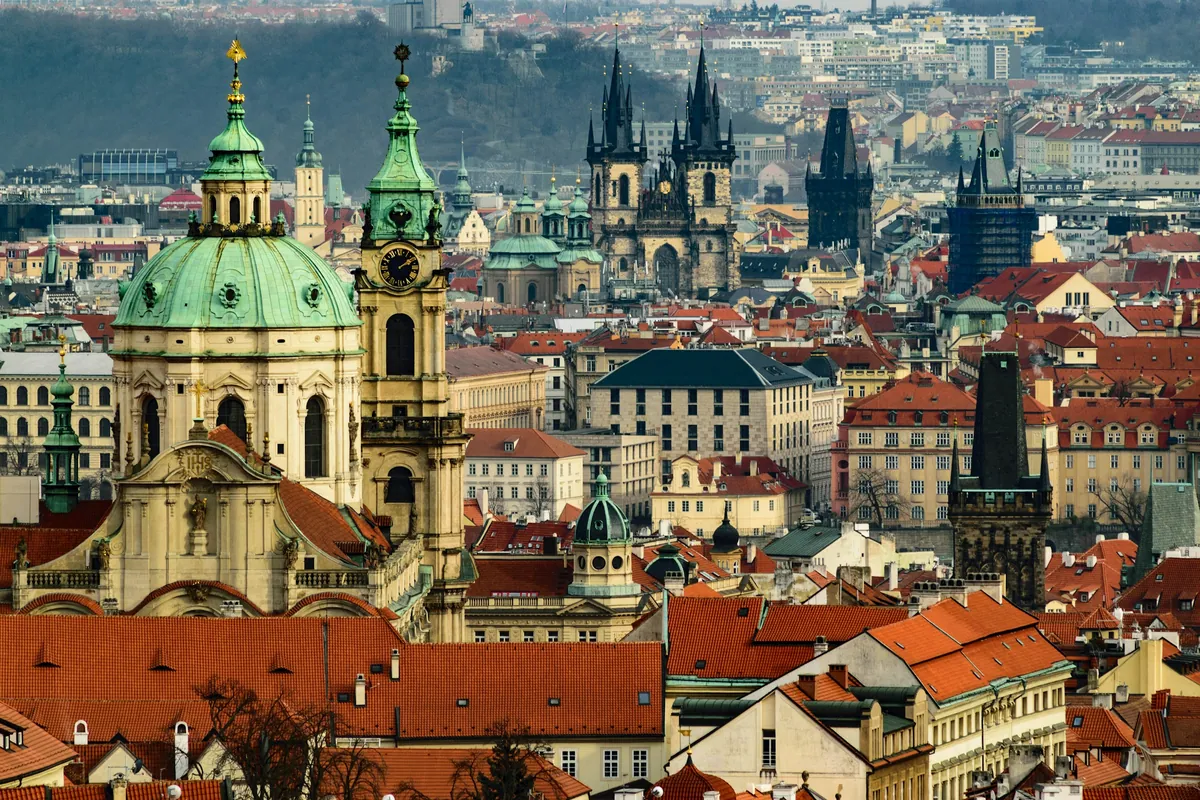
Hungary, in frame
A quick visual sense of the landscapes, stays, and atmosphere your itinerary can be built around.
Build a Hungary itinerary around your dates.
Share your travel month, group size, budget comfort, and must-do experiences. The Taro team will shape the right route before any payment conversation.