beach
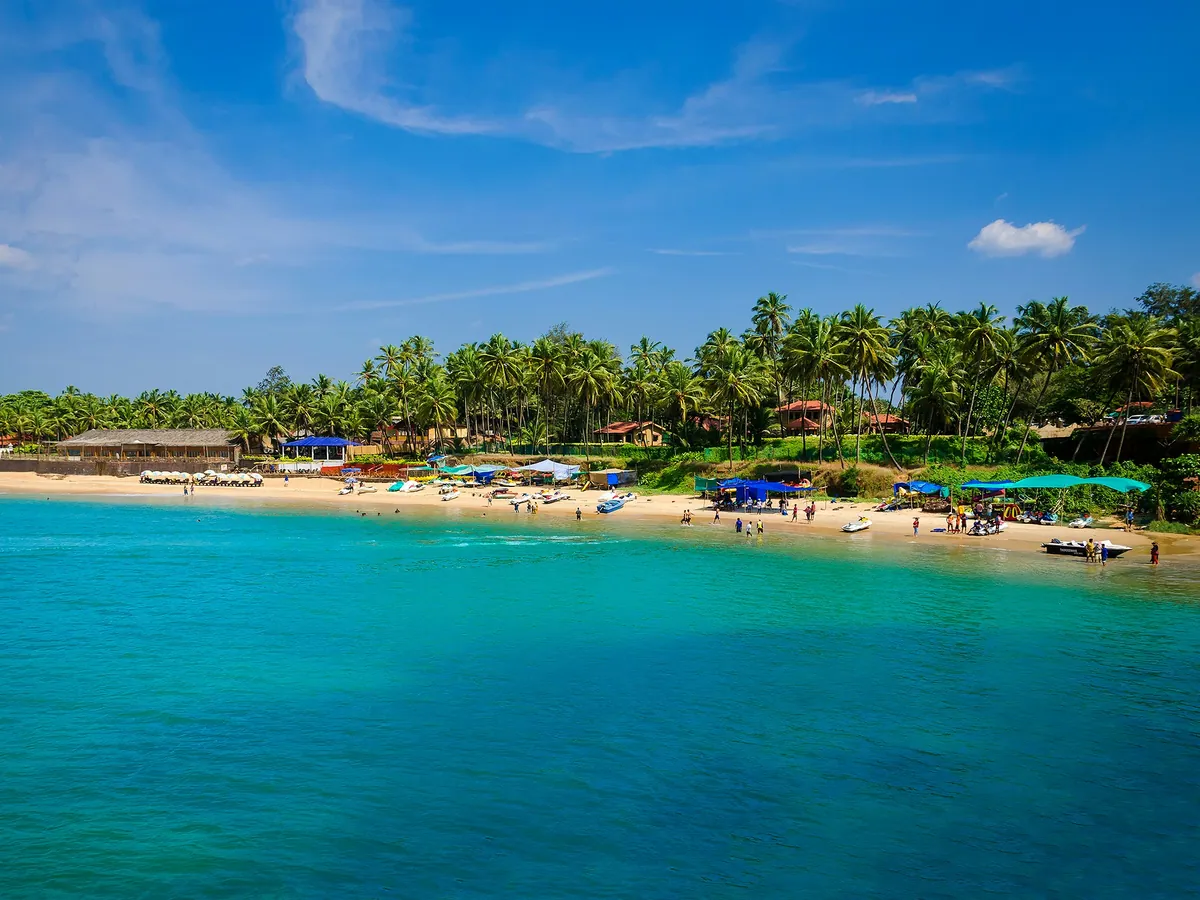
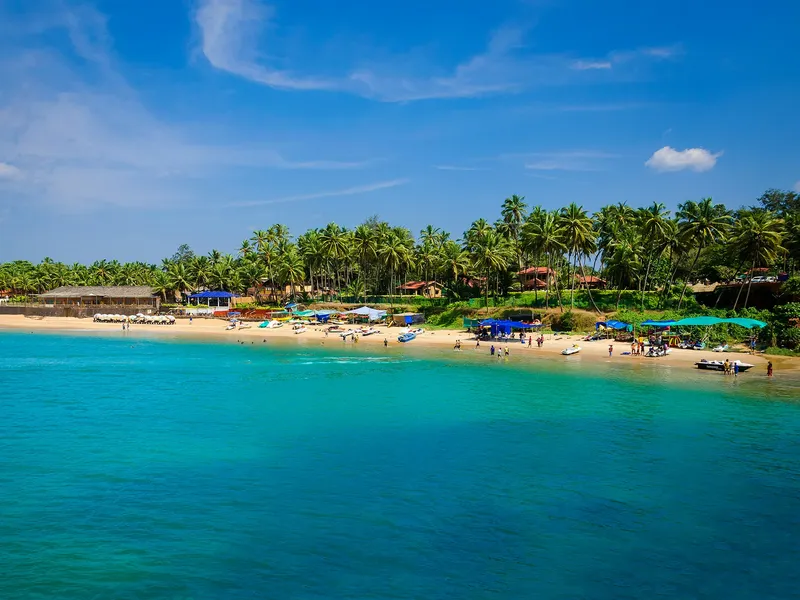
Baga Beach
The iconic party beach of North Goa — shacks, water sports, Tito's Lane nightlife, and Saturday night markets.
Goa is a state on the southwestern coast of India within the Konkan region, separated geographically from the Deccan highlands by the Western Ghats. It is bordered by the Indian states of Maharashtra to the north and Karnataka to the east and south, with the Arabian Sea forming its western coastline, and it is India's smallest state by area and fourth-smallest by population. Panaji, also called Panjim, is the state capital, while Vasco da Gama is its largest city by population, and Konkani, spoken by the majority of its inhabitants, is the state's official language.
In 1510, the Portuguese defeated the ruling Bijapur sultan Yusuf Adil Shah with the help of a local ally, Thimmayya, also known as Timoji, and established a permanent settlement at Velha Goa, or Old Goa, beginning four and a half centuries of Portuguese colonial rule that lasted until Goa's annexation by India in 1961. Goa was the capital of the eastern Portuguese empire for much of that period. The Goa Inquisition, a formal tribunal, was established in 1560 and finally abolished in 1812, and alongside the Portuguese, the Croatian Republic of Ragusa maintained a small colonial settlement, Sao Braz, in the Goan village of Gandaulim during the same era. From the late eighteenth century, Goan territory was organized into the Velhas Conquistas, the central nucleus of Bardes, Ilhas de Goa, and Salcette that had been under Portuguese administration since the sixteenth century.
Goa's one World Heritage Site is the Bom Jesus Basilica with the churches and convents of Old Goa, Portuguese-era monuments that hold the mortal remains of Saint Francis Xavier, regarded by many Catholics as the patron saint of Goa. The relics are brought down for public veneration at intervals set by the Church in Goa; the first such exposition was held in 1782, nearly 230 years after Xavier's death, and since Goa's annexation by India, expositions have been held roughly every ten years between December and January, most recently in 2024. The Velhas Conquistas region is known for Goa-Portuguese style architecture, and the state also holds a number of forts from the same colonial era.
Goa features an extreme tropical monsoon climate, hot and humid for most of the year given its position in the torrid zone near the Arabian Sea. May is typically the hottest month, with daytime temperatures over 35°C and high humidity from the sea's proximity, and the state's year divides into three seasons: the southwest monsoon from June to September, a post-monsoon period from October to January, and a pre-monsoon period from February to May, with over 90% of average annual rainfall arriving during the monsoon months. Goa's coastline runs about 103 kilometres along the Arabian Sea, lined with named beaches including Anjuna Beach, Baga Beach, Bambolim Beach, Calangute Beach, Candolim Beach, Colva Beach, and Miramar Beach; a tourist website counts around 54 beaches at minimum, a figure that can rise past 100 once smaller, minor beaches are included.
As a former Portuguese territory, Goa developed a musical scene built around Western instruments such as the violin, drums, guitar, trumpet, and piano, alongside traditional Goan forms including Corridinho, Mando, Dekhnni, Fugdi, Dulpod, and Fado, the last carrying over the significance of Portuguese fado music in Goa. The state has also produced prominent figures in Indian classical music, including Mogubai Kurdikar, Lata Mangeshkar, Deenanath Mangeshkar, Kishori Amonkar, Kesarbai Kerkar, Jitendra Abhisheki, and Pandit Prabhakar Karekar.
Rice with fish curry, known locally as xit koddi, is the staple diet in Goa, and Goan cuisine draws on a wide variety of fish dishes prepared with coconut, coconut oil, chili peppers, spices, and, in Catholic cooking, vinegar, reflecting the strong influence of Portuguese cuisine on the state's food. Goan food splits broadly into Goan Catholic and Goan Hindu traditions, each with distinct tastes and cooking styles: pork dishes such as vindalho, xacuti, chouriço, and sorpotel are prepared for major occasions among Goan Catholics, while khatkhate, a mixed vegetable stew containing at least five vegetables, fresh coconut, and Goan spices, is a popular dish during festivals celebrated by Hindus and Christians alike.
Text adapted from the linked articles under CC BY-SA 4.0; edited for length.
North Goa for nightlife and parties, South Goa for peace and luxury
A quick visual sense of the landscapes, stays, and atmosphere your itinerary can be built around.
The iconic party beach of North Goa — shacks, water sports, Tito's Lane nightlife, and Saturday night markets.
Wednesday flea market with bohemian vibes — handmade jewelry, tie-dye clothes, live music, and hippie culture since the '60s.
South Goa's crescent-shaped paradise — silent noise parties, kayaking to Butterfly Beach, and dolphin spotting trips.
India's fifth-tallest waterfall at 310m — a milky cascade through dense jungle, best reached by jeep safari.
17th-century Portuguese fort overlooking the Arabian Sea — a well-preserved lighthouse, moat, and panoramic sunset views.
UNESCO World Heritage church holding St. Francis Xavier's preserved remains — Baroque architecture from 1605.
November to February
Tropical, warm and humid
No visa required (domestic). Visa rules change without notice — confirm current requirements with the destination's embassy or consulate before you book.
Indian Rupee (INR)
Konkani, Hindi, English
Share your travel month, group size, budget comfort, and must-do experiences. The Taro team will shape the right route before any payment conversation.