Why Galápagos Islands works
The Galápagos Islands are an archipelago of volcanic islands in the eastern Pacific, straddling the equator about 485 nautical miles west of mainland South America. They form the Galápagos Province of Ecuador, with a population slightly over 33,000 in 2020, divided into the cantons of San Cristóbal, Santa Cruz, and Isabela, the three most populated islands in the chain. All the islands are protected as part of Ecuador's Galápagos National Park and Marine Reserve.
European discovery of the Galápagos is recorded on 10 March 1535, when the Spanish bishop of Panama, Tomás de Berlanga, sailing to Peru to adjudicate a dispute between Francisco Pizarro and Diego de Almagro, drifted off course after his ship was becalmed in the Doldrums. He found the islands uninhabited and so arid that two men and ten horses died for lack of fresh water, forcing the rest of his party to survive on cactus pads; the ship left the islands unclaimed, though Berlanga wrote an account of their condition and wildlife for Charles V. The islands first appeared on maps by Gerardus Mercator and Abraham Ortelius around 1570, and centuries later, in the 1830s, Charles Darwin's study of the islands' endemic species inspired his theory of evolution by natural selection. Though the first protective legislation for the Galápagos was enacted in 1930 and supplemented in 1936, systematic conservation action did not begin until the late 1950s: the International Union for the Conservation of Nature organized a fact-finding mission in 1955, and UNESCO followed in 1957 with an expedition, conducted with the Ecuadorian government, to study conservation needs and choose a site for a research station. In 1959, the centenary of Charles Darwin's publication of The Origin of Species, the Ecuadorian government declared 97.5% of the archipelago's land area a national park, excepting already-colonised areas, and the Charles Darwin Foundation was founded that same year.
The archipelago sits at the Galápagos triple junction on the Nazca tectonic plate, which is moving east-southeast and diving beneath the South American plate at about 2.5 inches a year, while also lying atop the Galápagos hotspot, where a mantle plume melts the crust from below to create volcanoes. The first islands here formed at least 8 million, and possibly as much as 90 million, years ago, and volcanism has continued on the Galápagos for at least 20 million years, with the mantle plume beneath the moving plate building up a roughly 3-kilometre-thick platform under the island chain and its associated seamounts. There are 19 islands in the group with areas above one square kilometre.
Although the islands sit on the equator, the Humboldt Current brings cold water to them, producing frequent drizzle through most of the year, and the climate is regularly disrupted by El Niño events roughly every three to seven years, which bring warmer sea surface temperatures, higher sea levels, stronger wave action, and depleted nutrients in the water. Precipitation can swing sharply from one year to the next as a result: at the Charles Darwin Station, March rainfall reached 249.0 millimetres in the unusually wet year of 1969 but only 1.2 millimetres the following March. Most of the Galápagos is covered in semi-desert vegetation — shrublands, grasslands, and dry forest — though some islands have higher-elevation areas with cooler temperatures and heavier rainfall that support humid-climate forests and montane grasslands known as pampas at the highest points.
About 500 species of native vascular plants grow on the islands, including 90 fern species, with roughly 180 vascular plant species found nowhere else. That isolation also produced the archipelago's distinctive endemic animal life: giant tortoises, finches, flightless cormorants, Galápagos lava lizards, and marine iguanas all evolved in place to adapt to island conditions. The province's administrative structure across San Cristóbal, Santa Cruz, and Isabela reflects where population and infrastructure have concentrated on the three largest islands, even as the wider archipelago's smaller islands and islets remain the setting for the wildlife encounters visitors come to see.
- Galápagos Islands — Wikipedia, CC BY-SA 4.0
Text adapted from the linked articles under CC BY-SA 4.0; edited for length.
Trip Snapshot
Highlights
Suitable For
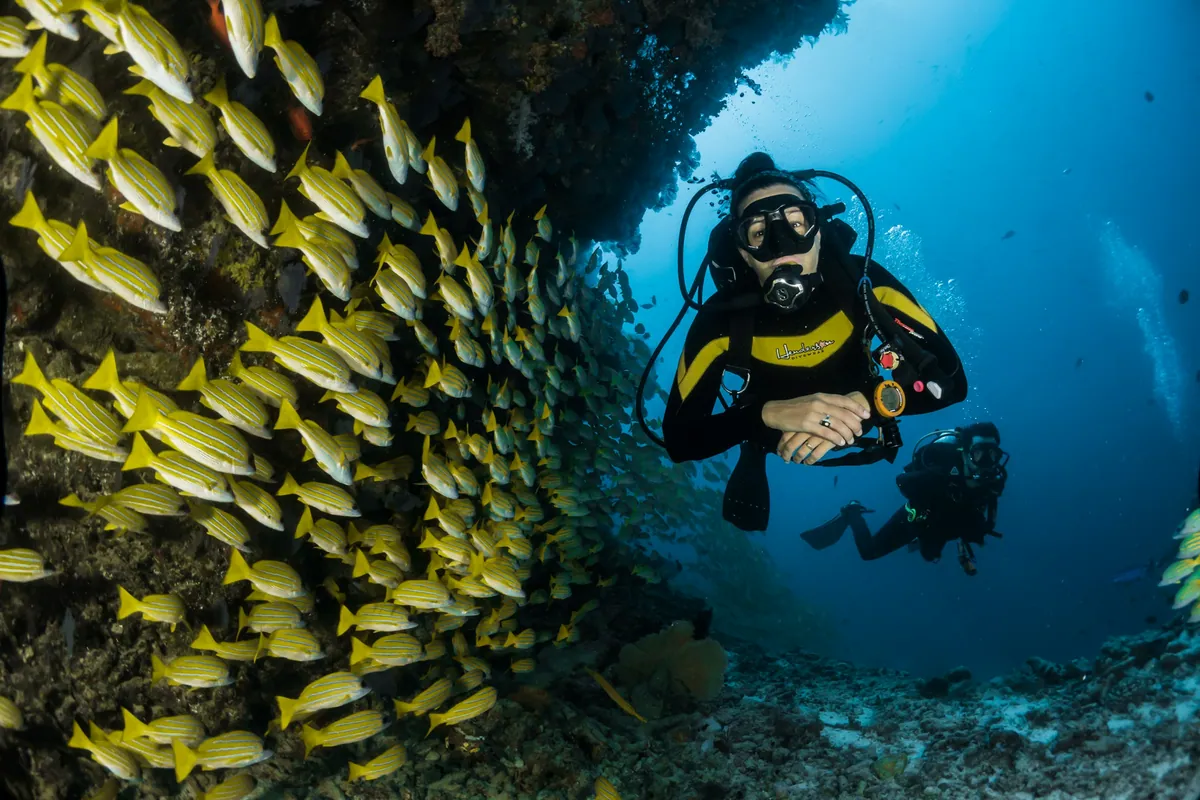
Galápagos Islands, in frame
A quick visual sense of the landscapes, stays, and atmosphere your itinerary can be built around.
Build a Galápagos Islands itinerary around your dates.
Share your travel month, group size, budget comfort, and must-do experiences. The Taro team will shape the right route before any payment conversation.