Why Finland works
Finland, officially the Republic of Finland, is a Nordic country in Northern Europe bordered by Sweden to the northwest, Norway to the north, and Russia to the east, with the Gulf of Bothnia to the west and the Gulf of Finland to the south, opposite Estonia. Its capital and largest city is Helsinki, and the country has a population of 5.7 million, with Finnish and Swedish as official languages, the mother tongues of 83.5% and 5.0% of the population respectively. Finland's climate ranges from humid continental in the south to boreal in the north, and its land is predominantly covered by boreal forest, threaded through with over 180,000 recorded lakes.
The 12th and 13th centuries were a turbulent period around the northern Baltic, as Finnish tribes such as the Tavastians and Karelians moved in and out of conflict with Novgorod and each other while crusades from Catholic realms around the Baltic targeted the Finnish tribes: Danes led at least three crusades to Finland, around 1187, in 1191, and in 1202, while Swedes led a crusade against the Tavastians in 1249 and another against the Karelians in 1293. Through these crusades, particularly the Second Swedish Crusade led by Birger Jarl, and the colonization of Finnish coastal areas by Christian Swedes during the Middle Ages, Finland was drawn into the Swedish sphere for centuries. The Swedish era ended with the Finnish War of 1809, when Finland was conquered by the armies of Alexander I of Russia and became an autonomous Grand Duchy within the Russian Empire, recognised by the Diet of Porvoo, a status that lasted until the end of 1917. Swedish remained widely spoken through this period, but the Finnish language gained increasing recognition, and from the 1860s a nationalist Fennoman movement grew, with the philosopher and statesman J. V. Snellman playing a leading role in the 19th-century Finnish national movement.
Lying between roughly latitudes 60° and 70° N, Finland is one of the world's northernmost countries — among world capitals, only Reykjavík sits further north than Helsinki — and stretches 1,160 kilometres from its southernmost point, Hanko in Uusimaa, to its northernmost, Nuorgam in Lapland. The country holds about 168,000 lakes larger than 500 square metres and 179,000 islands; its largest lake, Saimaa, ranks as the fourth largest in Europe, and the Finnish Lakeland, where major cities including Tampere, Jyväskylä, and Kuopio sit near large lakes, holds the greatest concentration of them. Off the coast lies the largest archipelago on Earth, made up of more than 50,000 islands.
The Finnish attachment to sauna runs through the country's cultural tradition, particularly around Midsummer and Christmas, and the word itself traces to a Proto-Finnish origin found in Finnic and Sámi languages dating back 7,000 years. Steam bathing traditions exist elsewhere in Europe too, persisting also in Sweden, Estonia, Latvia, Russia, Norway, and parts of the United States and Canada, but nearly every Finnish house has its own sauna, or access to a shared one in multi-storey apartment buildings, and municipal swimming halls and hotels commonly maintain their own as well; Finnish sauna culture is inscribed on the UNESCO Intangible Cultural Heritage Lists.
Finnish cuisine combines traditional country cooking with contemporary style, built around potato, meat, and fish, with wholemeal grains such as rye, barley, and oats, and berries including bilberries, lingonberries, cloudberries, and sea buckthorn appearing throughout. Milk and its derivatives, such as buttermilk, are used widely as both food and drink, and salmon is the most popular fish dish in the country. Finland has the world's second-highest per capita coffee consumption, and milk consumption also runs high, averaging about 112 litres per person per year.
- Finland — Wikipedia, CC BY-SA 4.0
Text adapted from the linked articles under CC BY-SA 4.0; edited for length.
Trip Snapshot
Highlights
Suitable For
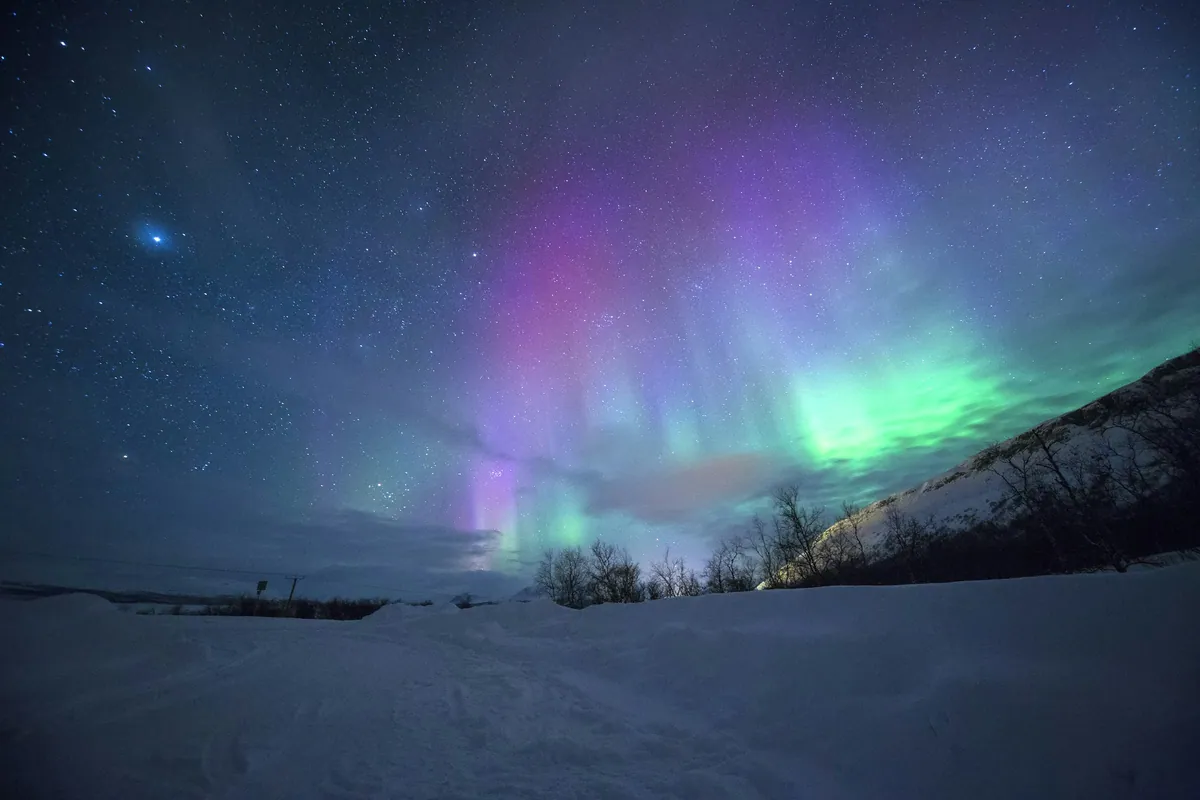
Finland, in frame
A quick visual sense of the landscapes, stays, and atmosphere your itinerary can be built around.
Build a Finland itinerary around your dates.
Share your travel month, group size, budget comfort, and must-do experiences. The Taro team will shape the right route before any payment conversation.