Why Fiji works
Fiji, officially the Republic of Fiji, is an archipelagic country in Melanesia, part of Oceania in the South Pacific Ocean, lying about 1,100 nautical miles north-northeast of New Zealand. It consists of more than 330 islands, of which about 110 are permanently inhabited, and more than 500 islets, for a total land area of about 18,300 square kilometres; the most outlying island group is Ono-i-Lau. About 87% of the population lives on the two major islands, Viti Levu and Vanua Levu, with roughly three-quarters of Fijians settled along Viti Levu's coasts, either in the capital, Suva, or in smaller centres such as Nadi or Lautoka, while the island's mountainous interior remains sparsely inhabited.
Pottery evidence from Fijian sites shows the islands were settled by Austronesian peoples by at least 3500 to 1000 BC, with Melanesians following around a thousand years later, though open questions remain about the exact dates and patterns of migration. It is believed that either the Lapita people or the ancestors of the Polynesians arrived first, with archaeological evidence suggesting some later migrants moved on from Fiji to Samoa, Tonga, and even Hawai'i; separately, evidence of human settlement on Moturiki Island dates back to at least 600 BC and possibly as far as 900 BC. Although some elements of Fijian culture echo the Melanesian cultures of the western Pacific, Fijian tradition maintains especially strong connections to its Polynesian neighbours.
Fiji lies roughly 5,100 kilometres southwest of Hawaii and about 3,150 kilometres from Sydney, positioned as a hub of the southwest Pacific midway between Vanuatu and Tonga. The archipelago covers a total area of some 194,000 square kilometres, of which around 10% is land, spread across 332 islands, 106 of them inhabited. The 180th meridian runs through the island of Taveuni, though the International Date Line bends around the group to keep a single, uniform time zone across all of Fiji. Rotuma, an outlying island 220 nautical miles north of the main group, sits apart from the rest of the archipelago, which otherwise lies between roughly 15°42′ and 20°02′ south of the equator.
Fiji's climate is tropical marine and warm year-round with minimal extremes: a warmer season runs from November to April and a cooler season from May to October, when temperatures average around 22°C. Rainfall is heavier during the warm season, especially inland, and tends to fall more heavily on the southeast sides of the larger islands than the northwest, with knock-on effects for agriculture in those areas; winds are generally moderate, though cyclones occur roughly once a year, on average 10 to 12 times per decade. Fiji's exposure to climate change is an especially pressing issue for the country, given its vulnerability as an island nation to rising sea levels, coastal erosion, and extreme weather.
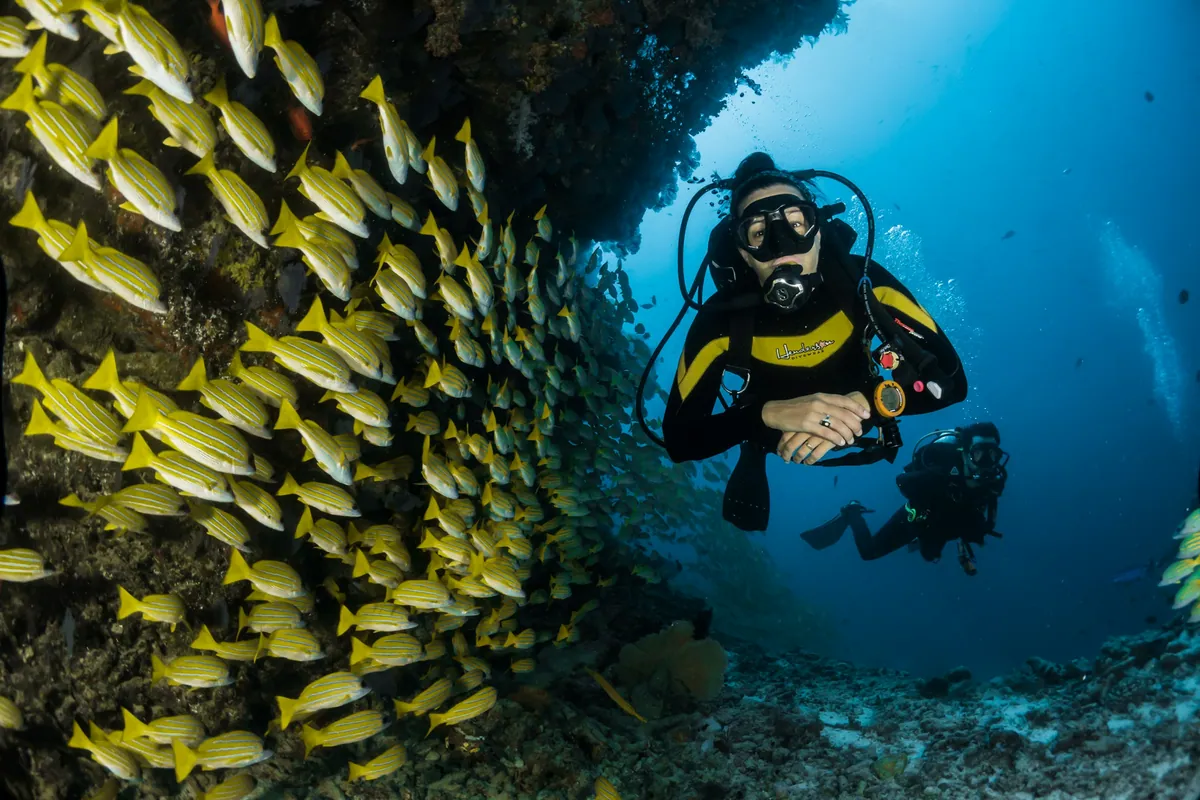
Indigenous Fijian culture and tradition remain vibrant and central to daily life for most of the population, even as Fijian society has absorbed Indian and Chinese traditions over the past century alongside influences from Europe and Pacific neighbours, particularly Tonga and Samoa, producing a distinctly multicultural national identity. That culture has also been presented internationally, showcased at the 1986 World Exposition in Vancouver and, more recently, in the Pacific Pavilion at the Shanghai World Expo of 2010. Visitors are drawn especially to Nadi, the Coral Coast, Denarau Island, and the Mamanuca Islands, where Fiji's soft coral reefs make scuba diving a common activity alongside its white sandy beaches, with Australia, New Zealand, and the United States supplying the largest numbers of international visitors.
- Fiji — Wikipedia, CC BY-SA 4.0
Text adapted from the linked articles under CC BY-SA 4.0; edited for length.
Trip Snapshot
Highlights
Suitable For
Fiji, in frame
A quick visual sense of the landscapes, stays, and atmosphere your itinerary can be built around.
Build a Fiji itinerary around your dates.
Share your travel month, group size, budget comfort, and must-do experiences. The Taro team will shape the right route before any payment conversation.