Why Etosha National Park works
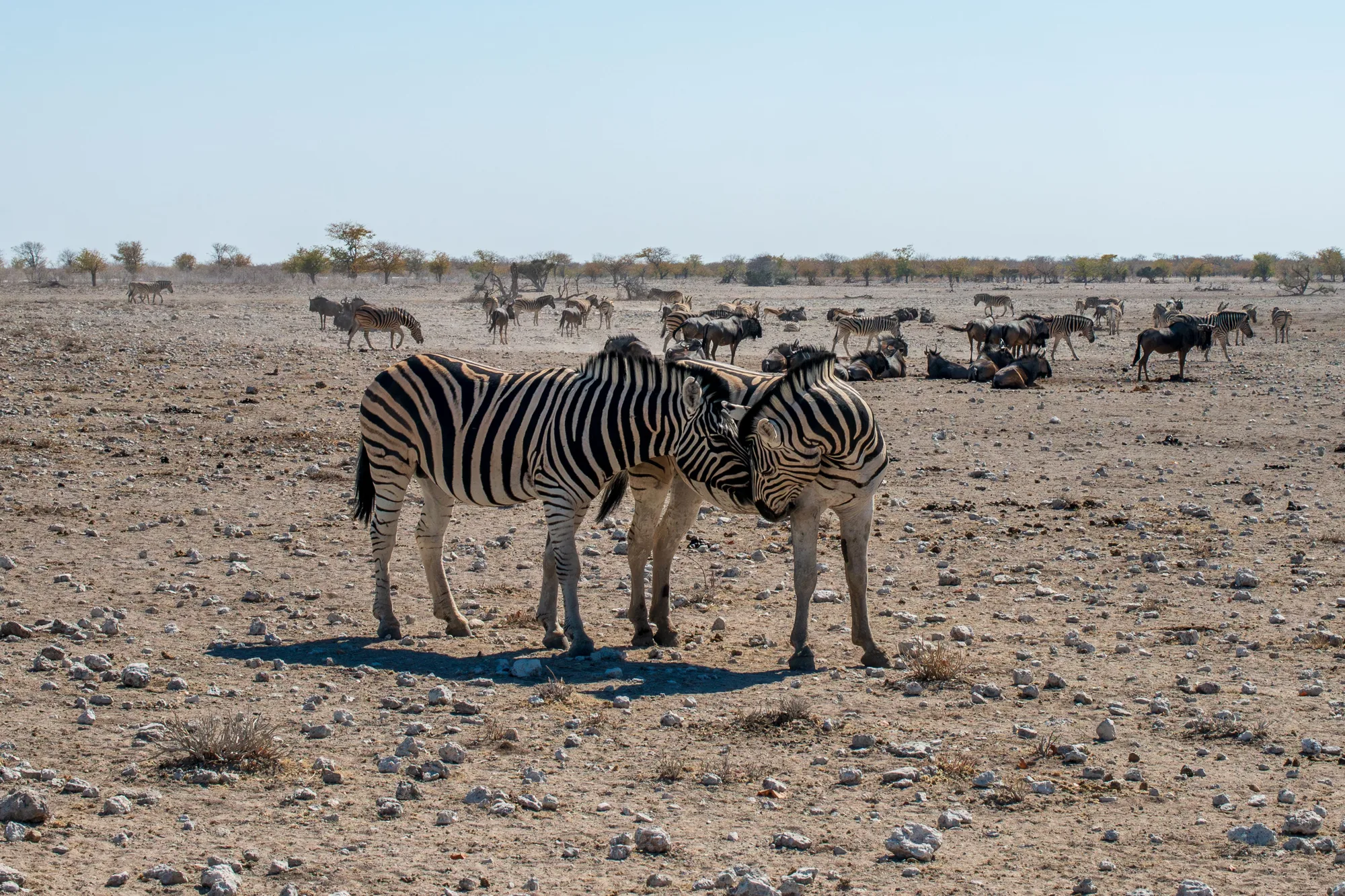
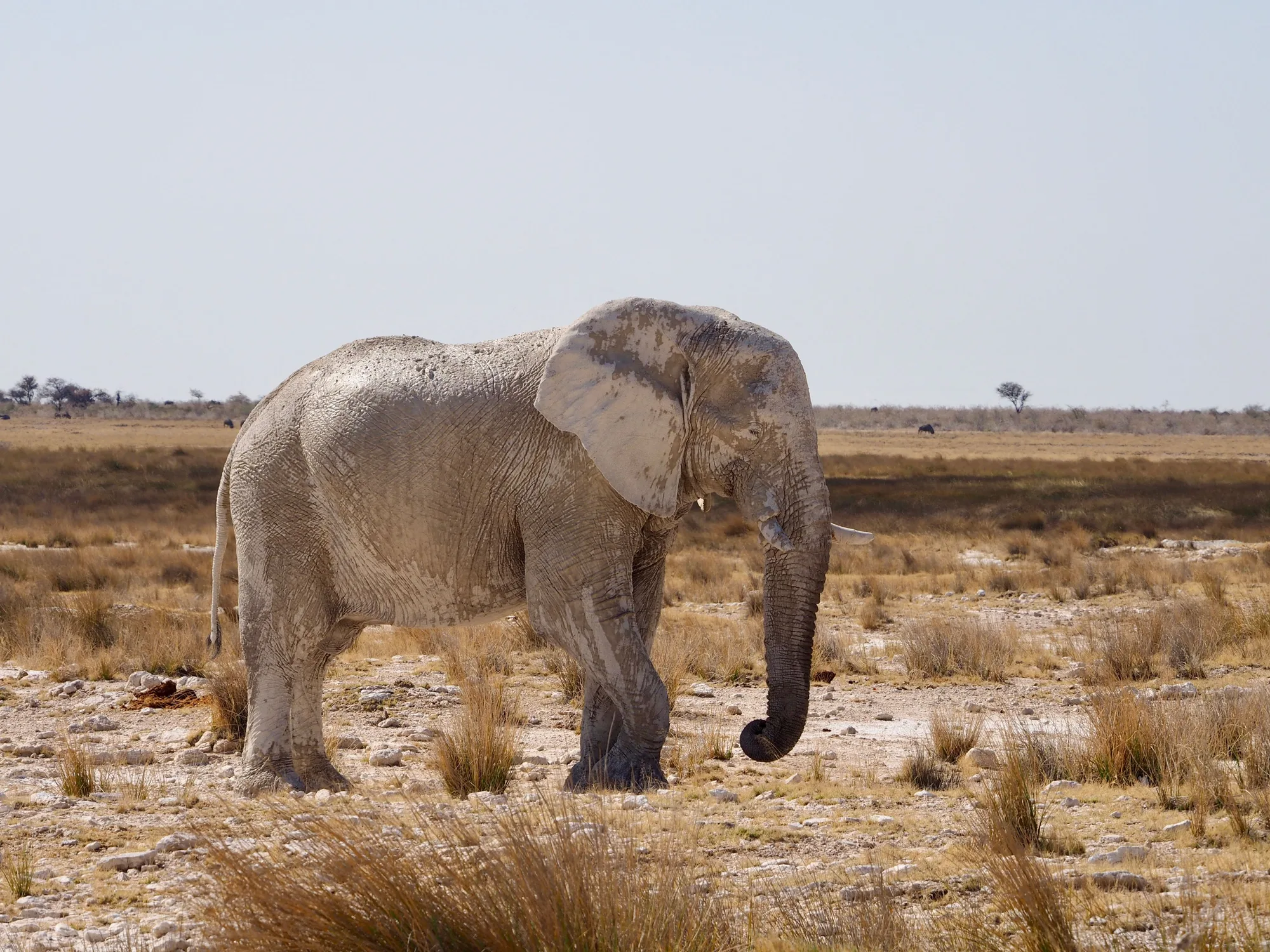
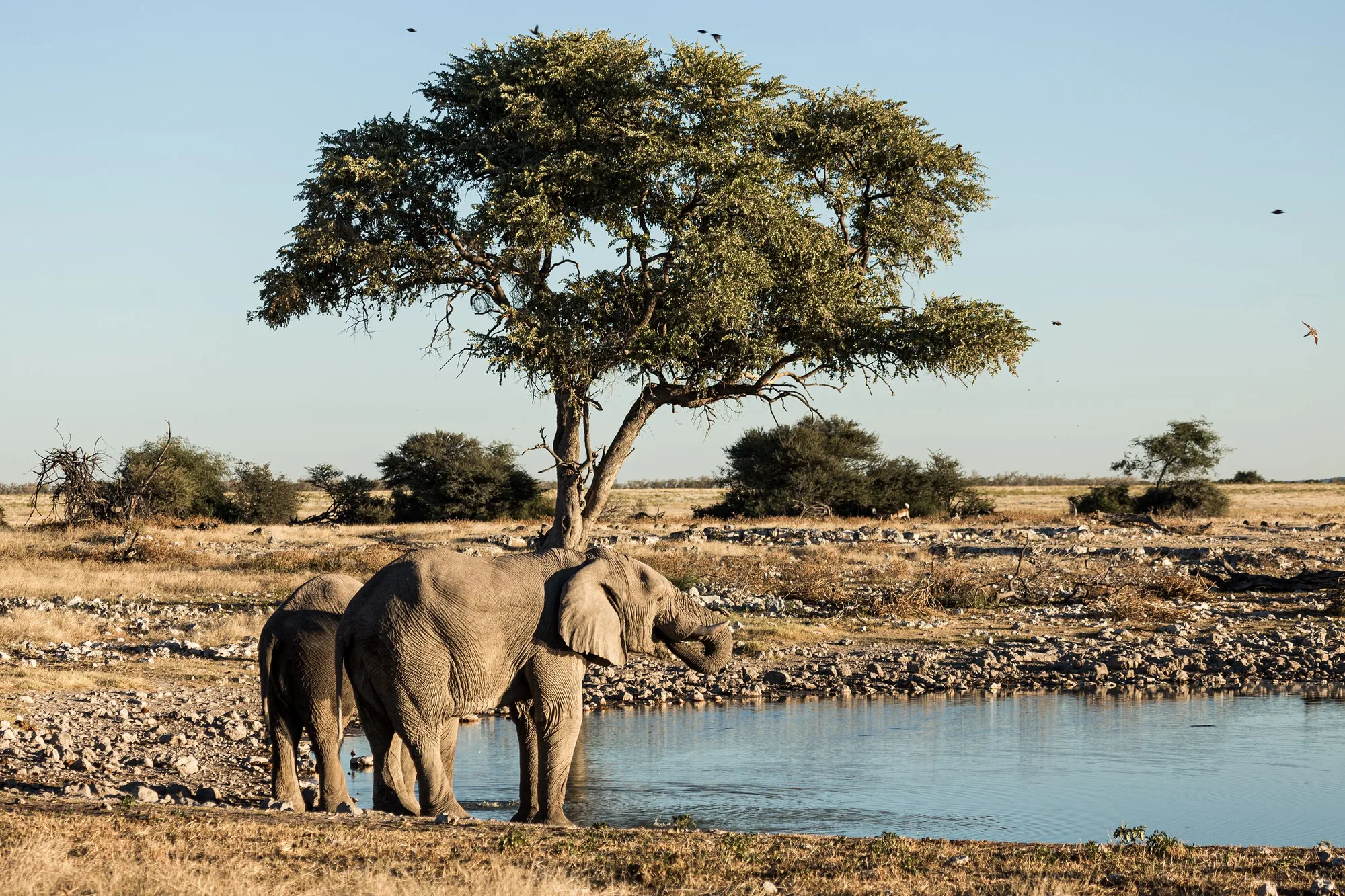
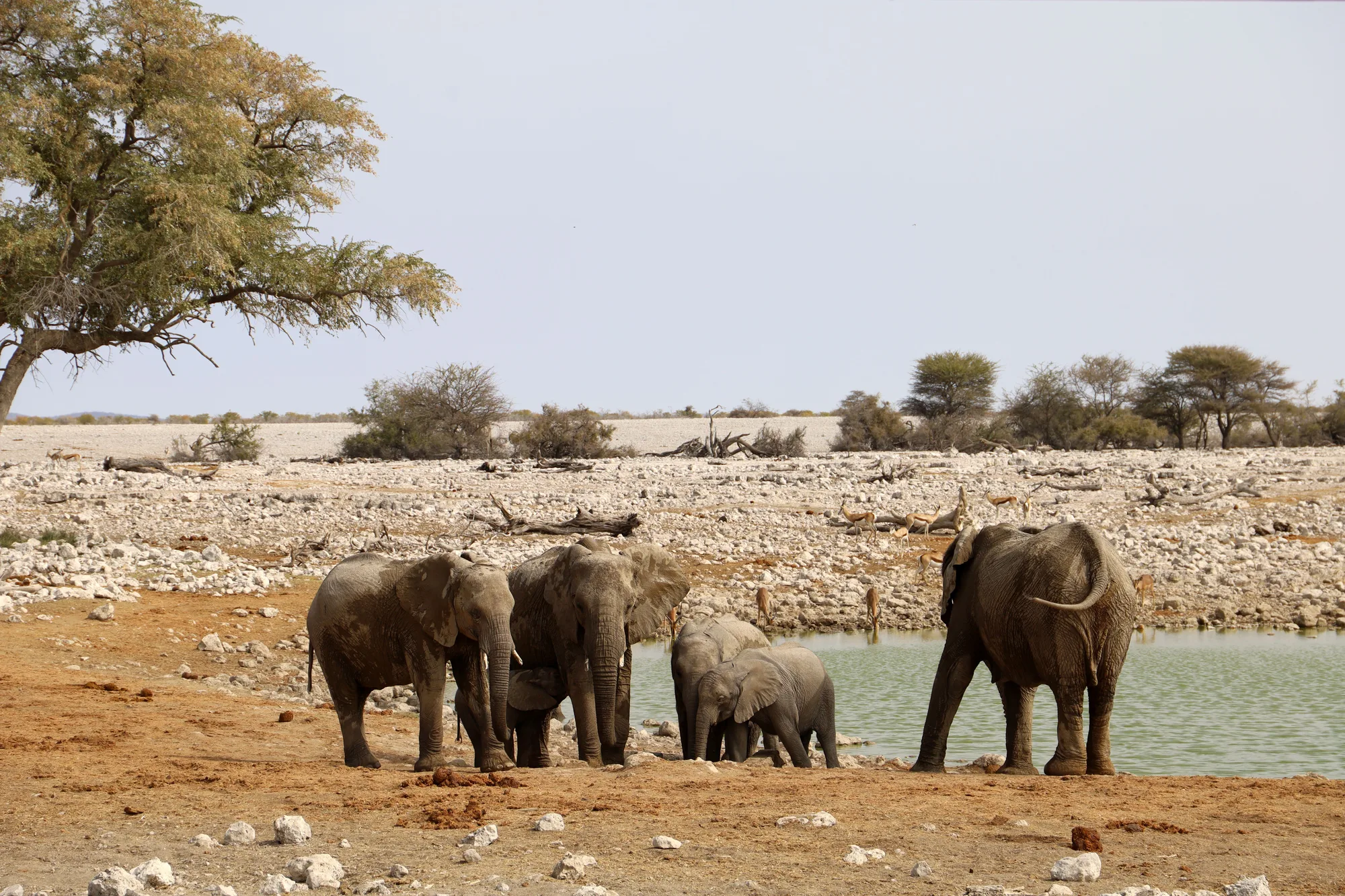
Etosha's defining feature is its namesake pan: a 4,800-square-kilometre bed of pale, cracked clay so large it is visible from orbit, ringed by mopane woodland and grassland that concentrates wildlife around a network of natural and man-made waterholes during the long dry season. Unlike most major African parks, Etosha is built for confident self-drive safaris on well-graded gravel roads, with a public sightings logbook at each rest camp keeping visitors current on lion, rhino and leopard movements. The park's three main rest camps -- Okaukuejo, Halali and Namutoni -- each have a floodlit waterhole within the camp fence, meaning game viewing continues after dark from a bench with a drink in hand; Okaukuejo's waterhole is famous for black rhino sightings on quiet, moonlit nights. Etosha holds strong populations of elephant, giraffe, zebra, springbok and both black and white rhino, plus healthy numbers of lion and the ghost-pale Etosha subspecies of gemsbok, whose colouring matches the pan's dust. The dry season (roughly May to October) concentrates animals tightly around permanent water sources, making it the far stronger viewing window; by the December-March wet season, the pan itself sometimes floods shallow and pink with flamingos, but game disperses widely into the bush.
Trip Snapshot
Suitable For
Etosha National Park, in frame
A quick visual sense of the landscapes, stays, and atmosphere your itinerary can be built around.
Etosha National Park questions, answered
When is the best time to visit Etosha National Park?
May to October (dry season, wildlife concentrated at waterholes)
What is the weather like in Etosha National Park?
Semi-arid savannah, 15-32°C by day, cold nights May-Aug
Do I need a visa to travel to Namibia?
Visa required for Indian nationals — apply in advance through a Namibian mission or VFS; no e-Visa or visa-on-arrival for India currently (verify visa rule before travel). Visa rules change without notice — confirm current requirements with the destination's embassy or consulate before you book.
What currency is used in Namibia?
NAD — Namibian Dollar
What languages are spoken in Namibia?
English, Afrikaans, Oshiwambo
Build a Etosha National Park itinerary around your dates.
Share your travel month, group size, budget comfort, and must-do experiences. The Taro team will shape the right route before any payment conversation.