Why Ethiopia works
Ethiopia, officially the Federal Democratic Republic of Ethiopia, is a landlocked country in the Horn of Africa region of East Africa, bordered by Eritrea to the north, Djibouti to the northeast, Somalia to the southeast, Kenya to the south, South Sudan to the west, and Sudan to the northwest. It covers a land area of 1,104,300 square kilometres, making it the world's 26th-largest country, and as of 2026 has around 138 million inhabitants, the tenth-most populous country in the world and the second most populous in Africa. The national capital and largest city, Addis Ababa, lies west of the East African Rift that splits the country between the African and Somali tectonic plates.
Around 980 BC, the polity of Dʿmt was established in what is now the Tigray Region and present-day Eritrea, with its capital at Yeha and widely regarded as the successor state to Punt. The kingdom took the name "Ethiopia" during the reign of Ezana in the 4th century, and after conquering the Kingdom of Kush in 330 the Aksumite territory reached its peak between the 5th and 6th centuries, at one point besieging and retaking Sana'a in 575 following the assassination of its governor. Aksum's power declined as the Red Sea passed to the Rashidun Caliphate in 646 and the port city of Adulis was plundered by Arab forces in the 8th century, compounded by land degradation and reported climate shifts between 730 and 760; the Aksumite era formally ended in 960 when Queen Gudit defeated the kingdom's last ruler.
Ethiopian art was shaped for much of its history by Christian iconography — illuminated manuscripts, paintings, crosses, icons, and metalwork such as crowns — most of it commissioned by the Ethiopian Orthodox Tewahedo Church, the state religion for a thousand years. That architectural tradition produced the rock-hewn churches of Lalibela, including the Bete Medhane Alem, one of twelve churches built under Emperor Lalibela I as a national "new Jerusalem" during a period when Christian Ethiopians were blocked from Jerusalem itself by Muslim conquests. Aksumite architecture, built from monolithic stelae such as the Tomb of the False Door, influenced the Lalibela churches in turn, while later Gondarine-period building absorbed Baroque, Arab, Turkish, and Gujarati Indian influences taught by Portuguese emissaries in the 16th and 17th centuries, visible today in the imperial fortress Fasil Ghebbi.
Ethiopia lies between the 3rd and 15th parallels north, its territory dominated by a vast highland complex of mountains and dissected plateaus divided by the Great Rift Valley, which runs generally southwest to northeast and is ringed by lowlands, steppe, and semi-desert. That range of terrain produces correspondingly wide variation in climate, soils, and natural vegetation across the country, and Ethiopia is counted among the more ecologically diverse nations on the continent as a result.
Ethiopian cuisine centres on thick meat stews known as wat, served with vegetable side dishes on top of injera, a large sourdough flatbread made from teff flour and eaten without utensils by scooping up the stew and sides directly. Diners commonly eat from a shared dish at the centre of the table, and feeding others by hand — a custom called gursha — remains an everyday gesture of hospitality. Traditional Ethiopian cooking uses no pork, forbidden in both the Ethiopian Orthodox Christian and Islamic faiths, and Ethiopian Orthodox Christians also fast from meat on Wednesdays, Fridays, and in the days leading up to Easter and Christmas; dishes such as chechebsa, marqa, chukko, michirra, and dhanga come from the Oromo people, alongside kitfo, a raw or lightly cooked minced beef dish, prepared across the country.
- Ethiopia — Wikipedia, CC BY-SA 4.0
Text adapted from the linked articles under CC BY-SA 4.0; edited for length.
Trip Snapshot
Highlights
Suitable For
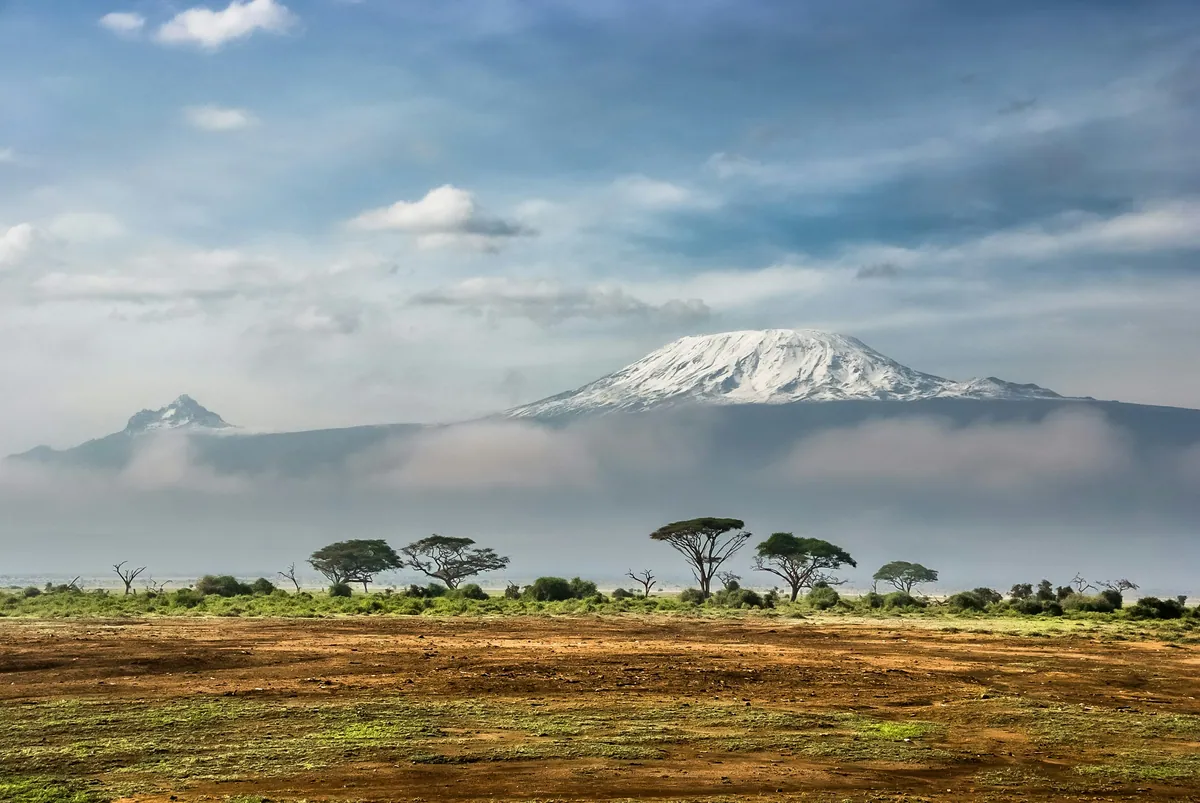
Ethiopia, in frame
A quick visual sense of the landscapes, stays, and atmosphere your itinerary can be built around.
Build a Ethiopia itinerary around your dates.
Share your travel month, group size, budget comfort, and must-do experiences. The Taro team will shape the right route before any payment conversation.