Why Cappadocia works
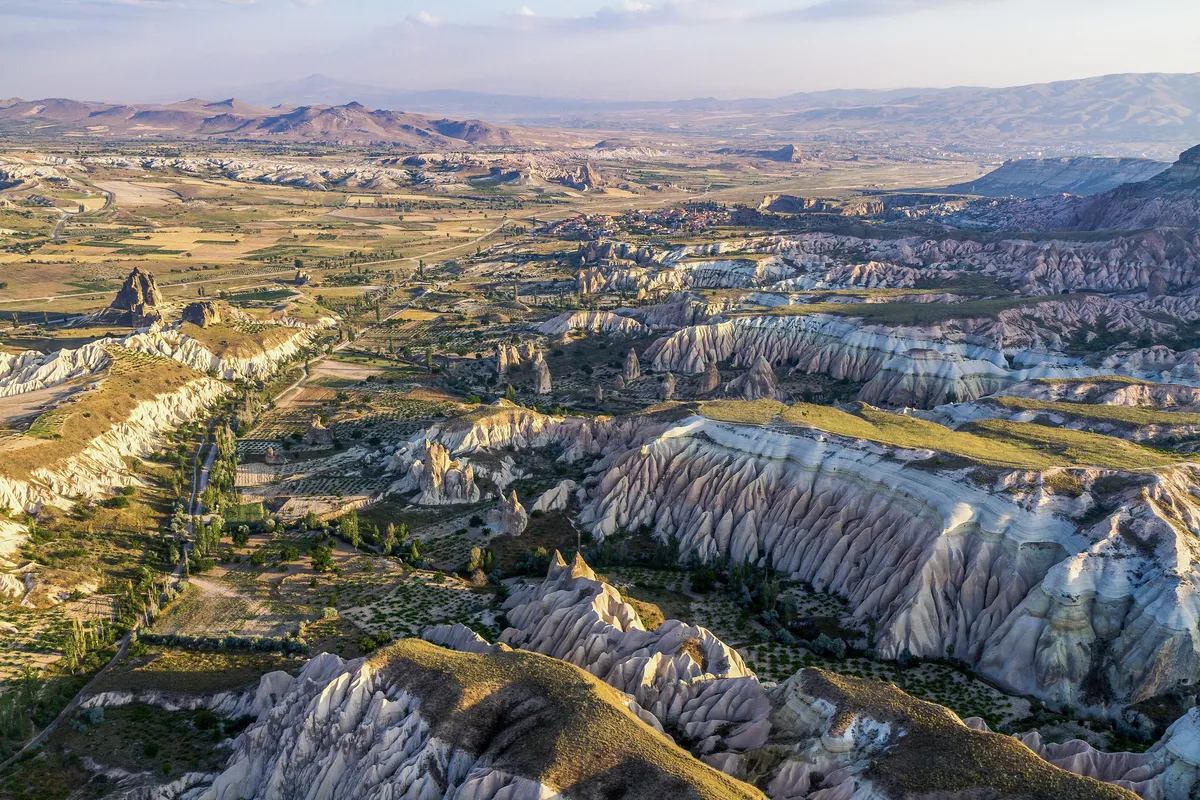
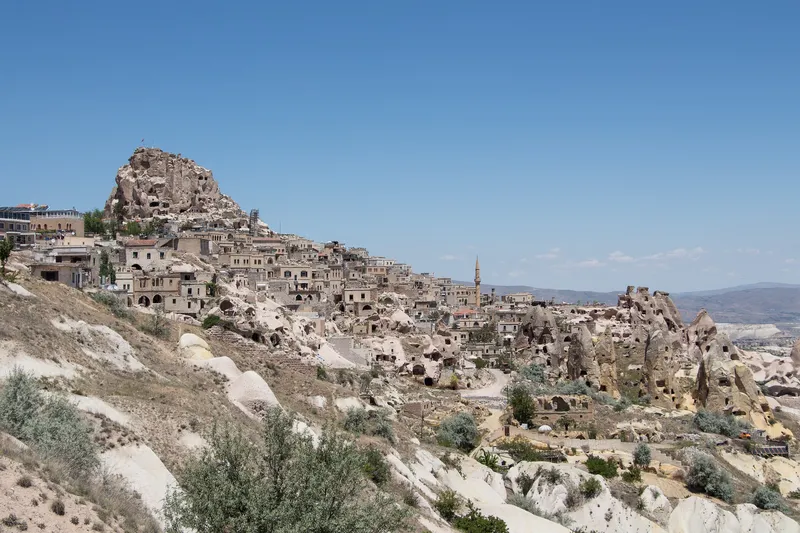
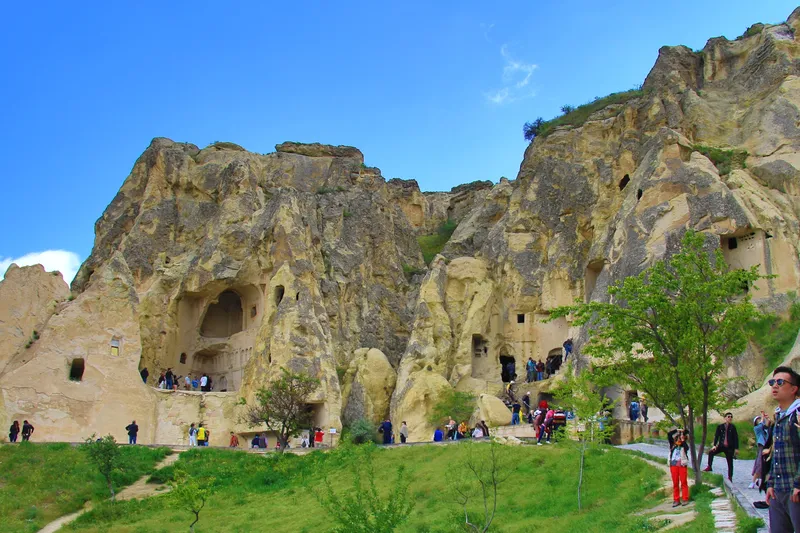
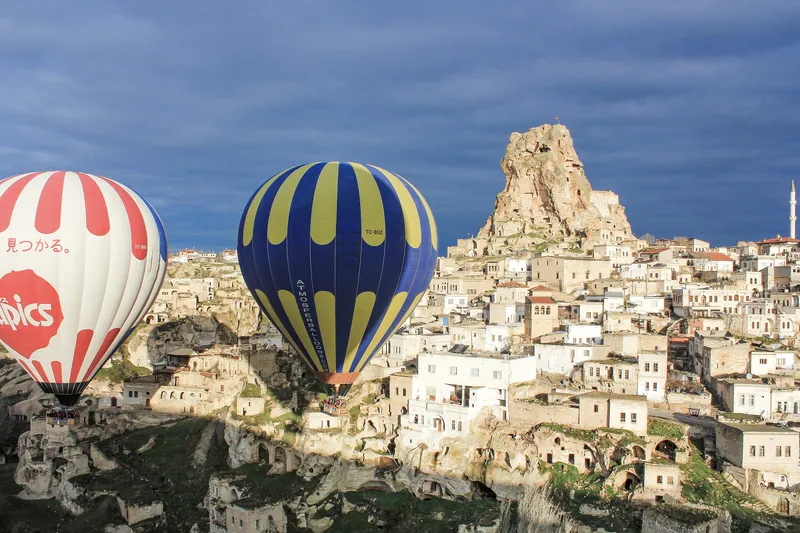
Cappadocia's landscape was shaped over millions of years as volcanic ash from long-extinct eruptions eroded into soft, undulating rock, later carved by wind and water into the region's famous 'fairy chimneys' — tall, tapering rock cones, many capped with harder basalt boulders. Goreme, the region's tourism hub, sits amid a valley of these formations and is best seen from above, and Cappadocia has become synonymous with sunrise hot-air balloon flights, with over a hundred balloons frequently lifting off simultaneously at dawn, drifting silently over the valleys before landing for a champagne toast — a sight as spectacular from the ground as from the basket. Beyond the balloons, Cappadocia's soft rock allowed entire communities to carve dwellings directly into hillsides and underground; the Goreme Open-Air Museum preserves Byzantine-era cave churches with frescoes dating to the 9th-11th centuries, while underground cities like Derinkuyu descend eight levels and could shelter thousands of people along with livestock during historical invasions, complete with ventilation shafts, wine presses and stone rolling doors for defence. Many hotels in the region occupy actual or replica cave dwellings, offering a genuinely unusual overnight stay. The Ihlara Valley, a steep gorge carved by the Melendiz River, offers hiking away from the balloon crowds, past more rock-cut churches, while Uchisar Castle, the region's highest point, provides a natural viewing platform over the entire valley system.
Trip Snapshot
Suitable For
Cappadocia, in frame
A quick visual sense of the landscapes, stays, and atmosphere your itinerary can be built around.
Cappadocia questions, answered
When is the best time to visit Cappadocia?
April to June, September to November
What is the weather like in Cappadocia?
Semi-arid, 0-30°C depending on season
Do I need a visa to travel to Turkey?
e-Visa for Indian nationals holding a valid Schengen/UK/US visa or visa-free entry stamp; else apply at embassy. Visa rules change without notice — confirm current requirements with the destination's embassy or consulate before you book.
What currency is used in Turkey?
Turkish Lira (TRY)
What languages are spoken in Turkey?
Turkish, English in tourist areas
Build a Cappadocia itinerary around your dates.
Share your travel month, group size, budget comfort, and must-do experiences. The Taro team will shape the right route before any payment conversation.