Why Botswana works
Botswana, officially the Republic of Botswana, is a landlocked country in Southern Africa, bordered by South Africa to the south and southeast, Namibia to the west and north, Zambia to the north, and Zimbabwe to the northeast. The country is topographically flat, and roughly 70% of its territory lies within the Kalahari Desert. Gaborone, in the South-East District, is the capital and largest city, and much of Botswana's population is concentrated in the country's southeast, where its major urban centres sit.
Human history in the region reaches back a very long way: stone tools found in present-day Botswana date to roughly two million years ago, and rock art in the area is estimated at around 30,000 years old, with permanent water sources widely settled by about 20,000 years ago. Cattle, sheep, pottery, and agriculture arrived roughly 2,000 years ago, and Bantu-speaking peoples, including the Kalanga from around 200 CE and the ancestors of the Tswana from around 400 CE, migrated into the region bringing iron and copper tools and permanent settlements. From the seventh century, trade networks connected the region to wider southern Africa and eventually the Indian Ocean, and later regional powers such as the Toutswe people, the Kingdom of Mapungubwe, and Great Zimbabwe built economies substantially based on cattle and gold.
In the northwest, the Okavango River fans out into the Okavango Delta rather than reaching the sea, forming a vast inland delta of channels, lagoons, islands, and seasonal wetlands that supports an unusually high concentration of wildlife; the delta was inscribed as a UNESCO World Heritage Site in 2014, the 1,000th site added to the list, and is one of the largest inland deltas in the world. Northern Botswana, where wetlands and savanna provide reliable water, holds some of Africa's most significant wildlife populations, including one of the few remaining large populations of the endangered African wild dog. Other protected and natural sites include the Chobe River area along the Namibian border, the Gaborone Dam, and the Mokolodi Nature Reserve, and the Botswana Tourism Organisation, the country's official tourism body, promotes destinations from the Kalahari Fishing Club to the Gaborone Yacht Club alongside these wilder landscapes.
Botswana's climate is generally semi-arid, with highly seasonal rainfall that varies considerably by region — the north and east typically receive more rain than the dry southwest — and summers that can turn extremely hot against cold winter nights. Drought and desertification are recurring environmental pressures, closely linked to each other, with roughly three-quarters of the country's human and animal populations depending on scarce water resources; a sharp rise in livestock numbers, from about 1.7 million head in 1966 to 5.5 million by 1991, has also been linked by environmentalists to pressure on the Okavango Delta's wetlands.
Seswaa, pounded meat made from goat or beef, is considered Botswana's national dish, often served alongside bogobe, a porridge made from sorghum, maize, or millet flour cooked slowly into a soft paste. Other staples include pap, a maize porridge shared across much of southern Africa, samp, and ting, made by adding milk and sugar to fermented sorghum or maize, while madila, a traditional fermented milk product similar to yogurt, rounds out a cuisine that draws on the country's cattle-raising traditions as much as its grain crops. Segwapa, dried and cured meat cut either with or across the grain, and mopane worms are also part of the everyday table, reflecting a cuisine shared broadly across the region.
- Botswana — Wikipedia, CC BY-SA 4.0
Text adapted from the linked articles under CC BY-SA 4.0; edited for length.
Trip Snapshot
Highlights
Suitable For
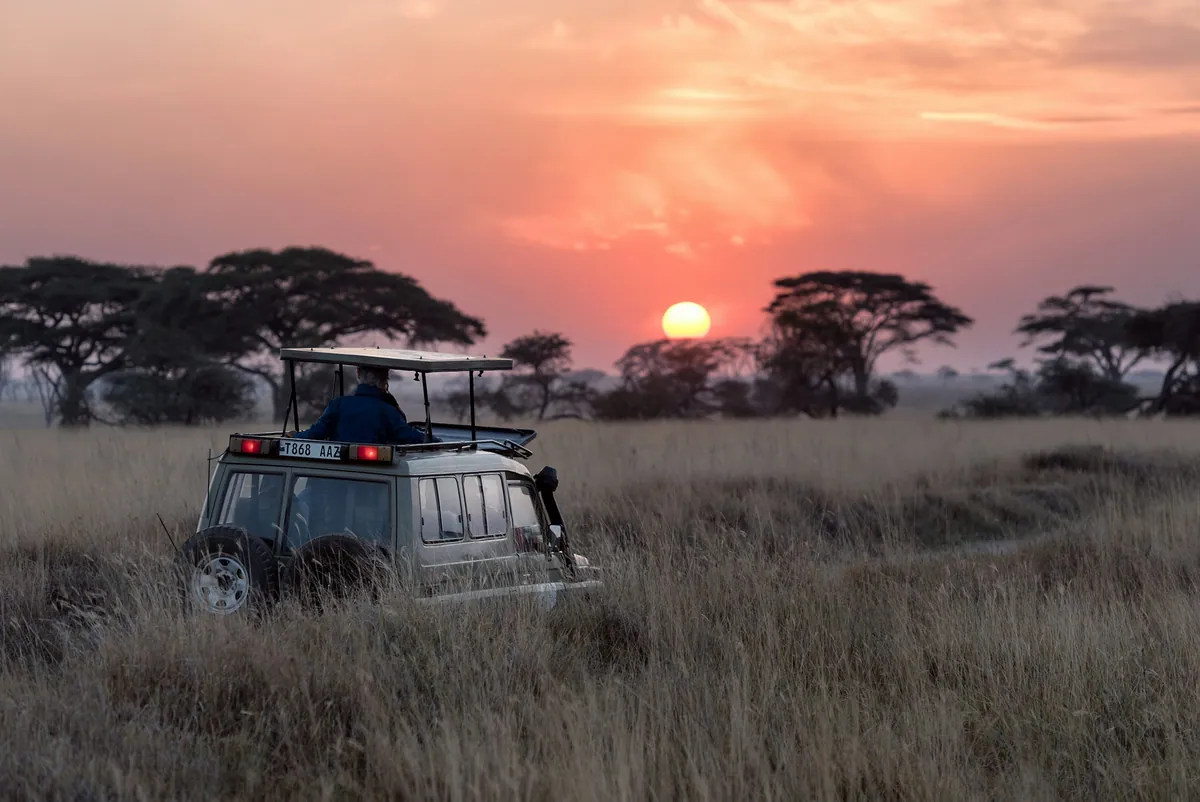
Botswana, in frame
A quick visual sense of the landscapes, stays, and atmosphere your itinerary can be built around.
Build a Botswana itinerary around your dates.
Share your travel month, group size, budget comfort, and must-do experiences. The Taro team will shape the right route before any payment conversation.