Why Bhutan works
Bhutan, officially the Kingdom of Bhutan, is a landlocked country in South Asia set in the Eastern Himalayas, bordering China's Tibet Autonomous Region to the north and northwest and India to the south and southeast. It is a democratic constitutional monarchy, with a king as head of state and a prime minister as head of government, and the Je Khenpo leads the state religion, Vajrayana Buddhism. Mountains cover 98.8% of the country, making Bhutan the most mountainous country in the world, with elevation rising from about 200 metres in the southern foothills to more than 7,000 metres at Gangkhar Puensum, the highest peak, in the north.
Evidence including stone tools and remnants of large stone structures suggests Bhutan was inhabited as early as 2000 BCE, though no written records survive from that period; historians have theorised that a state called Lhomon may have existed between roughly 500 BCE and 600 CE. Buddhism reached Bhutan in the mid-seventh century CE, when the Tibetan king Songtsen Gampo, a Buddhist convert, ordered the construction of two temples, Jambay Lhakhang in Bumthang and Kyichu Lhakhang in the Paro Valley; the faith was propagated further in 746 under King Sindhu Rāja, an exiled Indian king who established a government at Bumthang's Chakhar Gutho Palace. By the tenth century, competing Buddhist subsects patronised by different noble families had become central to the country's political development.
Bhutanese architecture remains distinctively traditional, built with rammed earth, wattle and daub, stone masonry, and intricate woodwork, using no nails or iron bars. Its signature structure is the dzong, a fortress-like building that has served since ancient times as both the religious and secular administrative centre of its district. Bhutan's isolation from the outside world until the mid-twentieth century has kept much of this cultural heritage — including its dzongs, monasteries, and festivals — largely intact, a combination of unspoiled nature and preserved tradition that has led to the country being referred to as "The Last Shangri-La," a nickname that reflects both its geography and its cultural continuity.
Bhutan's climate shifts with elevation and runs through five distinct seasons: summer, monsoon, autumn, winter, and spring. The south is subtropical, with hot, humid summers and cool winters and the heaviest monsoon rains falling in the west; the central and eastern regions are temperate and drier, with warm summers and cool winters; and the far north, among glaciated peaks over 7,000 metres, has a polar-type climate with snow year-round. This range of elevation and climate gives Bhutan an unusually broad span of ecosystems, from Eastern Himalayan alpine shrub and meadows in the north down through temperate and subtropical zones.
National dress remains part of everyday life: men wear the gho, a knee-length robe tied at the waist with a cloth belt called the kera, while women wear the kira, an ankle-length dress fastened at the shoulders with brooches called koma, worn with a long-sleeved wonju underneath and a jacket-like toego over it. Bhutanese law requires government employees to wear national dress at work and citizens to wear it when visiting schools and government offices. On the table, red rice, buckwheat, and maize are the staples, often served with pork, beef, yak meat, or lamb in soups and stews spiced with chilies and cheese; ema datshi, a very spicy dish of chilies and cheese, is widely regarded as the national dish, and butter tea and locally brewed ara, a rice wine, are common drinks.
- Bhutan — Wikipedia, CC BY-SA 4.0
Text adapted from the linked articles under CC BY-SA 4.0; edited for length.
Trip Snapshot
Highlights
Suitable For
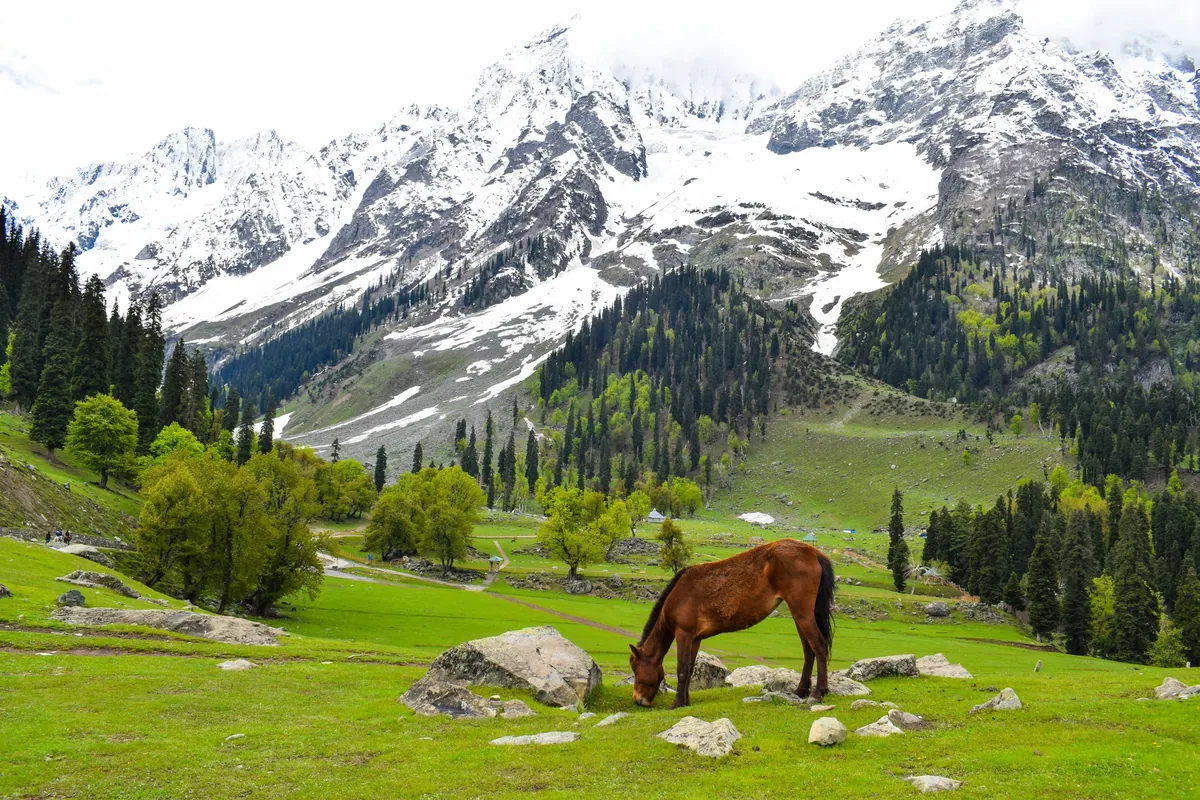
Bhutan, in frame
A quick visual sense of the landscapes, stays, and atmosphere your itinerary can be built around.
Build a Bhutan itinerary around your dates.
Share your travel month, group size, budget comfort, and must-do experiences. The Taro team will shape the right route before any payment conversation.