heritage
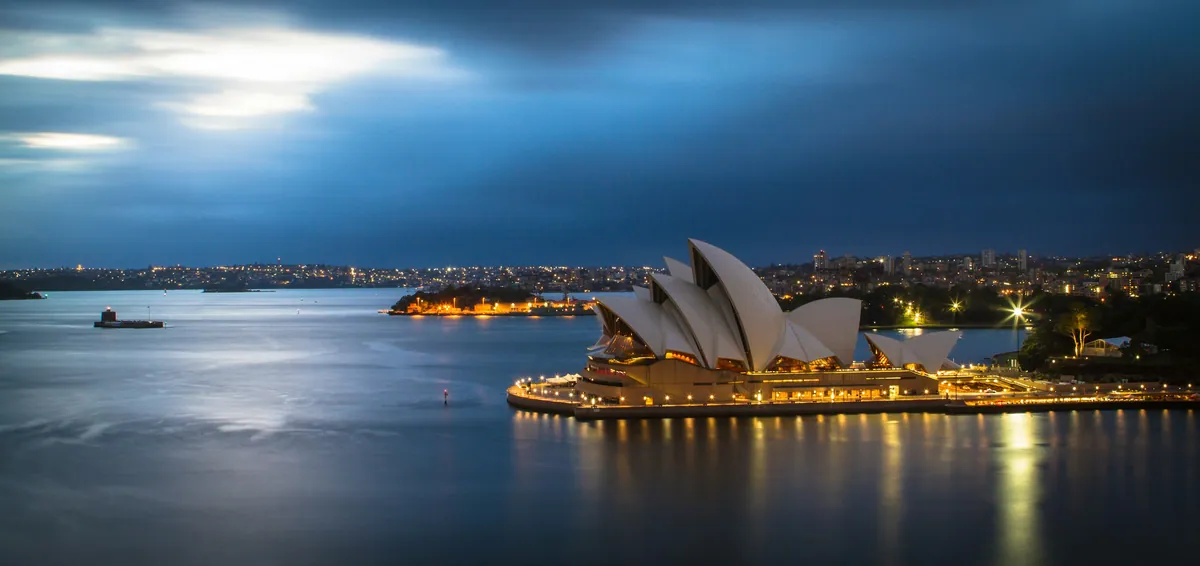
Sydney Opera House
Architectural masterpiece on Bennelong Point — harbor views, world-class performances, and the iconic sail-shaped roof.
Australia, officially the Commonwealth of Australia, comprises the mainland of the Australian continent, the island of Tasmania, and numerous smaller islands, with a land area of 7,688,287 square kilometres that makes it the sixth-largest country in the world. It is also the world's flattest and driest inhabited continent, a scale that produces landscapes ranging from interior deserts to tropical rainforest along the coast. Australia is one of only 17 megadiverse countries, and its long geographic isolation has left much of its wildlife found nowhere else: roughly 94% of its amphibians, 93% of its reptiles and flowering plants, and 69% of its mammals are endemic.
Human habitation of the continent is estimated to have begun 50,000 to 65,000 years ago, when Indigenous peoples crossed by land bridges and short sea journeys from present-day Southeast Asia; the Lake Mungo remains, dated to roughly 42,000 years ago, are among the oldest human remains found here, and Aboriginal Australian culture is counted among the oldest continuous cultures on Earth. European contact began with the Dutch ship Duyfken's landing in 1606, followed by Abel Tasman's voyages in the 1640s, which let the Dutch map much of the continent's northern, western, and southern coasts under the name New Holland. Captain James Cook charted and claimed the east coast for Great Britain in 1770, and the First Fleet, under Captain Arthur Phillip, arrived at Sydney Cove on 26 January 1788 to found the first British colony.
Roughly 70% of the Australian mainland is arid or semi-arid, and about 18% is desert, a scale that shapes the vegetation across the country: acacia, banksia, and eucalypts spread over much of the land, adapted to nutrient-poor soil and variable rainfall. About 10% of the world's known plant species occur in Australia, and although more than 168,000 species had been formally named as of a January 2025 count, an estimated 70% of the continent's species remain undiscovered or unclassified. Australia's states and territories, and its major cities, sit largely around this arid interior, on the coastal fringe where climate and water supply are more forgiving.
The Australian climate ranges from wet tropical in the northeast and northwest to arid at the centre, with a temperate, humid south where the southeastern highlands and Tasmania see winter snow. The mainland's average annual rainfall of 470 millimetres makes it the driest inhabited continent, and rainfall variability, driven partly by systems such as the El Niño–Southern Oscillation, brings frequent droughts and flooding; the northern summer monsoon delivers most of the tropical north's rain, while low-pressure systems bring winter rain to the south.
Australian food reflects this same layered history. Indigenous Australians long relied on native fauna and flora, known as bush tucker, and ingredients such as lemon myrtle, macadamia nuts, and kangaroo meat have become more widely available to non-Indigenous Australians since the 1970s. British and Irish settlers brought dishes such as fish and chips and the Australian meat pie, Chinese migrants shaped a distinctive Australian Chinese cuisine, and post-war migration from Italy and Greece helped build the country's café culture, giving rise to now-iconic items like the flat white and avocado toast alongside older staples such as the pavlova, lamingtons, and Vegemite. Australia is also a leading wine producer and consumer, with vineyards spread across its temperate regions.
Text adapted from the linked articles under CC BY-SA 4.0; edited for length.
Get a Greyhound bus pass or rent a campervan for the best road trip experience
A quick visual sense of the landscapes, stays, and atmosphere your itinerary can be built around.
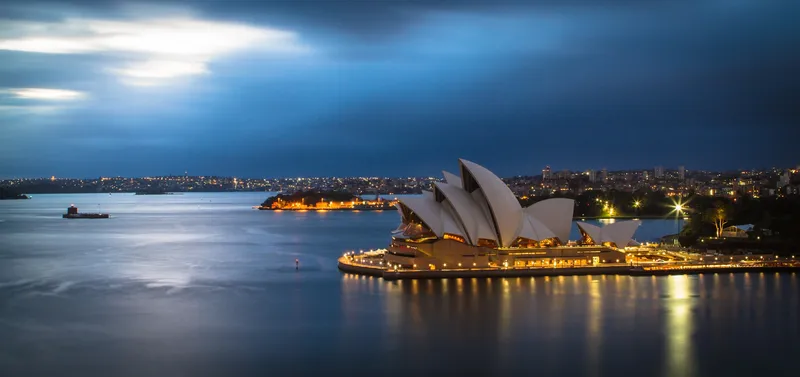
Architectural masterpiece on Bennelong Point — harbor views, world-class performances, and the iconic sail-shaped roof.
The world's largest coral reef system — 2,300km of vibrant coral, tropical fish, manta rays, and sea turtles.
Sacred red monolith rising from the Outback — Anangu cultural tours, Field of Light art installation, and desert sunsets.
Australia's cultural capital — laneway street art, world-class coffee, MCG cricket, and the vibrant food scene.
Surfers Paradise beach, theme parks (Dreamworld, Sea World, Movie World), hinterland rainforests, and nightlife.
243km coastal drive past the Twelve Apostles, London Arch, rainforest walks, and surf towns like Torquay.
September to November, March to May
Varies from tropical to temperate
Visa required for Indian nationals. Visa rules change without notice — confirm current requirements with the destination's embassy or consulate before you book.
Australian Dollar (AUD)
English
Share your travel month, group size, budget comfort, and must-do experiences. The Taro team will shape the right route before any payment conversation.