Why Antigua Guatemala works
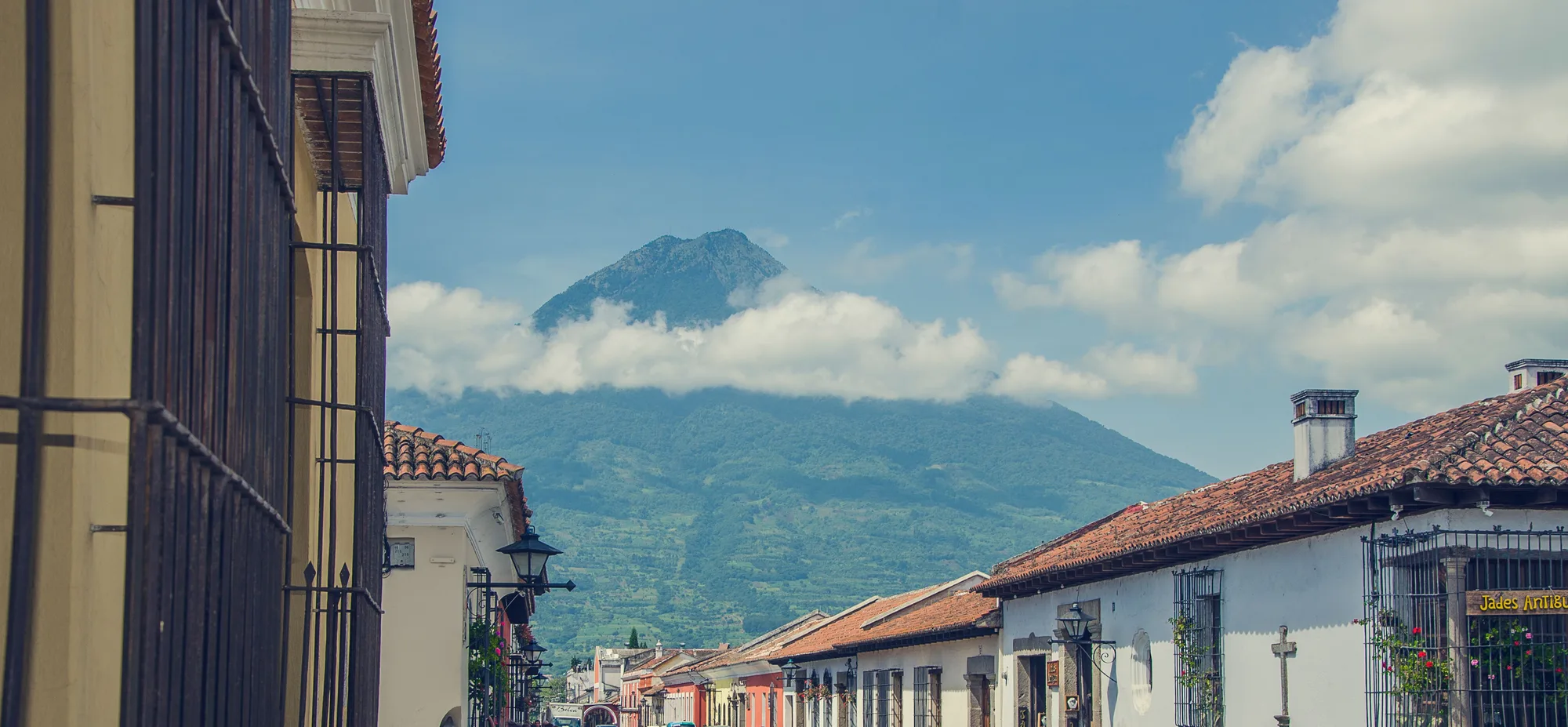
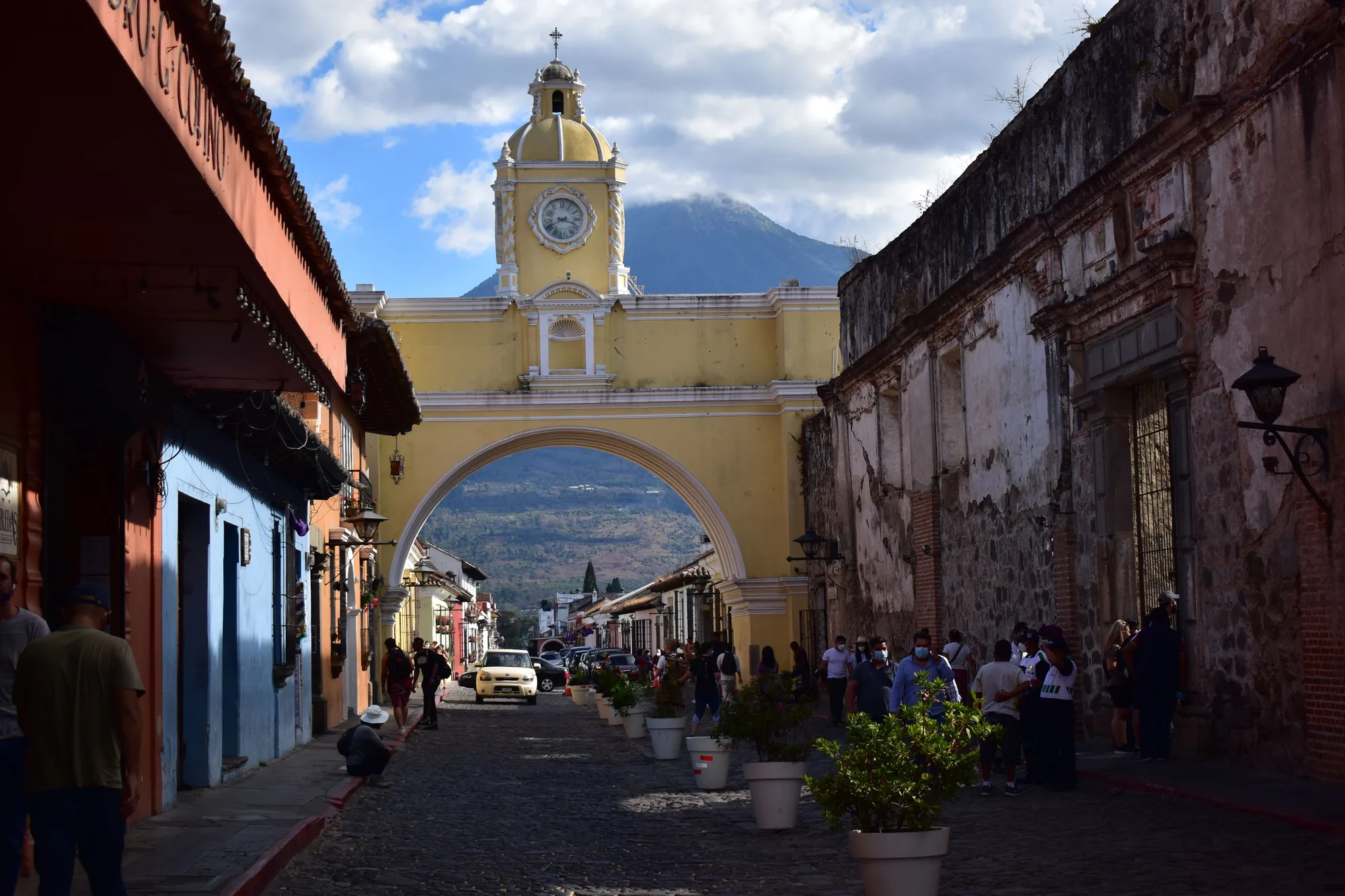
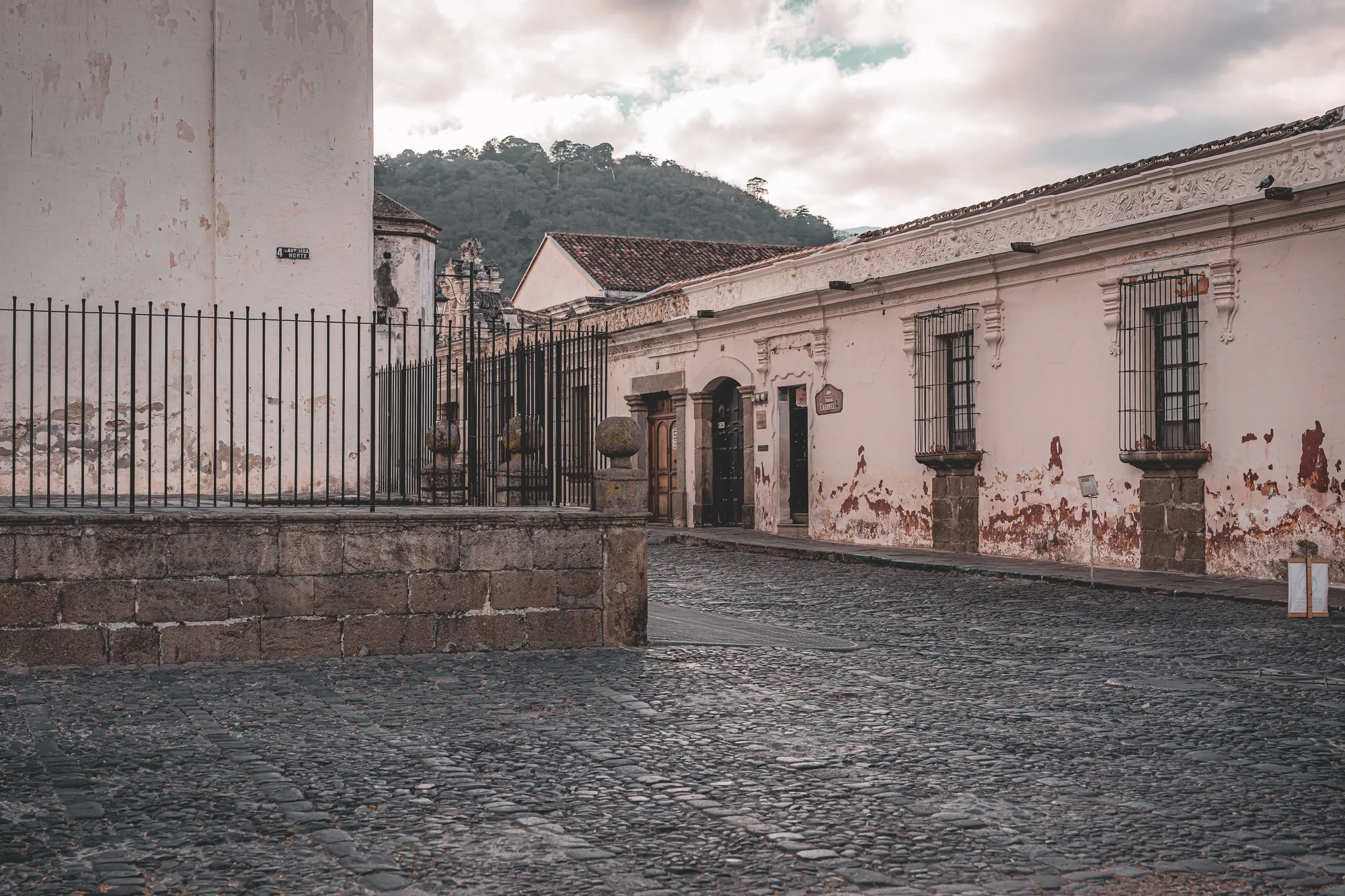
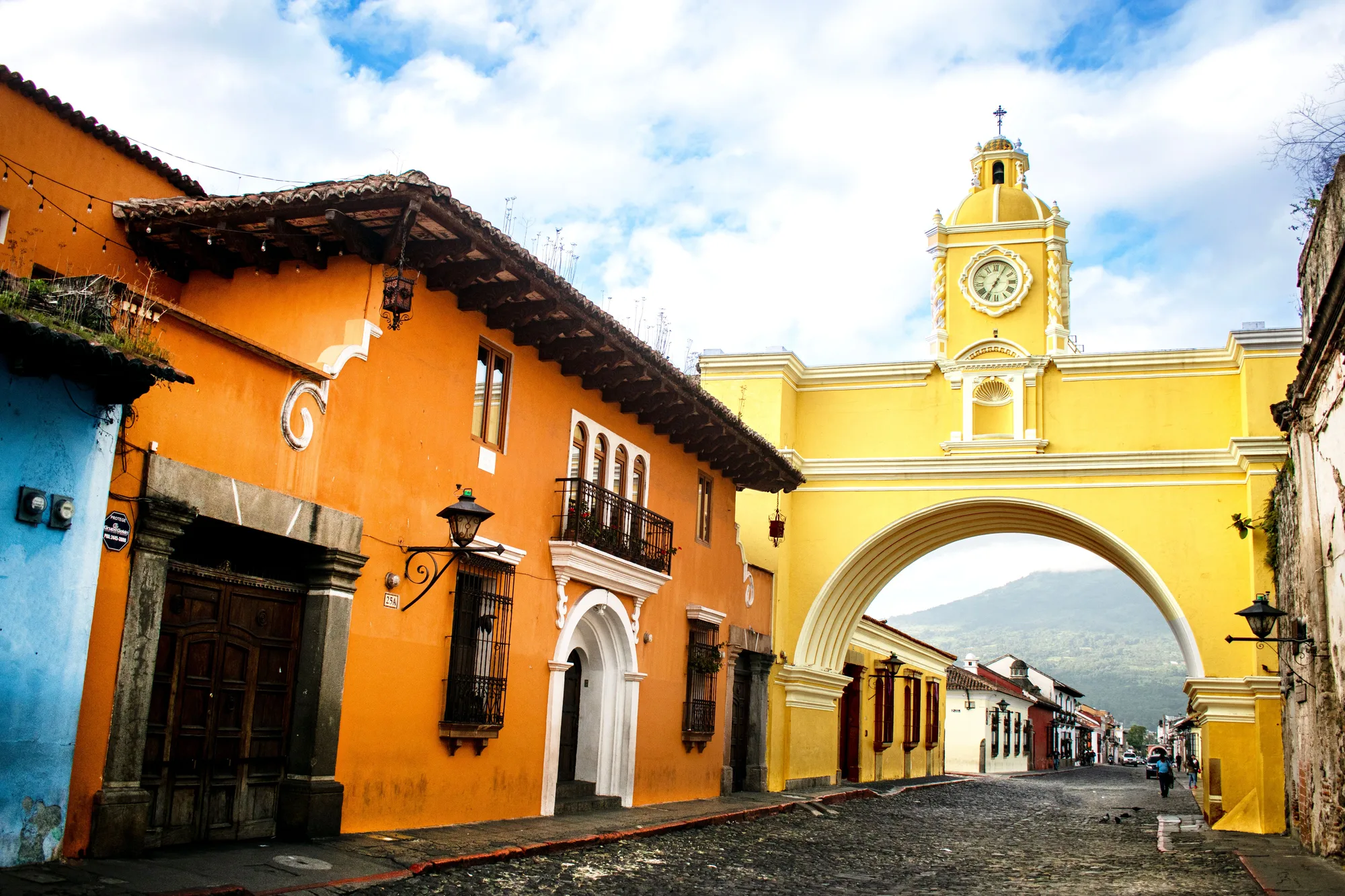
Antigua Guatemala served as the capital of Spanish Central America for over 200 years until a catastrophic 1773 earthquake prompted the colonial government to relocate to present-day Guatemala City, leaving Antigua's grand churches and convents partially ruined and largely preserved in that state ever since. The Santa Catalina Arch, built in 1694 to let cloistered nuns cross the street unseen, has become the city's defining image, its yellow facade framing the perfectly conical Volcan de Agua on clear days. Cobblestone streets in a strict colonial grid are lined with single-storey buildings in ochre, terracotta, and pastel blue, their unassuming facades often opening onto lush interior courtyards with fountains and bougainvillea. La Merced Church's baroque facade, one of the most elaborate in Central America, survived the earthquakes relatively intact, while the ruins of the Capuchinas convent and Santo Domingo — now partly a luxury hotel built around excavated colonial foundations — let visitors wander through roofless naves and collapsed archways. Three volcanoes ring the city: Agua, dormant and symmetrical; Fuego, one of Central America's most consistently active, visible puffing ash from Antigua's rooftops most evenings; and Acatenango, a challenging overnight trek that camps within sight of Fuego's eruptions. The surrounding highlands grow some of Guatemala's best coffee, with finca tours explaining the shade-grown, volcanic-soil process from cherry to cup. Antigua's mix of preserved history, active volcanoes, and a large community of long-term language-school students gives it an atmosphere unlike anywhere else in Central America.
Trip Snapshot
Suitable For
Antigua Guatemala, in frame
A quick visual sense of the landscapes, stays, and atmosphere your itinerary can be built around.
Antigua Guatemala questions, answered
When is the best time to visit Antigua Guatemala?
November to April (dry season)
What is the weather like in Antigua Guatemala?
Highland, 12-26°C, mild year-round
Do I need a visa to travel to Guatemala?
e-Visa / visa-free arrangement for Indian nationals via CA-4 agreement — verify visa rule before travel. Visa rules change without notice — confirm current requirements with the destination's embassy or consulate before you book.
What currency is used in Guatemala?
GTQ — Guatemalan Quetzal
What languages are spoken in Guatemala?
Spanish, some English
Build a Antigua Guatemala itinerary around your dates.
Share your travel month, group size, budget comfort, and must-do experiences. The Taro team will shape the right route before any payment conversation.